Paper Airplane
The paper airplane is the most universally folded origami model in the world — almost everyone has made one. This version is the classic dart style: sharp nose, clean wings, and a long stable glide. It is the perfect first fold for kids and adults who have never tried origami before.
Video Tutorial
Step-by-Step Instructions
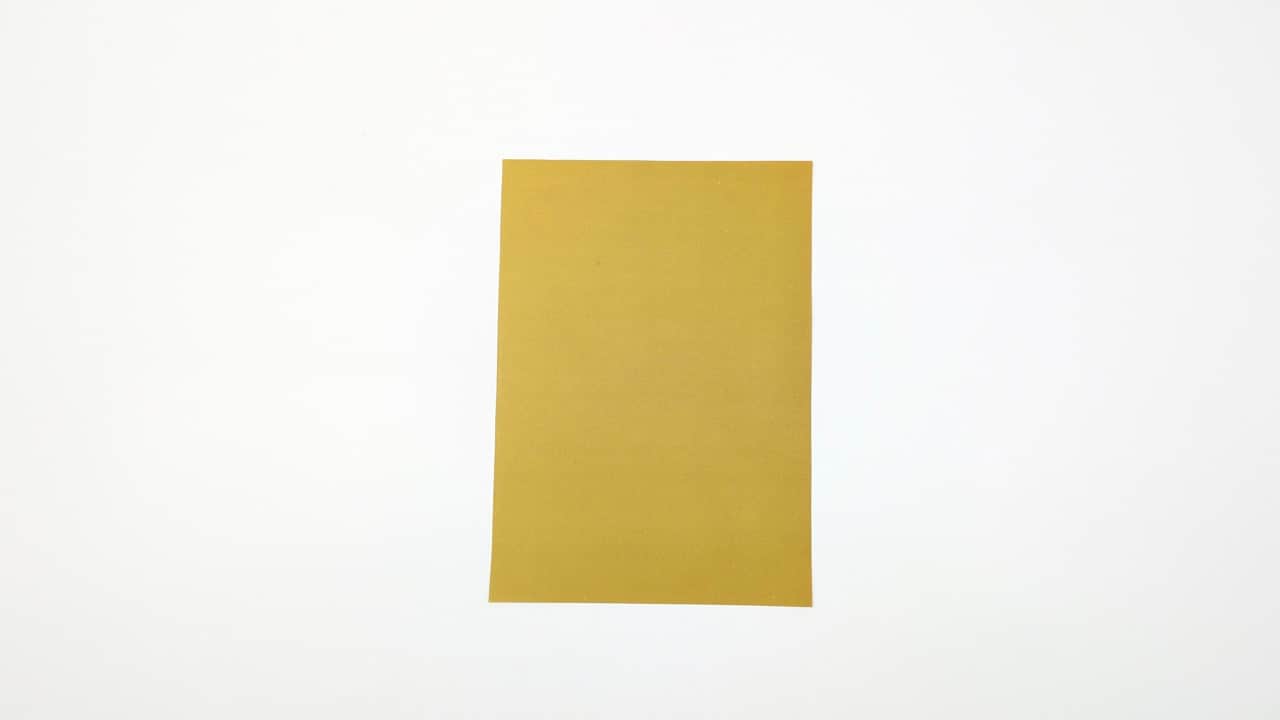 1
1Start with a standard rectangular sheet of paper (A4 or letter size), placed portrait orientation with the short edges at top and bottom.
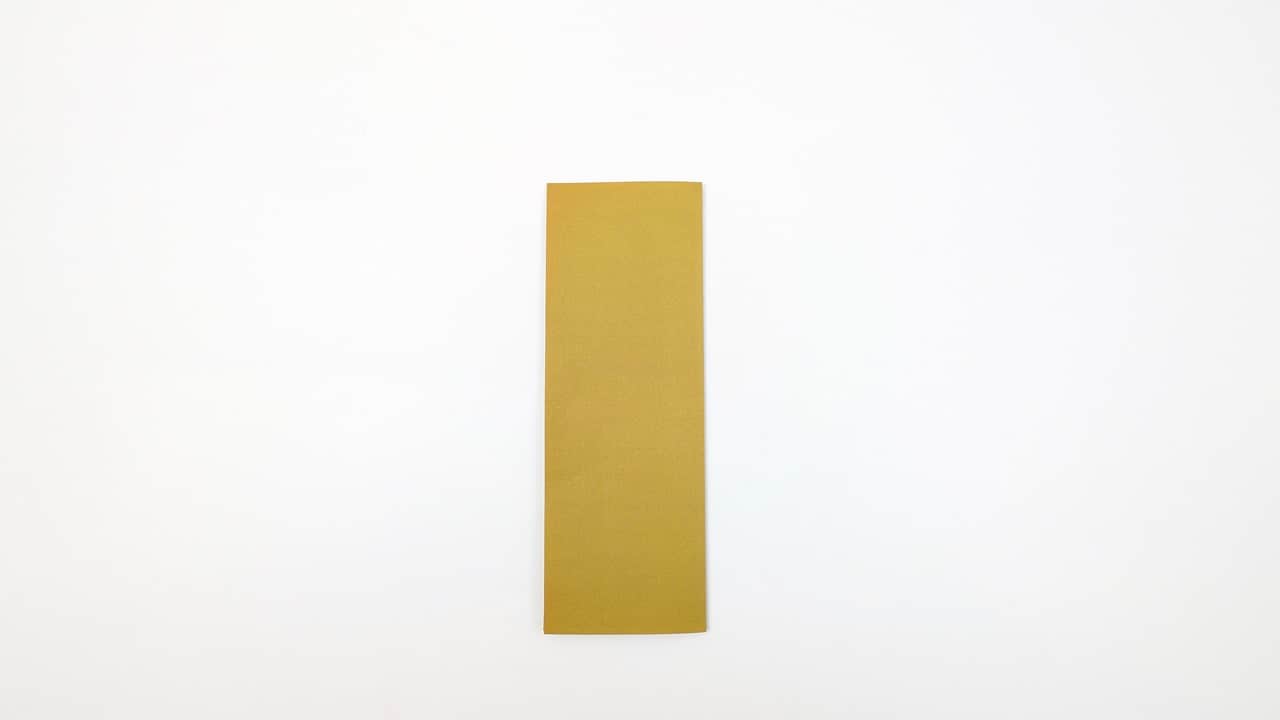 2
2Fold the paper in half lengthwise (hot dog fold), matching the long edges together. Crease firmly down the center.
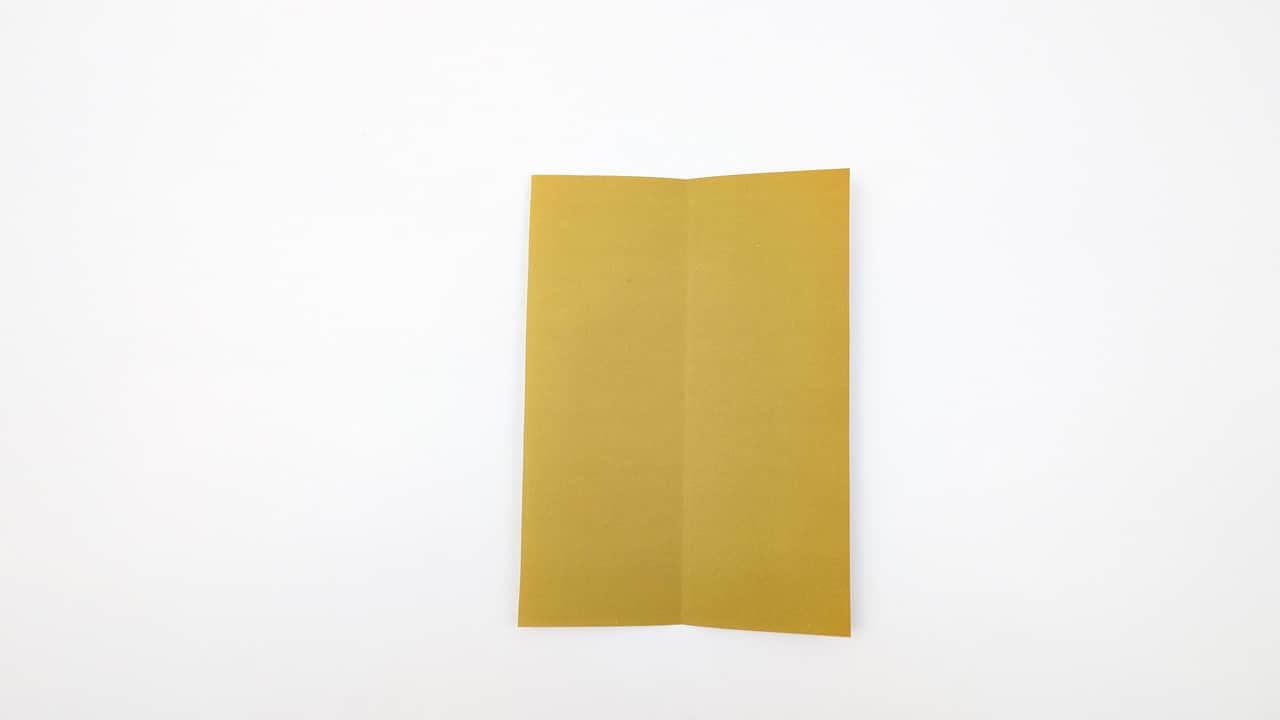 3
3Unfold back to the full rectangle. The center crease will be your guide for all remaining steps.
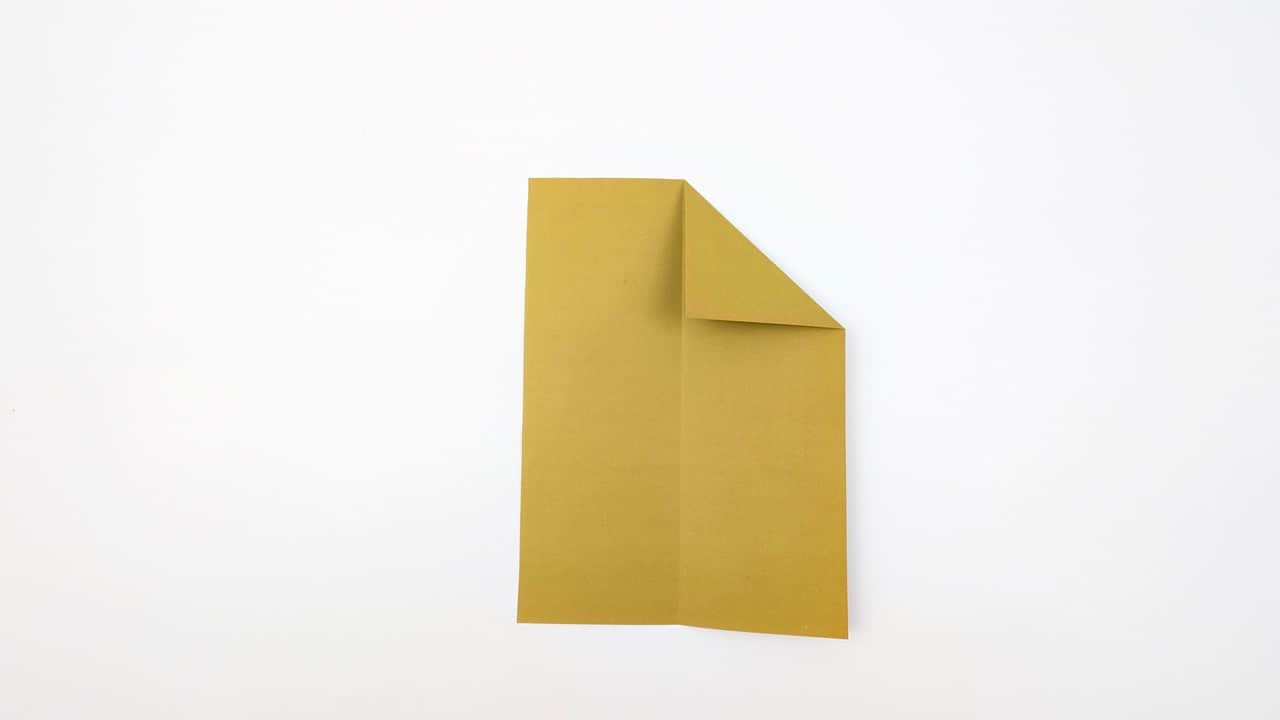 4
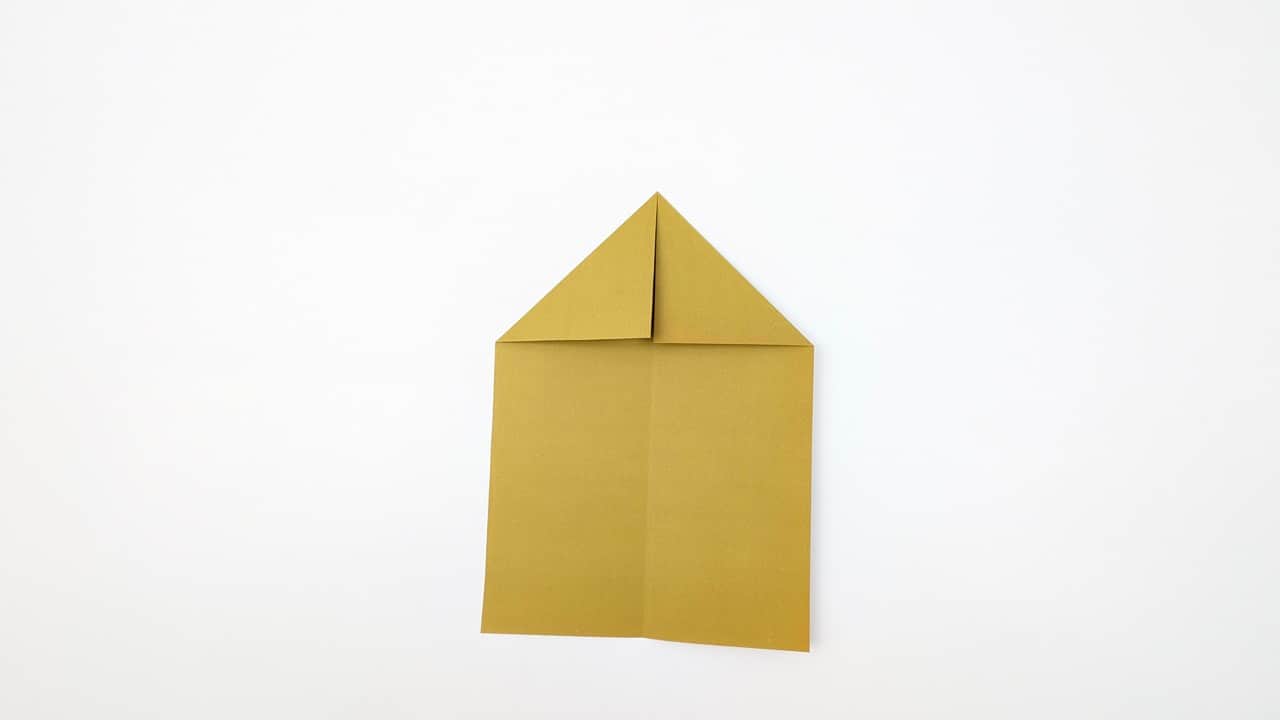
4Fold the top right corner down to meet the center crease. The top edge should now run along the center line.
 5
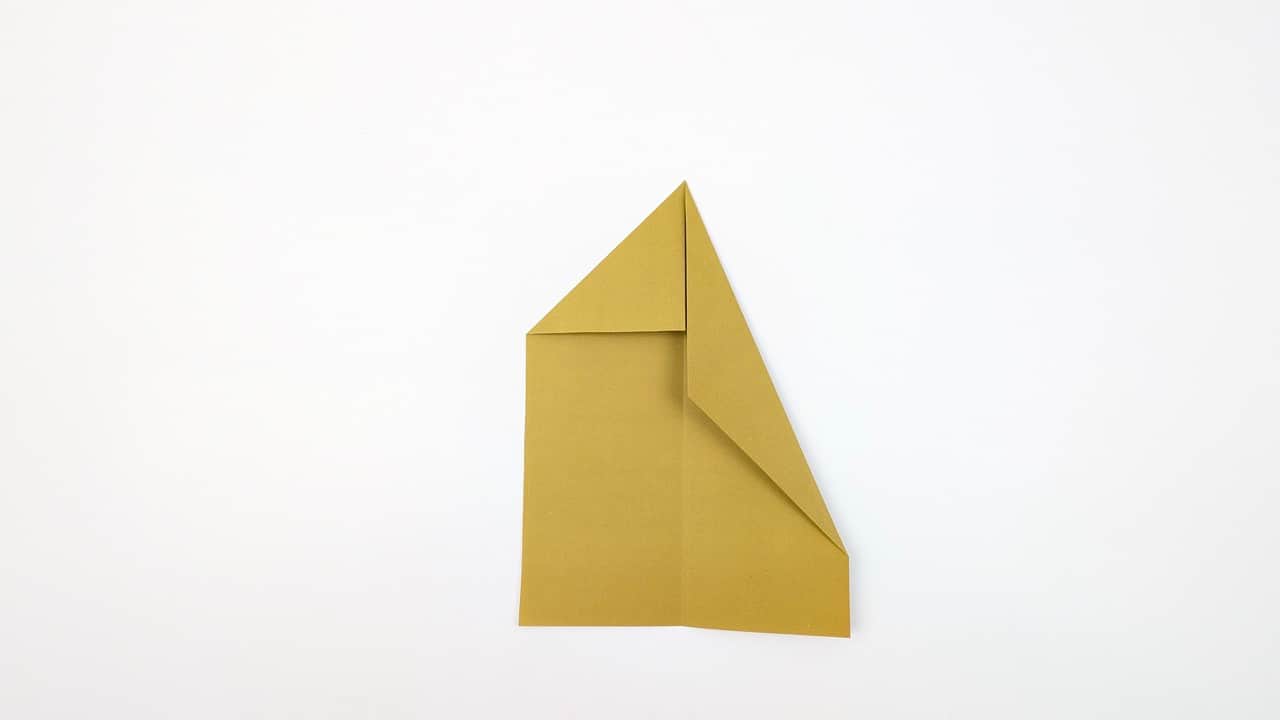
5Fold the top left corner down to meet the center crease in the same way. You should have a triangle at the top.
 6
6Crease both diagonal folds firmly. The top of the paper should now look like a pointed house shape.
 7
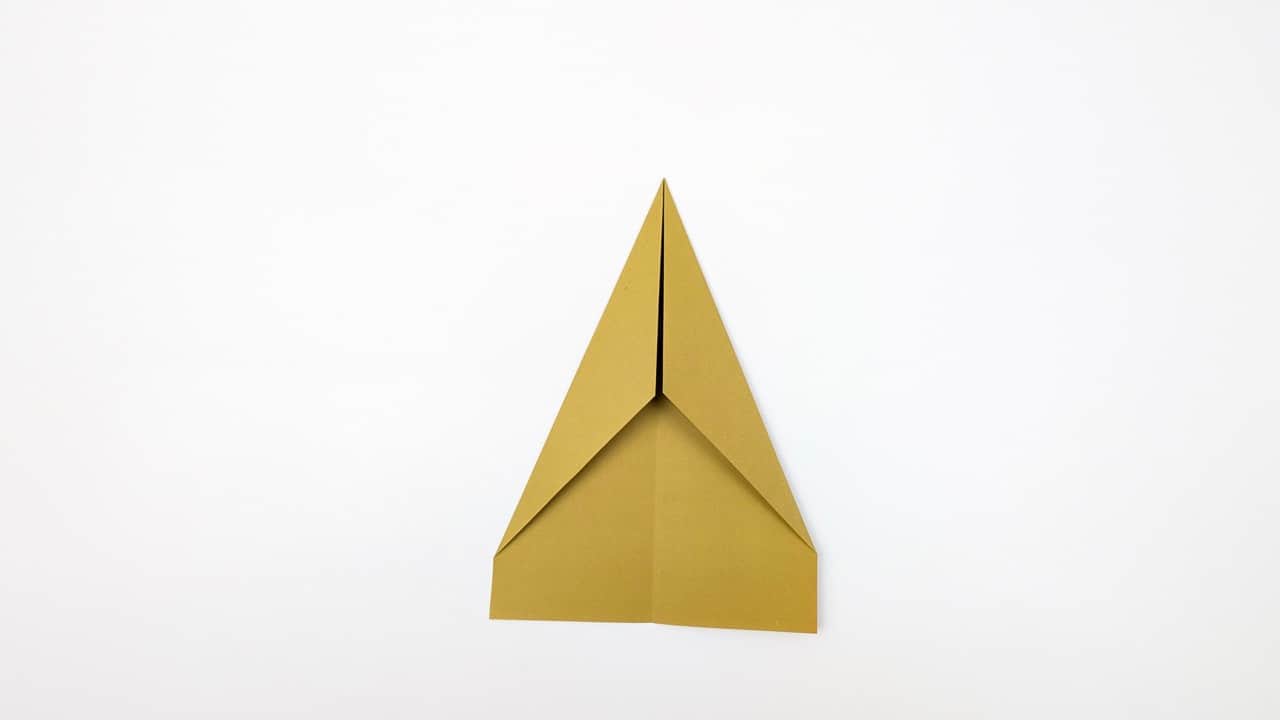
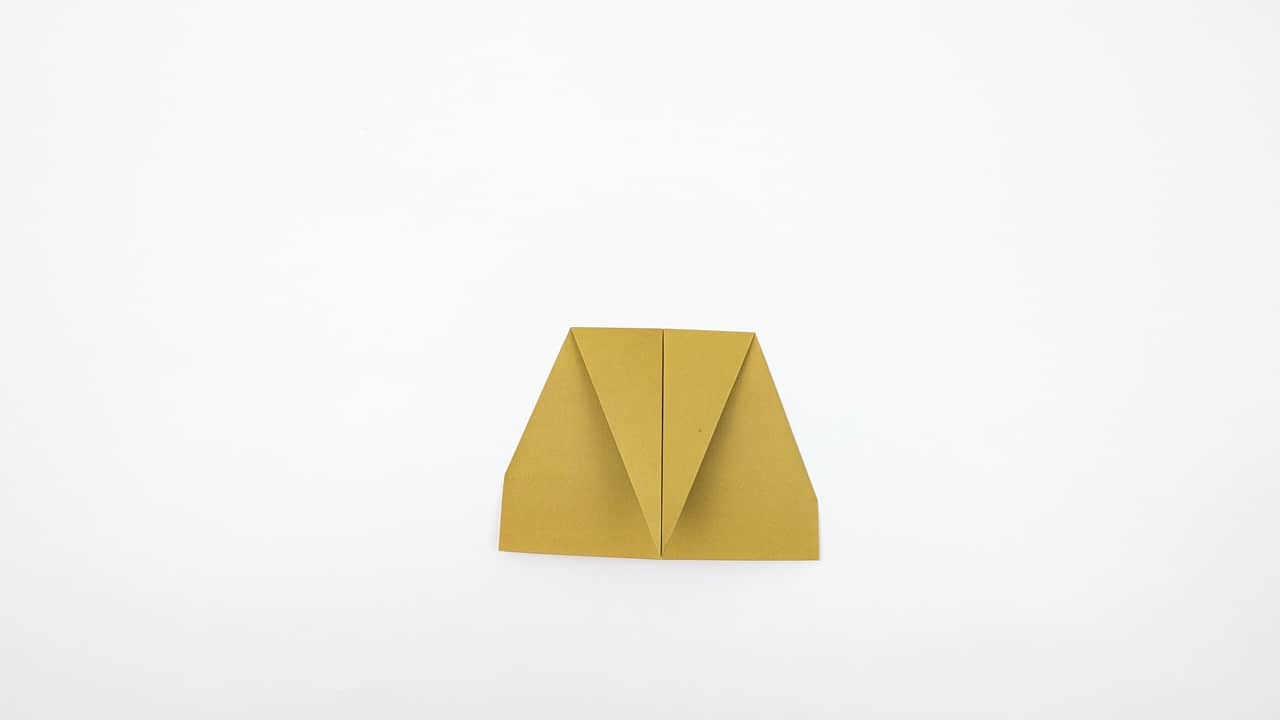
7Fold the top right edge down to the center crease again, following the same diagonal angle.
 8
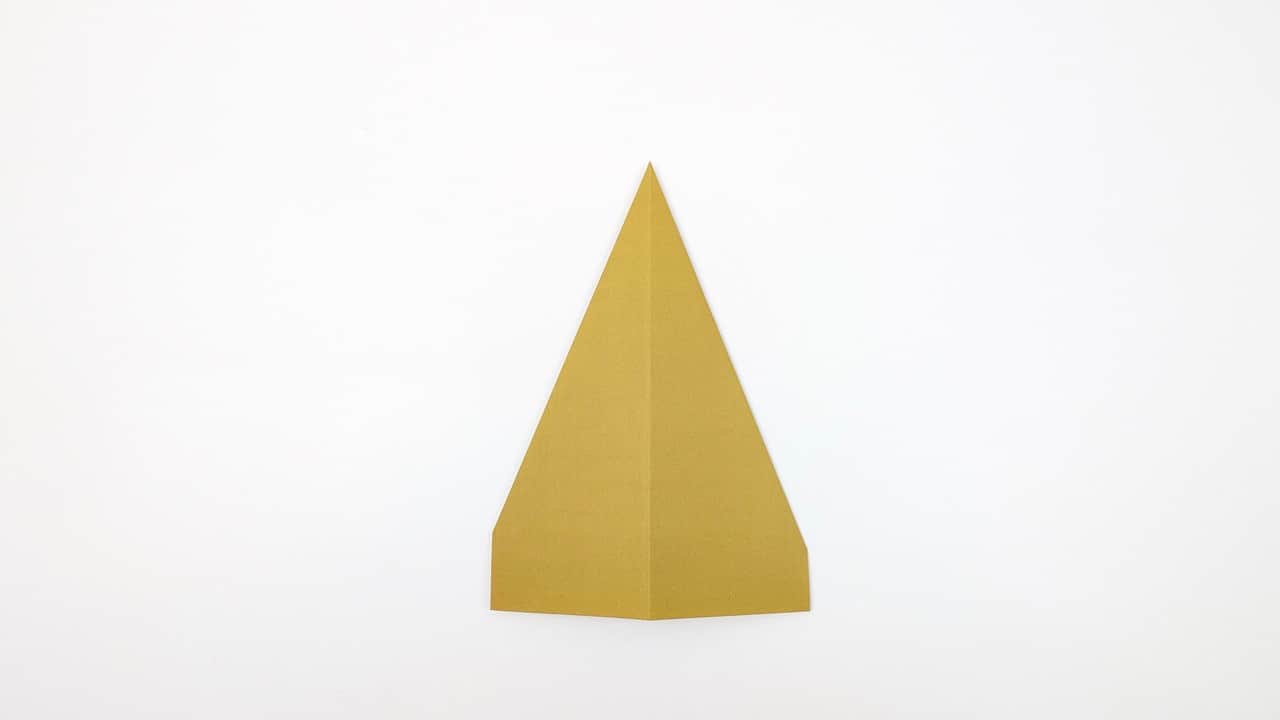
8Fold the top left edge down to the center crease in the same way. The nose is now sharper.
 9
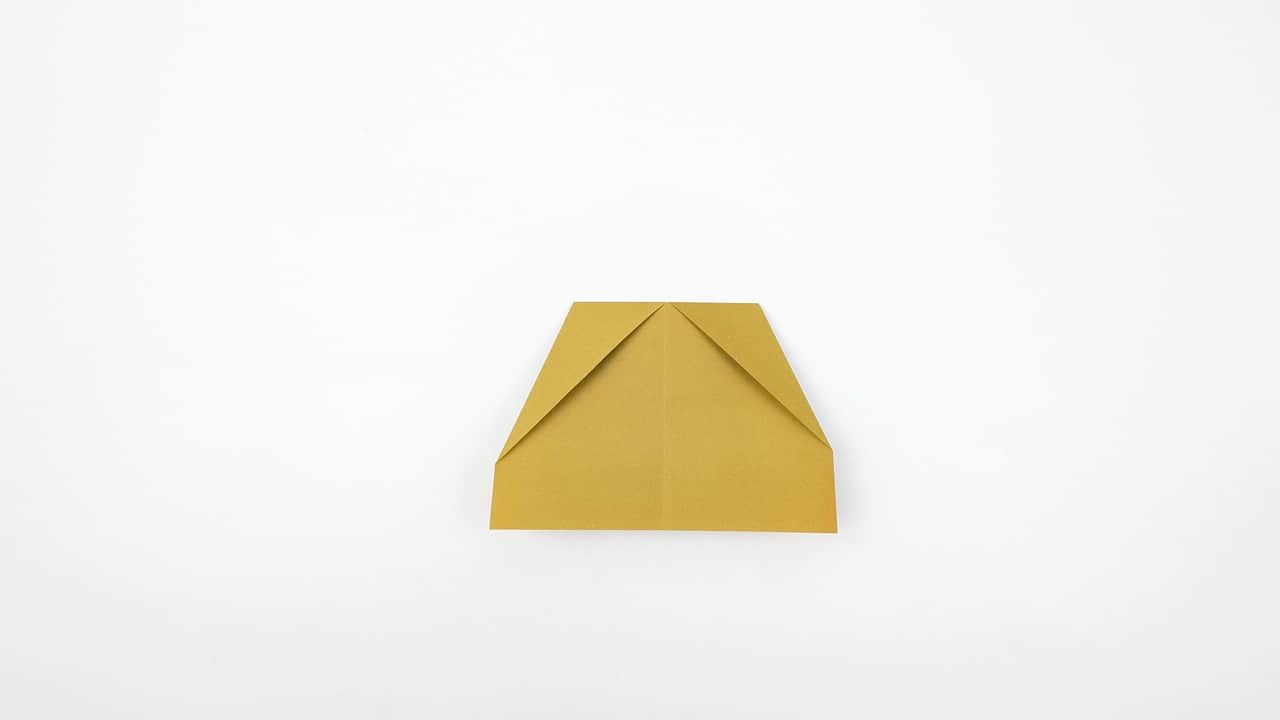
9Crease both second folds firmly. The nose should be a tight, sharp point.
 10
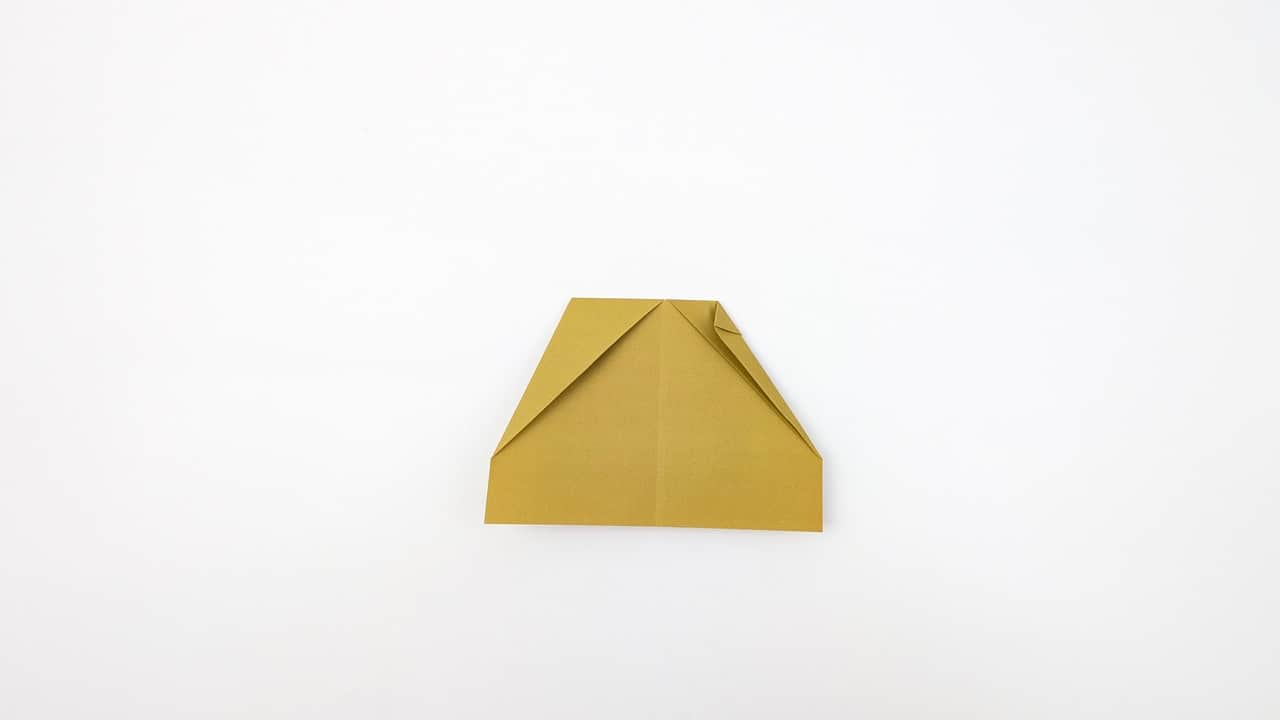
10Fold the entire model in half along the original center crease, bringing the right half behind the left.
 11
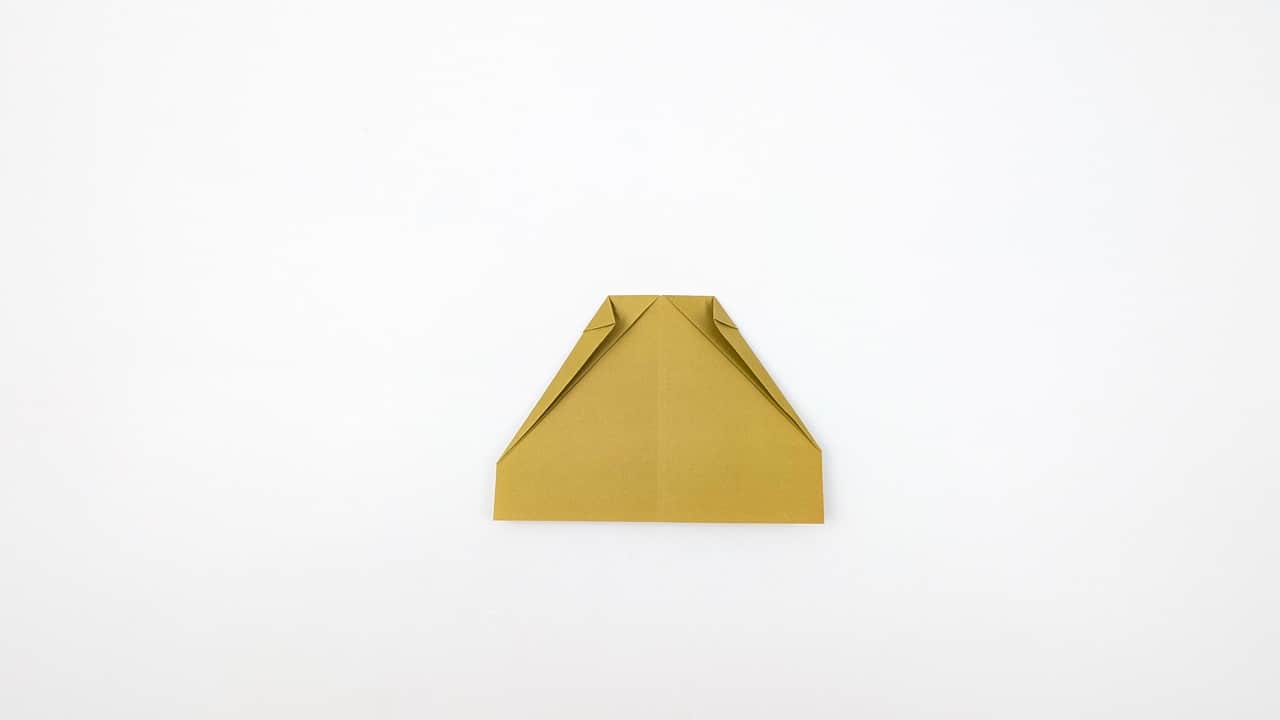
11The nose point should be sharp and both halves should align perfectly.
 12
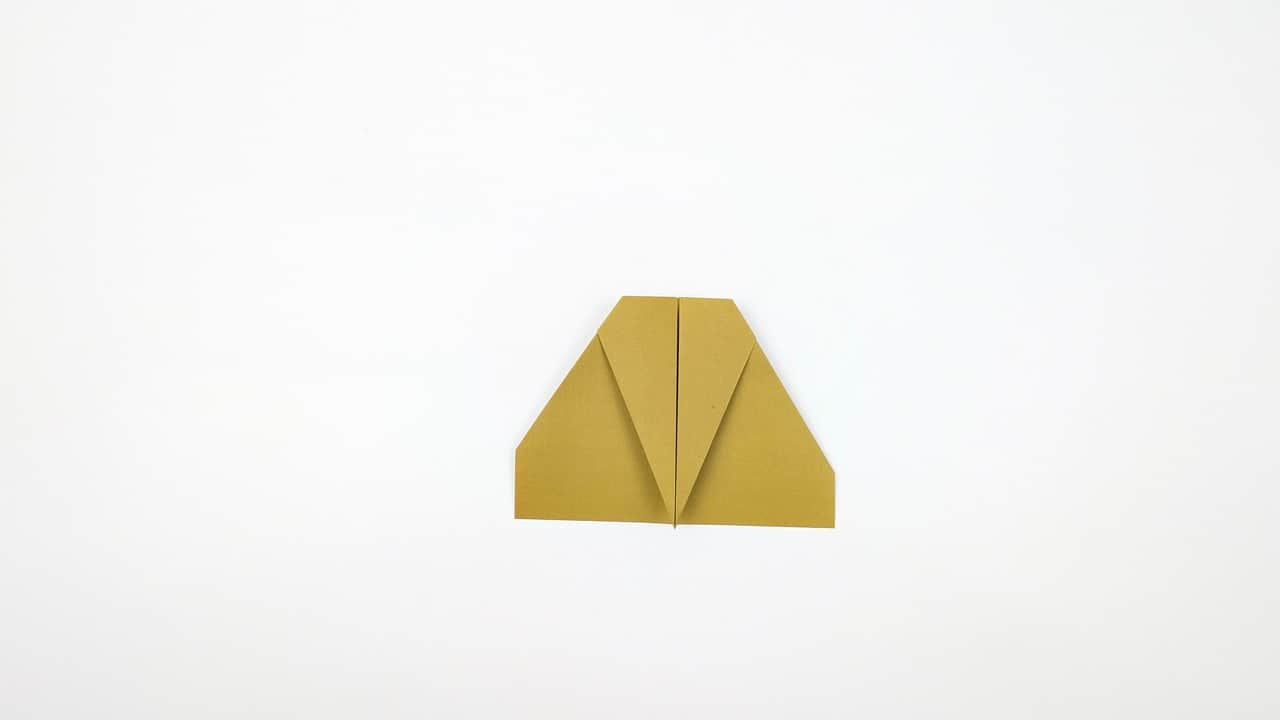
12Hold the model with the folded spine at the bottom. Fold the top layer down to meet the spine — this forms the first wing.
 13
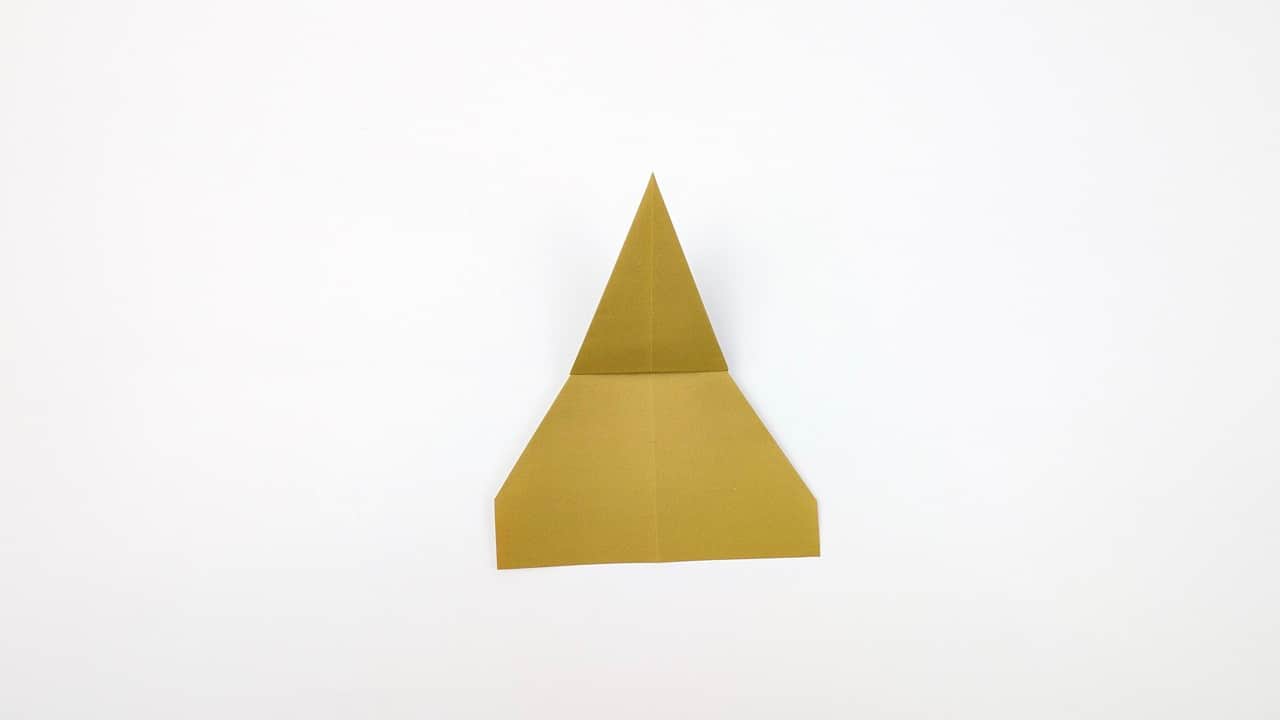
13Crease the wing fold firmly along the full length of the airplane.
 14
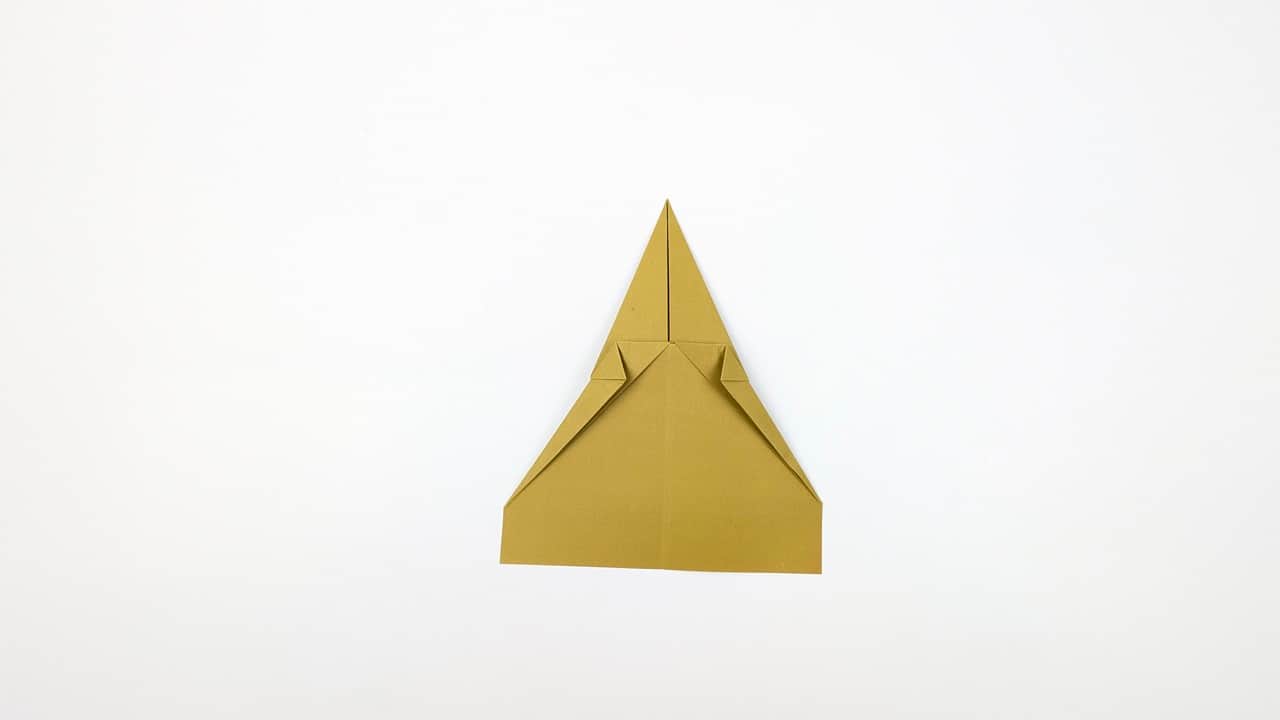
14Flip the model over. Fold the second layer down the same distance to form the second wing.
 15
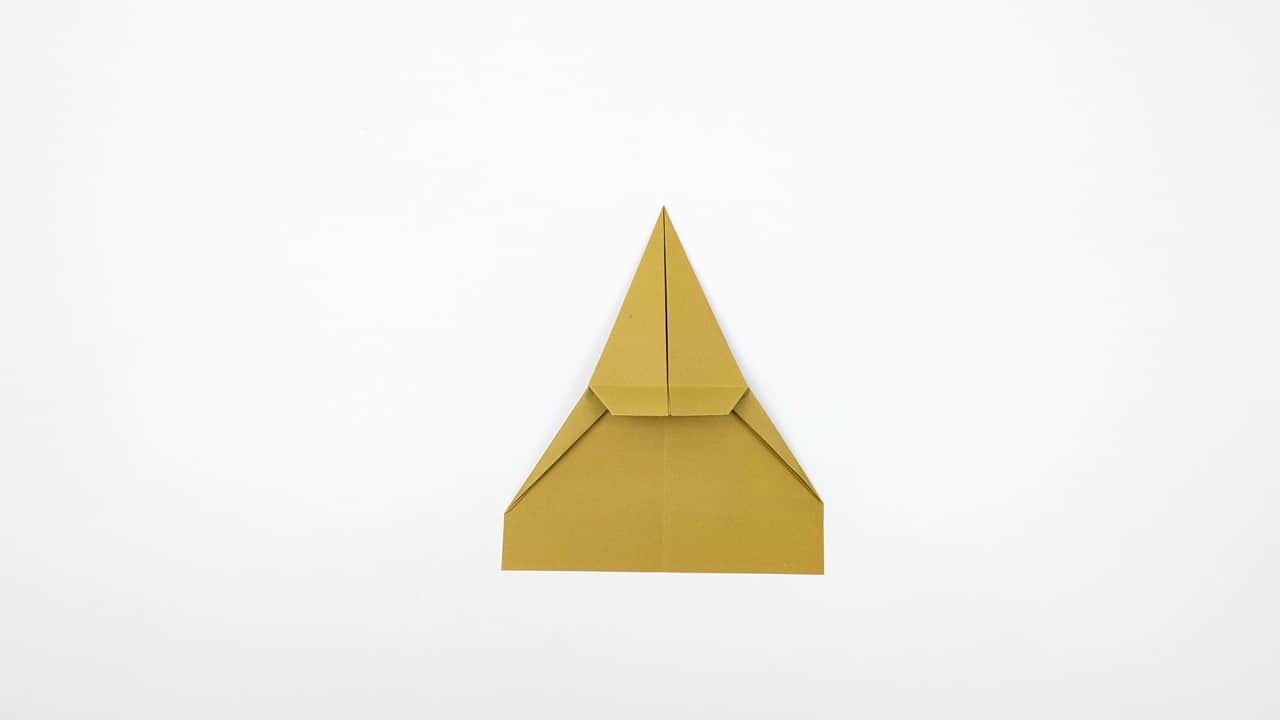
15Check both wings are even — hold the plane from behind and compare the wing angles.
 16
16Open the two wings out so they are flat and level, at roughly 90 degrees to the body.
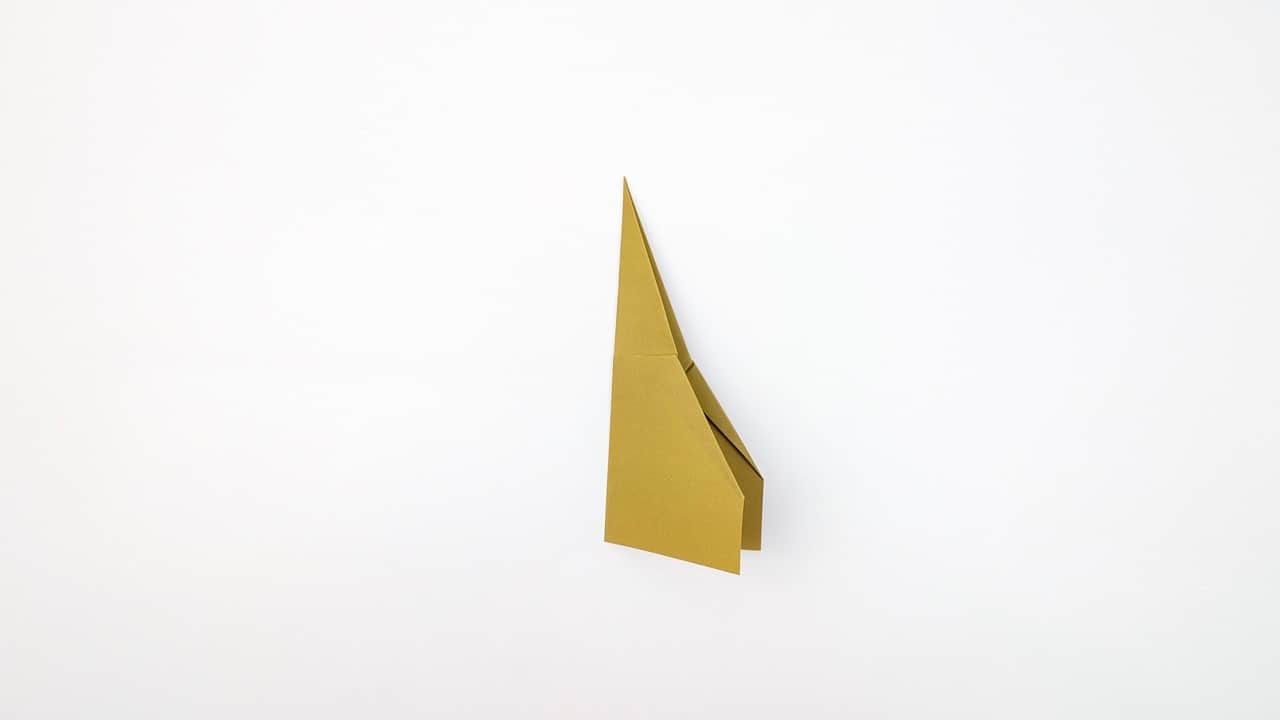 17
17Fold the tip of the right wing up slightly to form a small winglet at the end.
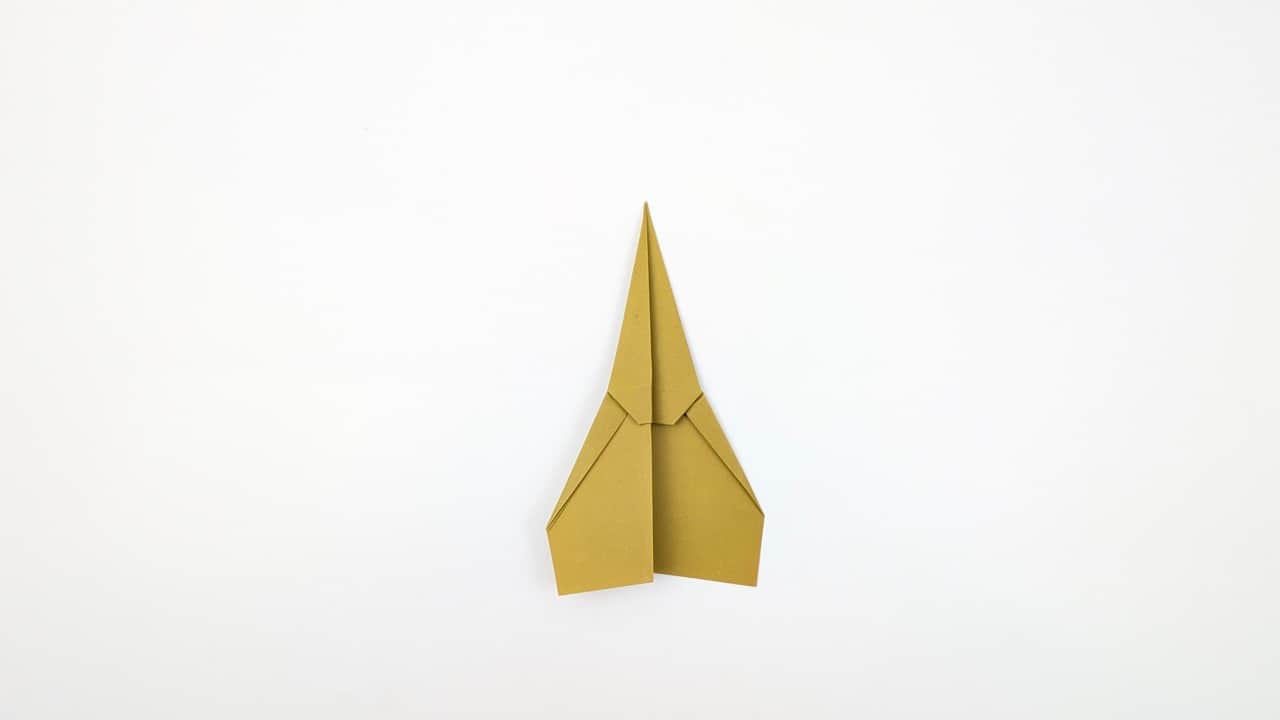 18
18Fold the tip of the left wing up in the same way. Winglets help stabilize the flight path.
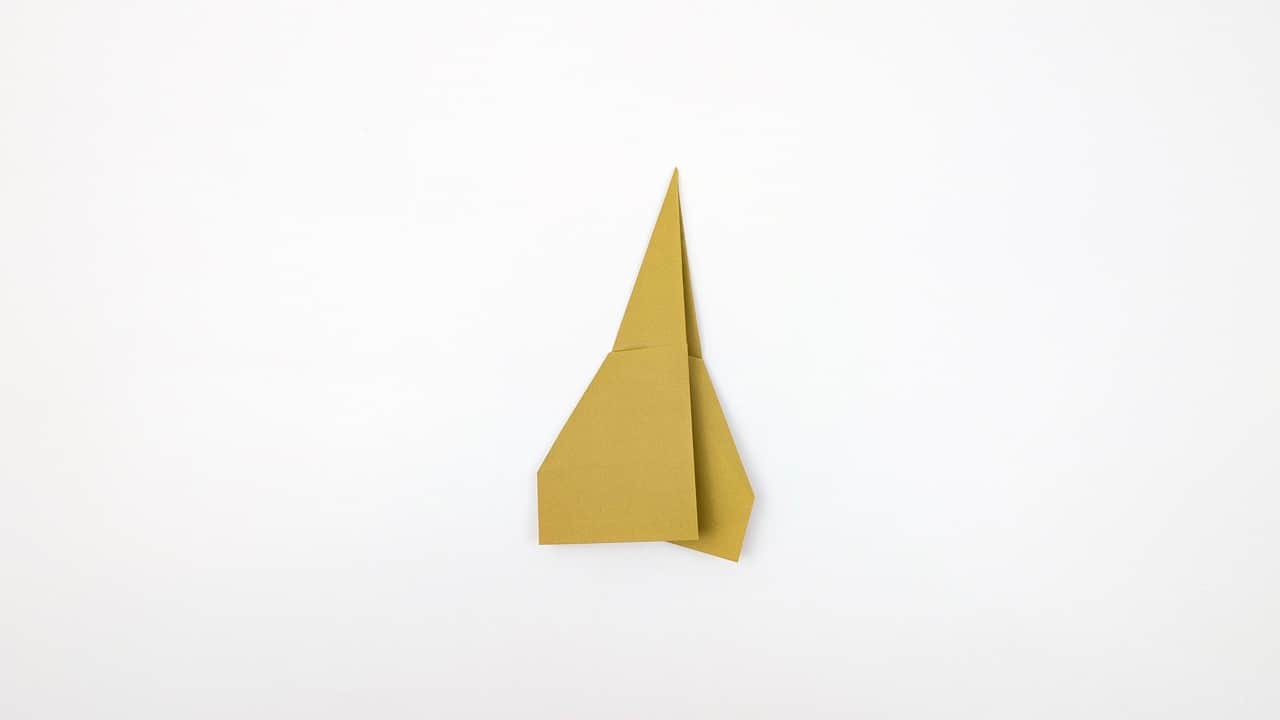 19
19Look at the airplane from the front. Both wings should be symmetrical and level.
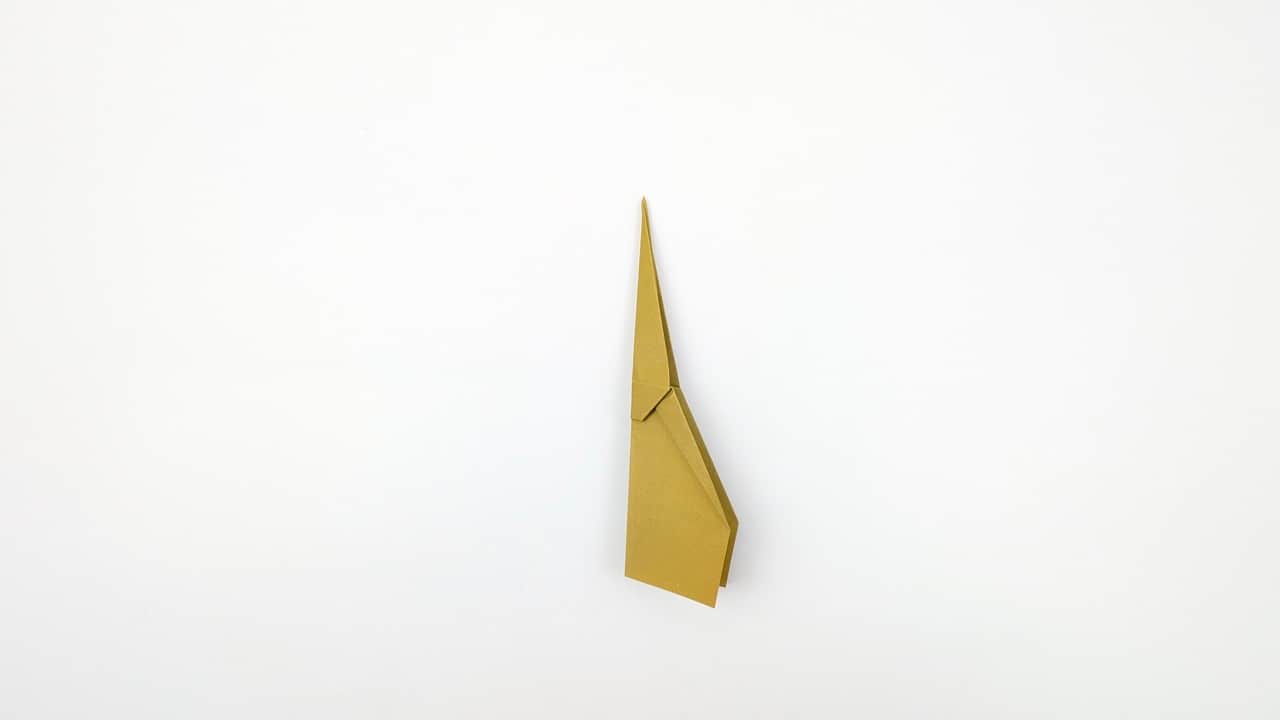 20
20Pinch the spine at the center to hold the airplane for throwing.
 21
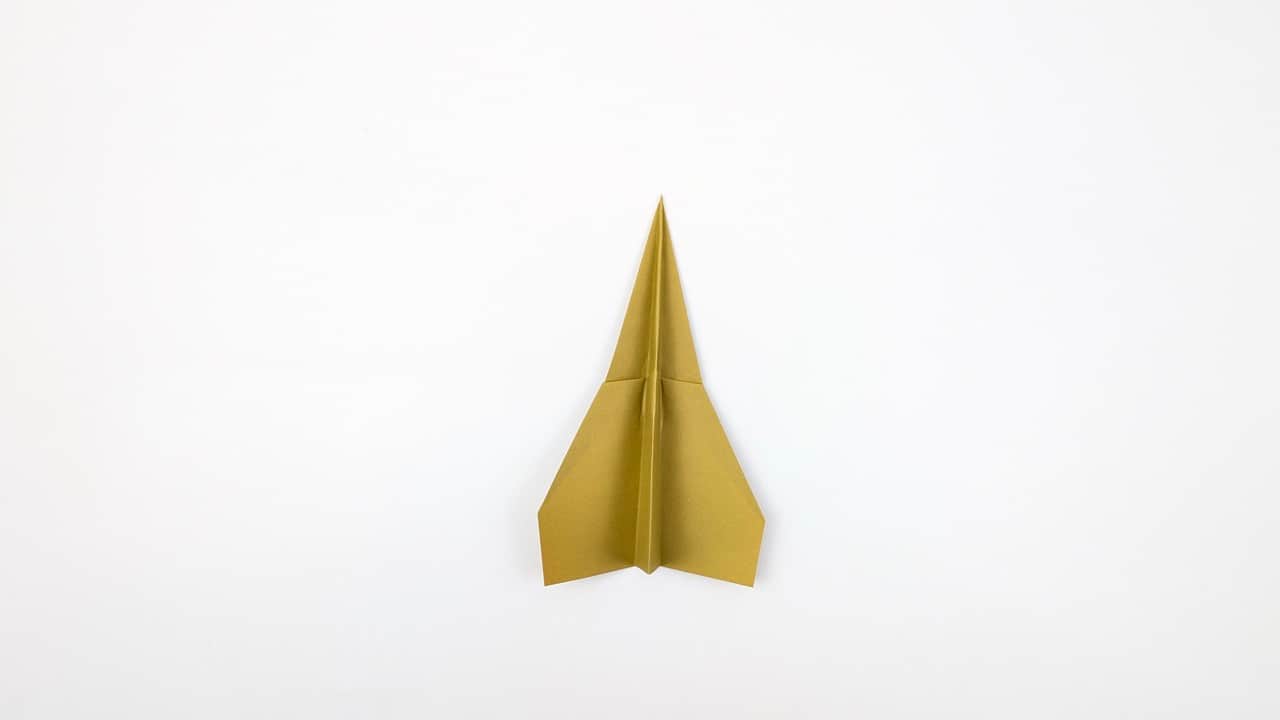
21Check the nose is still sharp and the two wing halves align cleanly.
 22
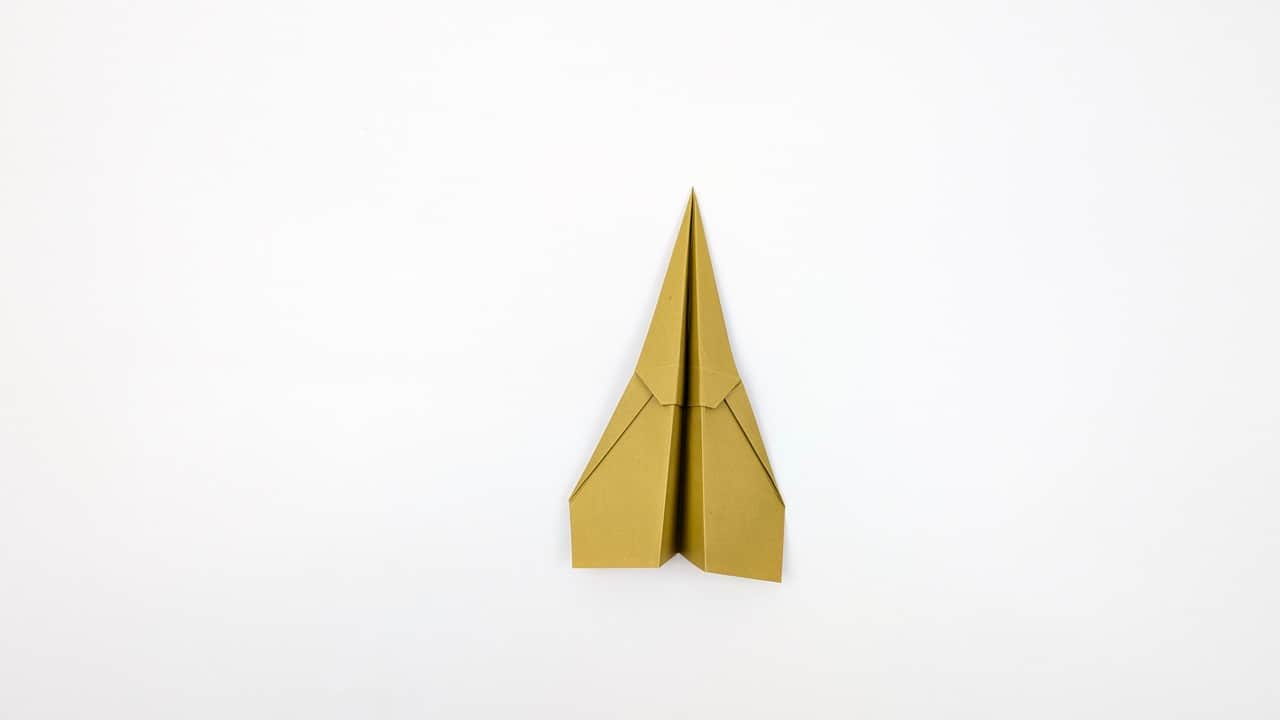
22For a straighter flight, adjust both wings so they angle very slightly upward.
 23
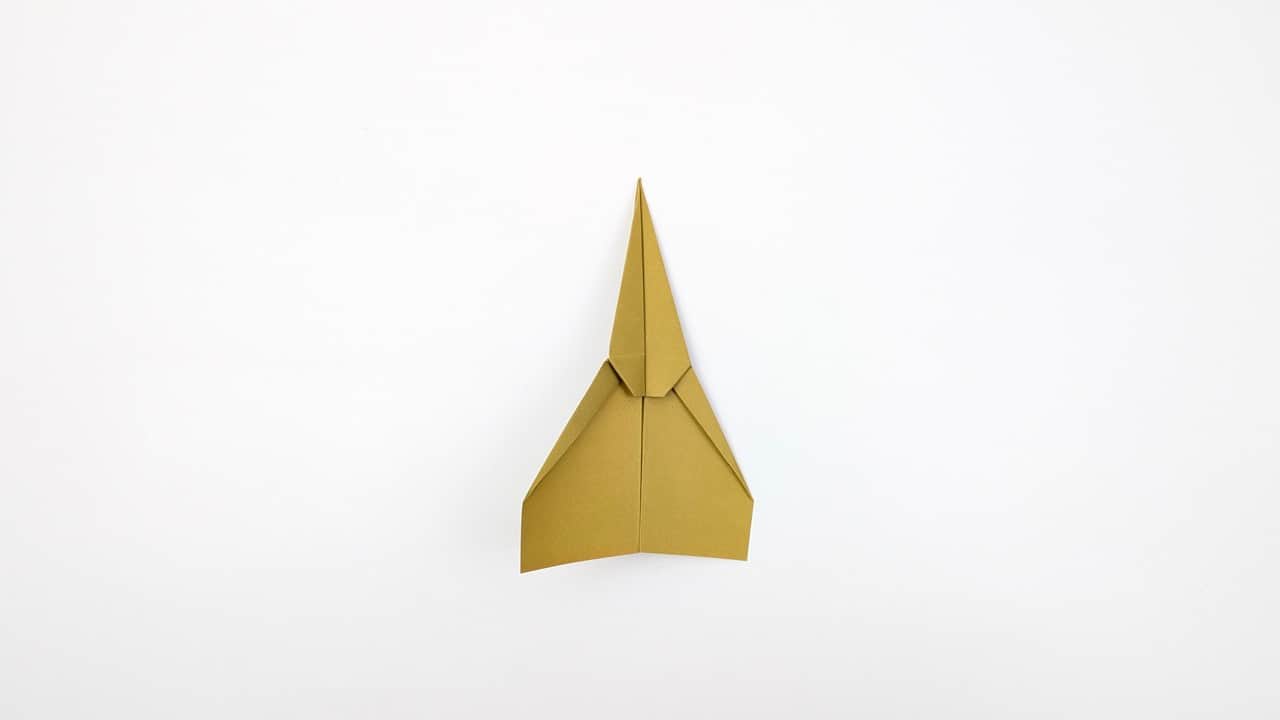
23For a faster, flatter flight, adjust both wings to perfectly horizontal.
 24
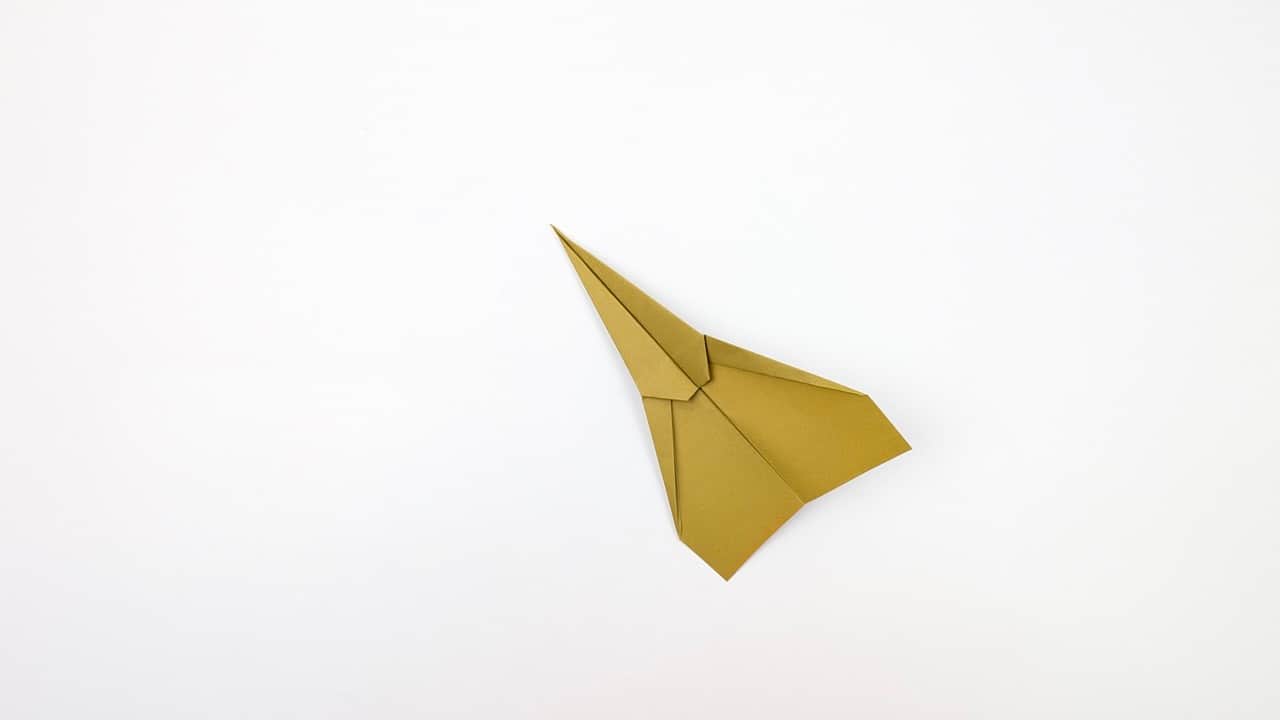
24Fold the trailing edge of each wing up slightly to act as an elevator — this helps the plane climb.
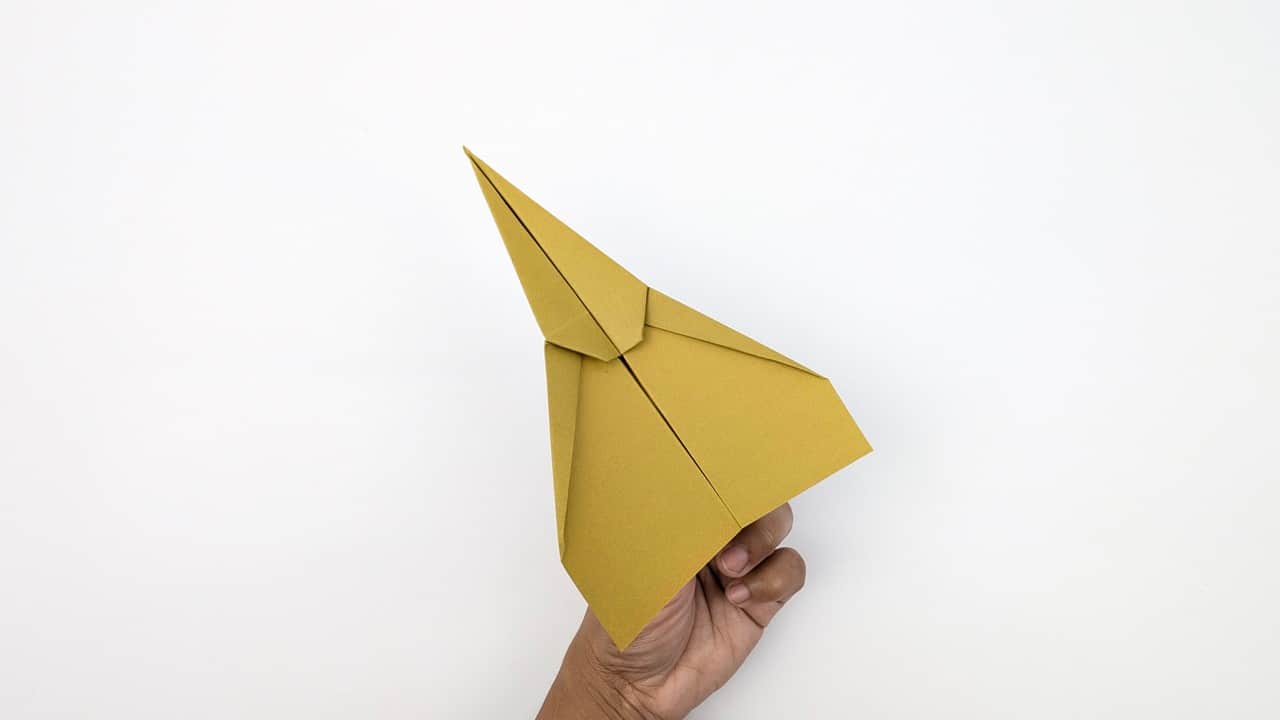 25
25Check the elevator folds are equal on both wings.
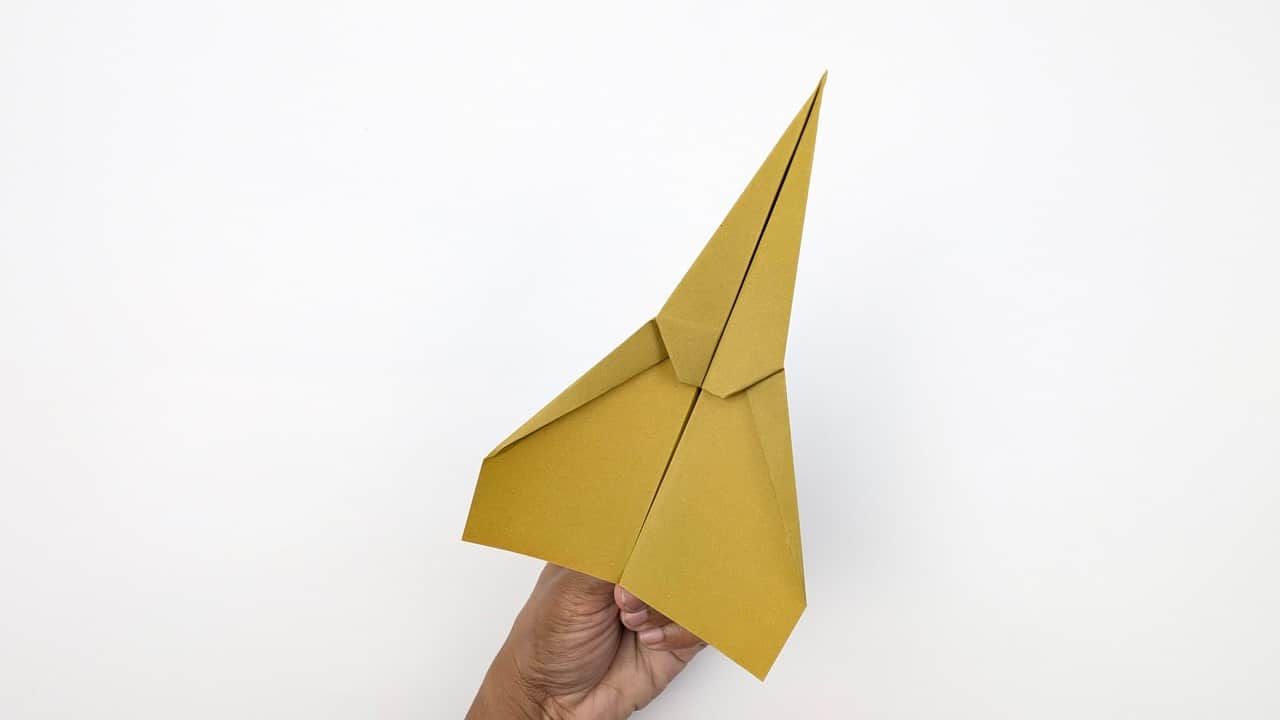 26
26Hold the airplane from below the spine, with your thumb and fingers on either side of the body near the center of gravity.
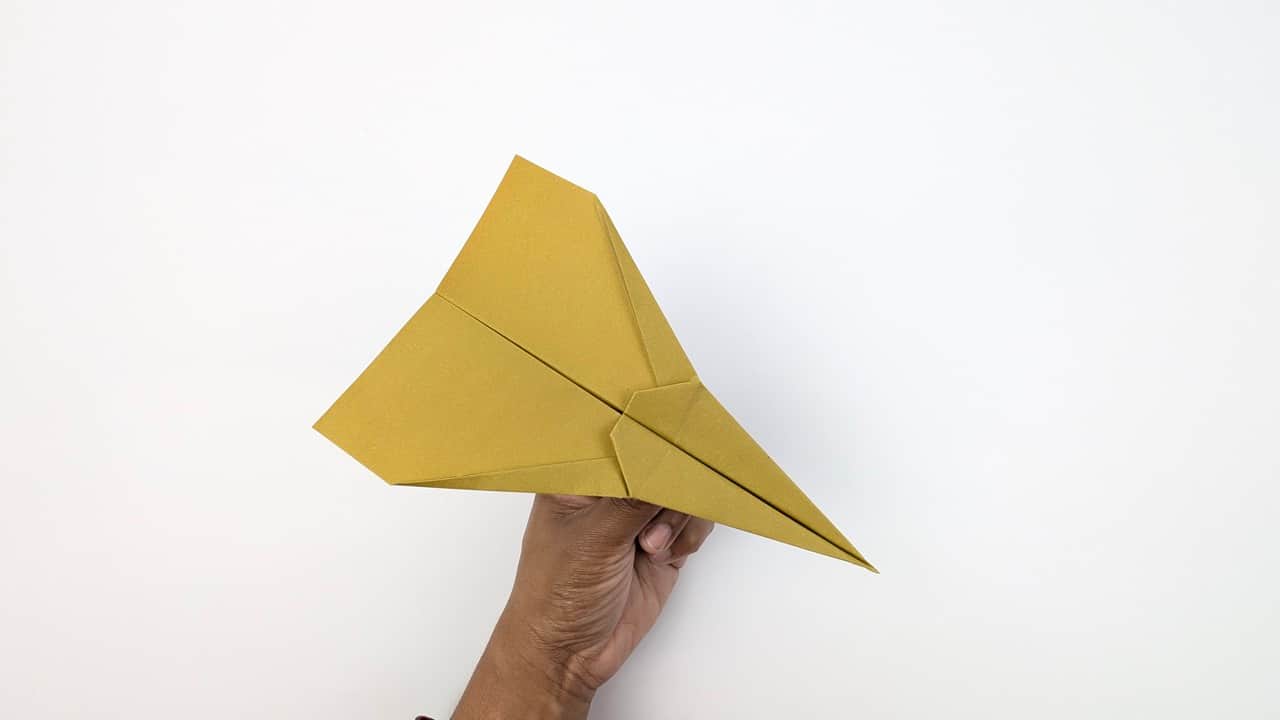 27
27Your paper airplane is ready to fly. Throw with a smooth, level motion — not too hard.
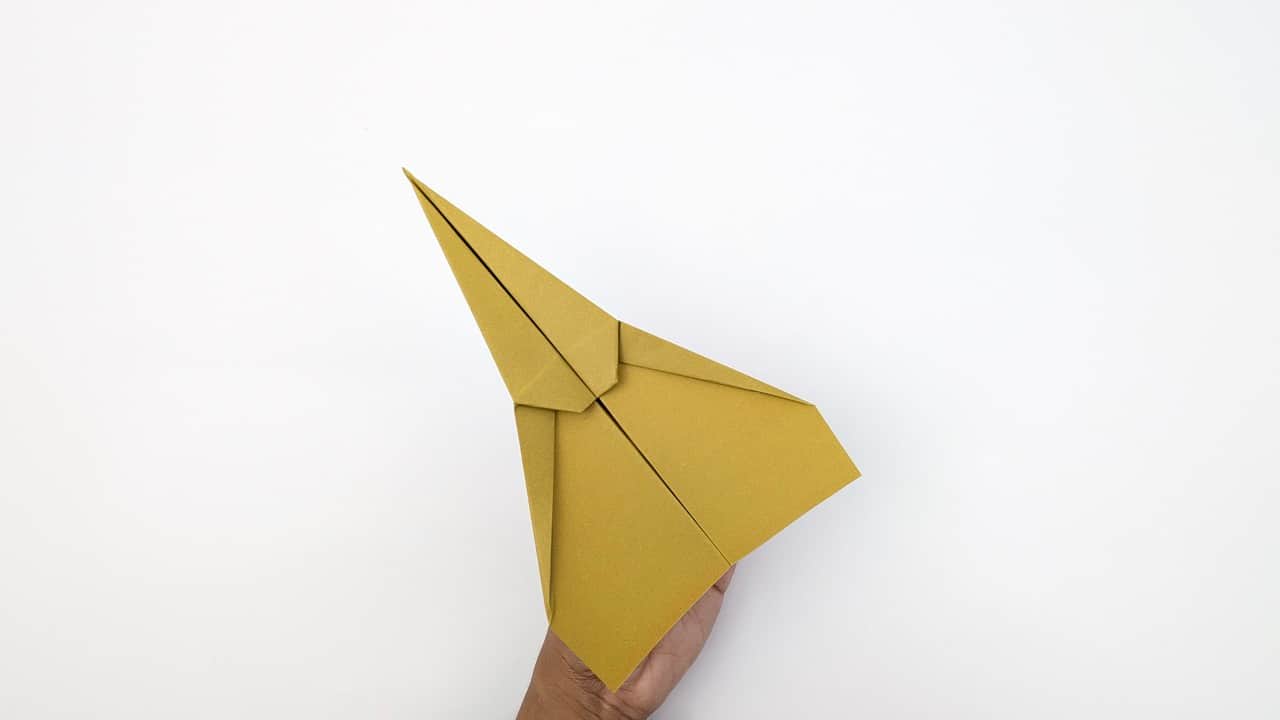 28
28If it dives, bend the trailing edges up more. If it stalls, bend them down slightly. Adjust until it glides perfectly.
Frequently Asked Questions
What paper should I use for the origami paper airplane?
Standard 15 cm x 15 cm origami paper (kami) works best for the Paper Airplane. The thin paper holds creases well and is easy to fold precisely.
How long does it take to fold the origami paper airplane?
This model takes approximately 5 minutes for someone with no experience. Beginners may need more time — that is completely normal. Take your time and focus on clean creases.
Is the origami paper airplane hard to make?
This model is rated easy. It is perfect for beginners and children. No prior experience needed.
Can kids make the origami paper airplane?
Yes! The Paper Airplane is a great origami project for children ages 5 and up. It uses simple folds and takes only 5 minutes.
What size paper works best for the Paper Airplane?
For the Paper Airplane, we recommend a standard 15 cm (6 inch) square. Larger paper gives you more room to work with and is especially helpful for your first attempt.
What other folds should I learn after the Paper Airplane?
After mastering the Paper Airplane, try the Simple Bird, Fortune Teller, Ninja Star. These models share similar techniques and will build your skills.