Origami Shark
The origami shark is a dramatic and rewarding model that produces a recognizable, three-dimensional fish shape with an open mouth and pointed fins. At 55 steps it is more challenging than most beginner models, but the process is methodical and the finished result is impressive enough to display.
Video Tutorial
Step-by-Step Instructions
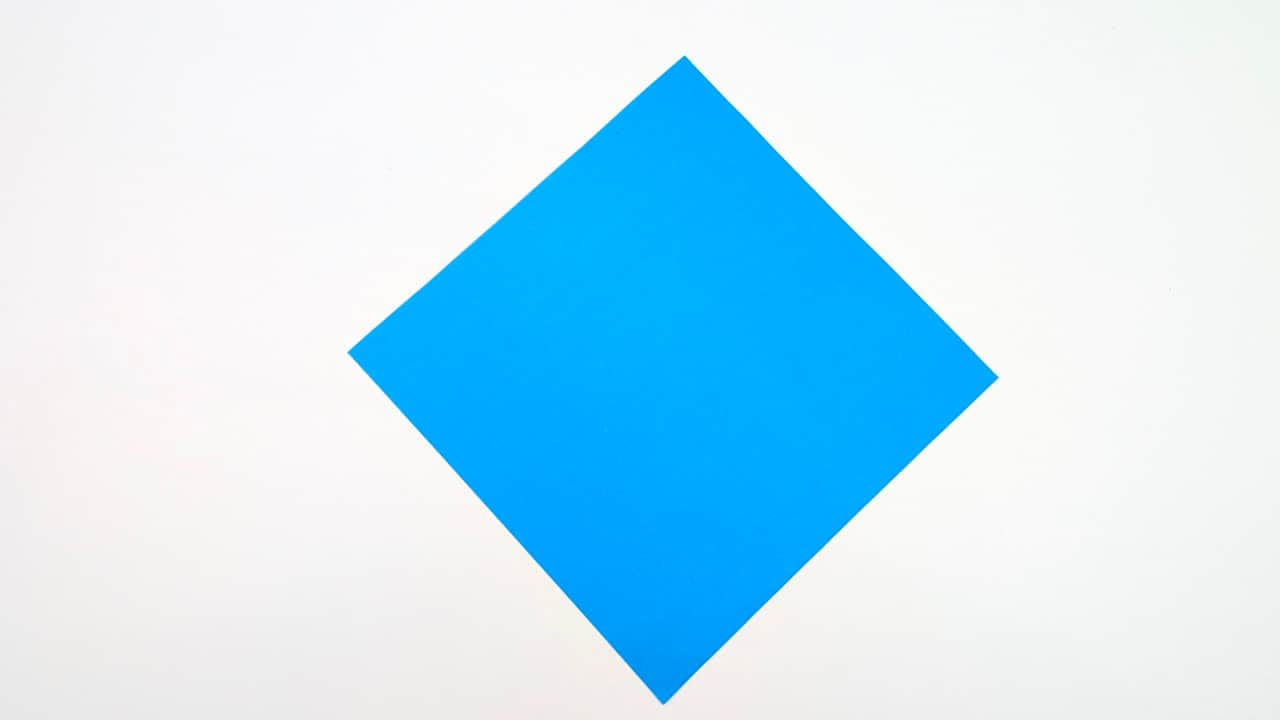 1
1Start with a square sheet of paper, blue or grey side up. Place it as a diamond.
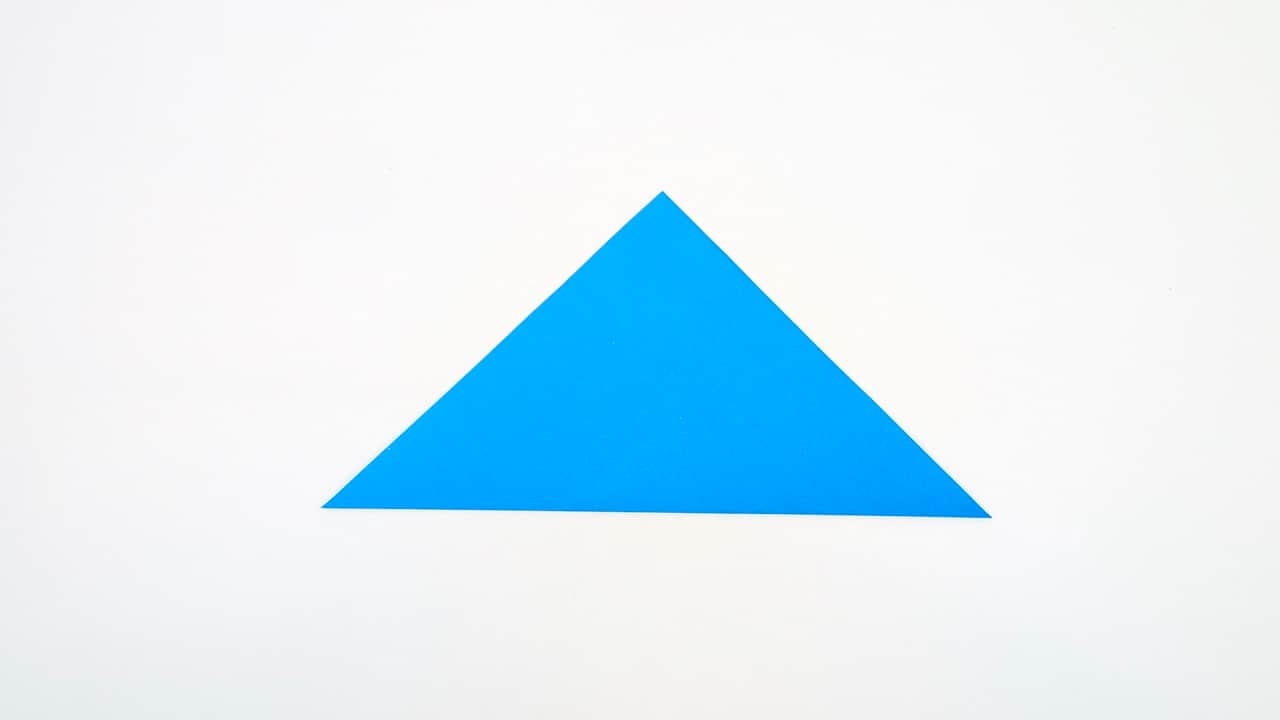 2
2Fold the paper in half diagonally from bottom to top. Crease and unfold.
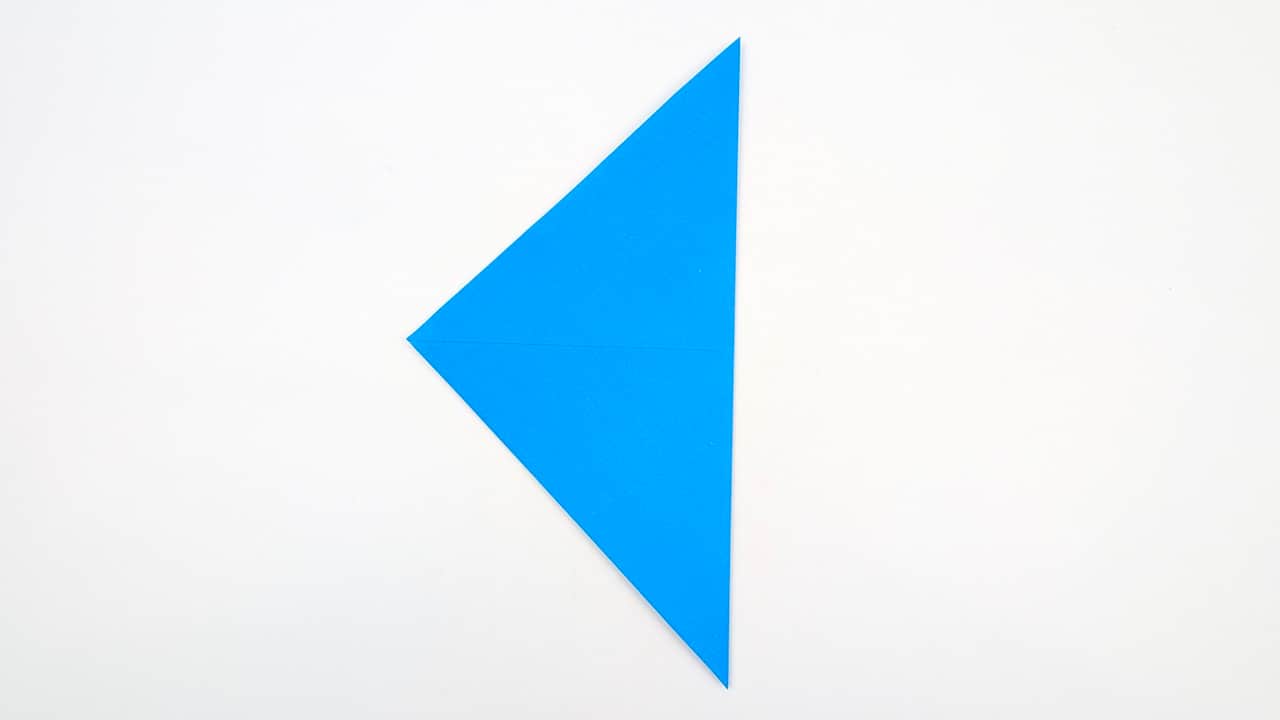 3
3Fold the paper in half diagonally in the other direction. Crease and unfold.
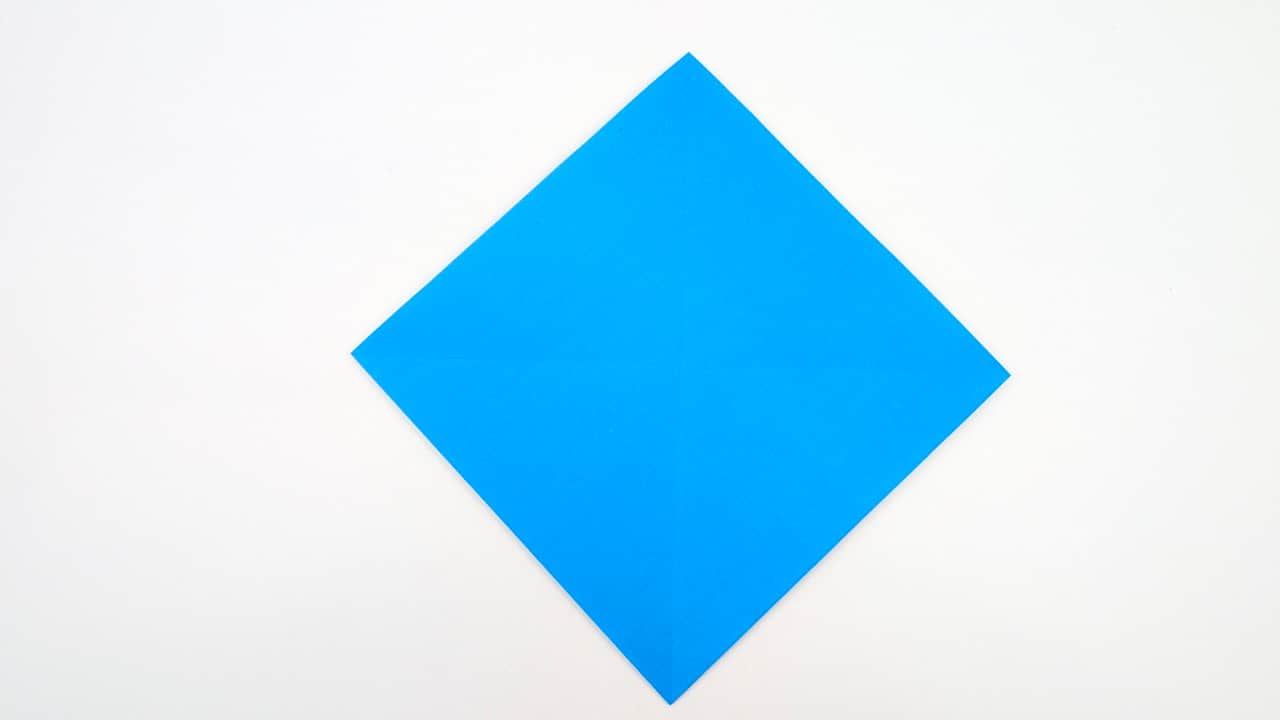 4
4Fold the paper in half horizontally. Crease and unfold.
 5
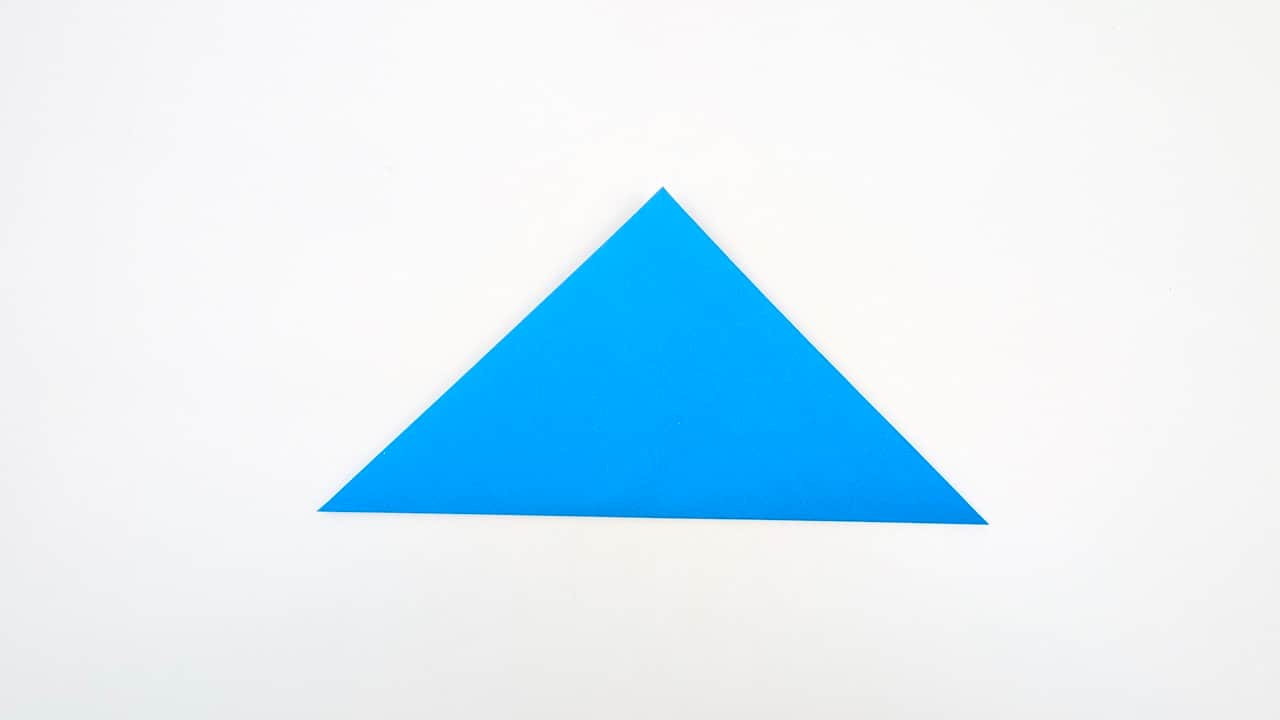
5Fold the paper in half vertically. Crease and unfold. You now have a grid of reference creases.
 6
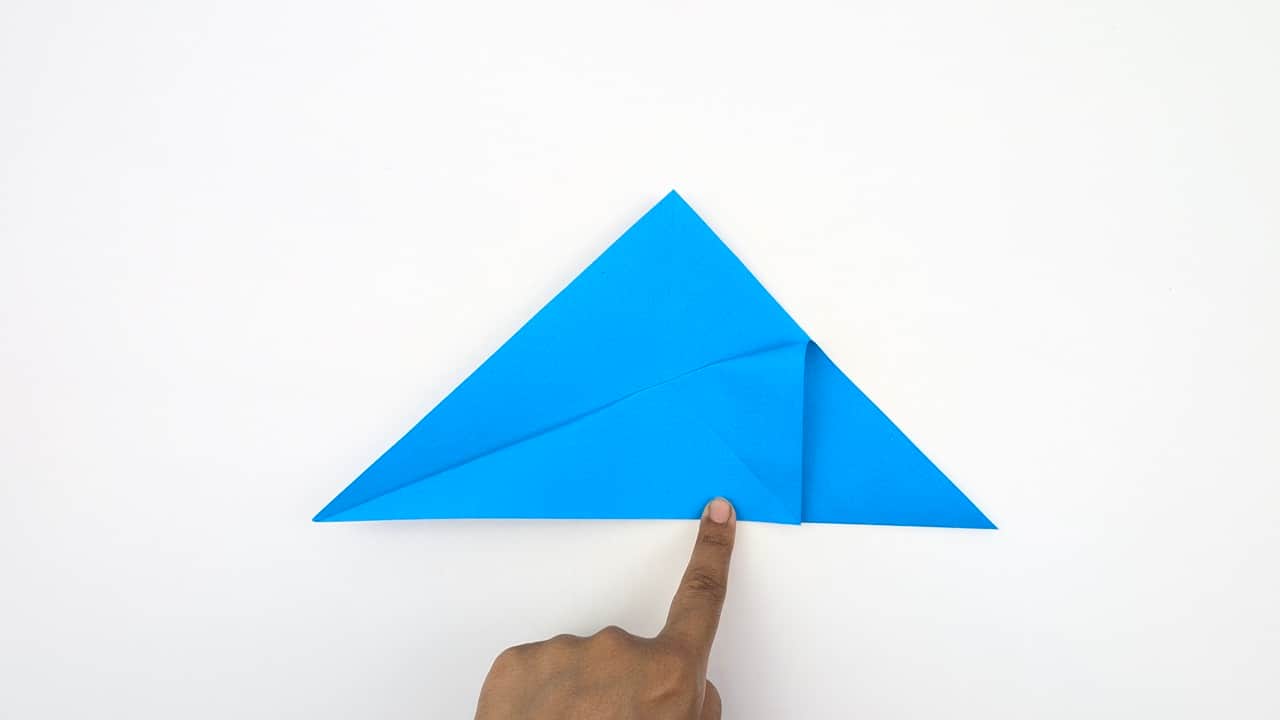
6Bring the top point down to the bottom point while pushing the sides inward to collapse into a preliminary base (square base).
 7
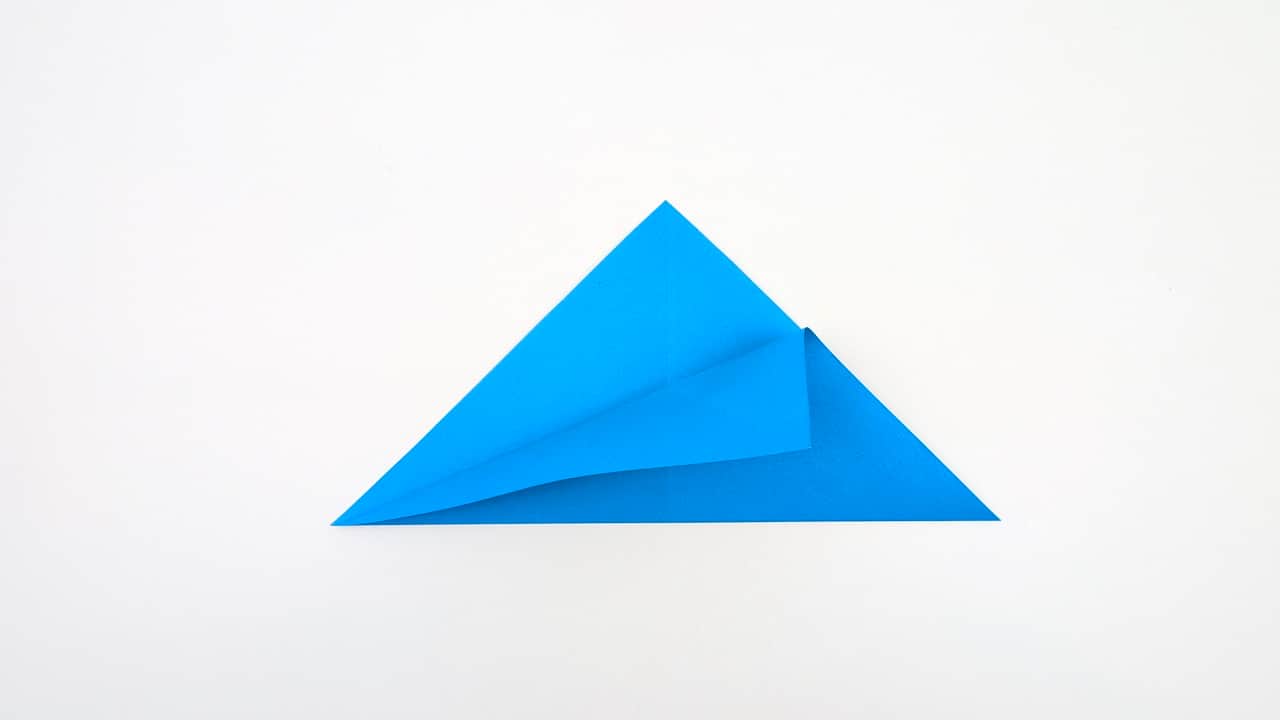
7The preliminary base should be a flat square with open flaps at the bottom.
 8
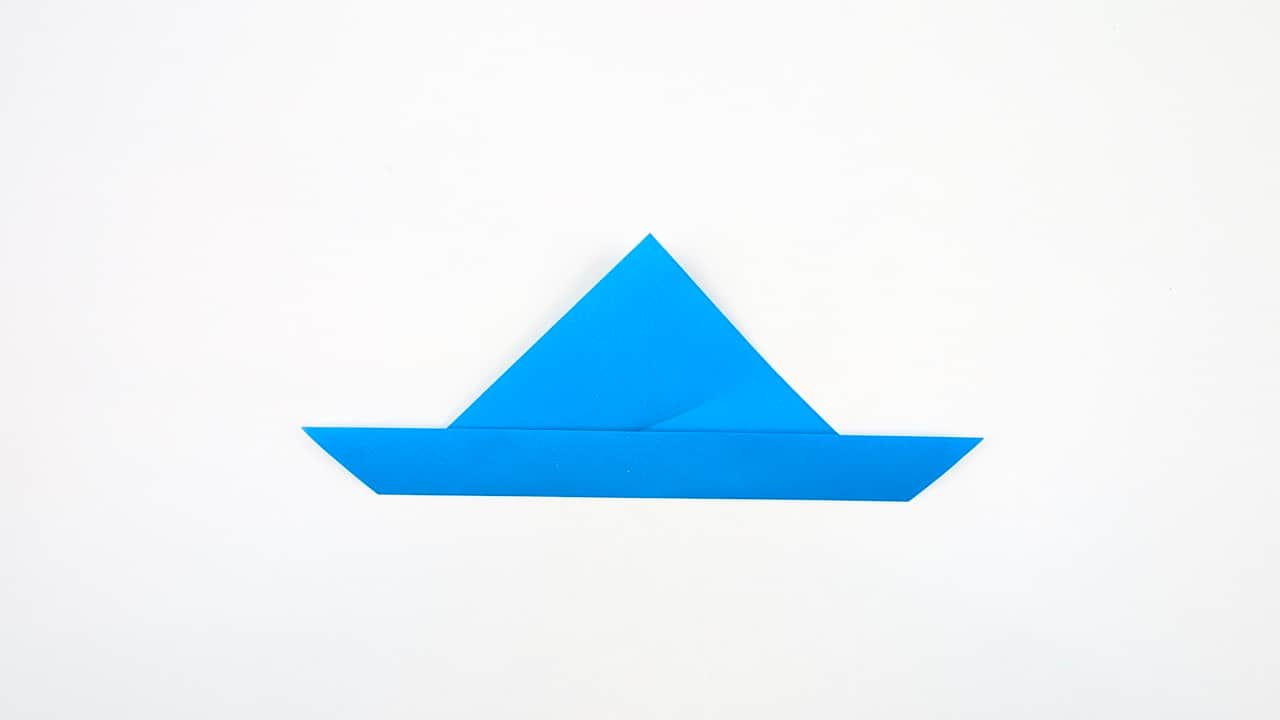
8Fold the right front flap to the left along the center crease.
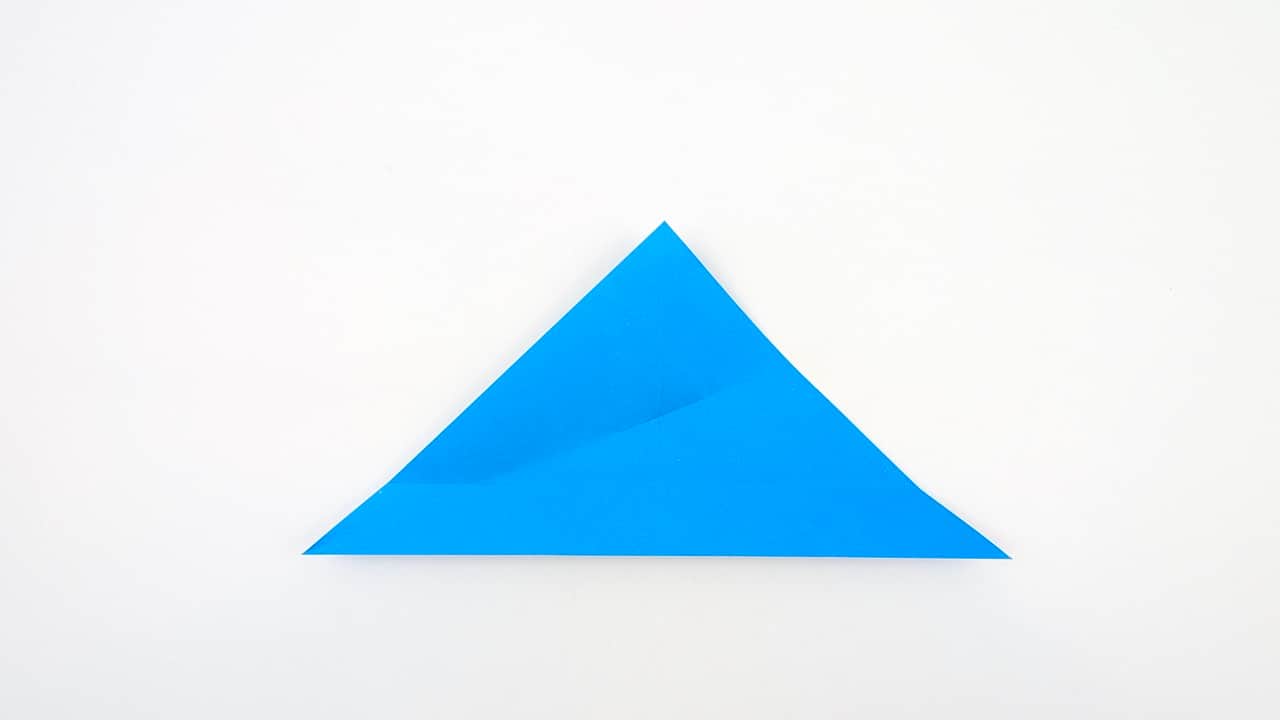 9
9Fold the top right edge of the front layer down to the center crease.
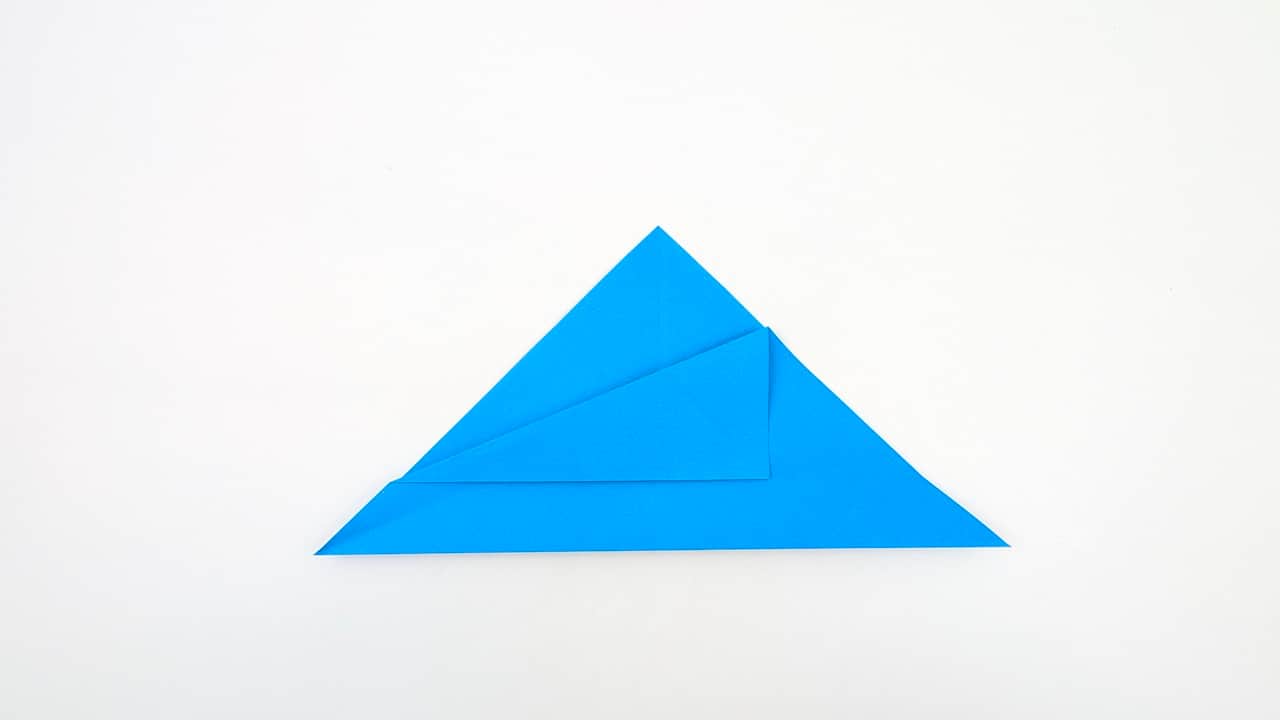 10
10Fold the top left edge of the front layer down to the center crease.
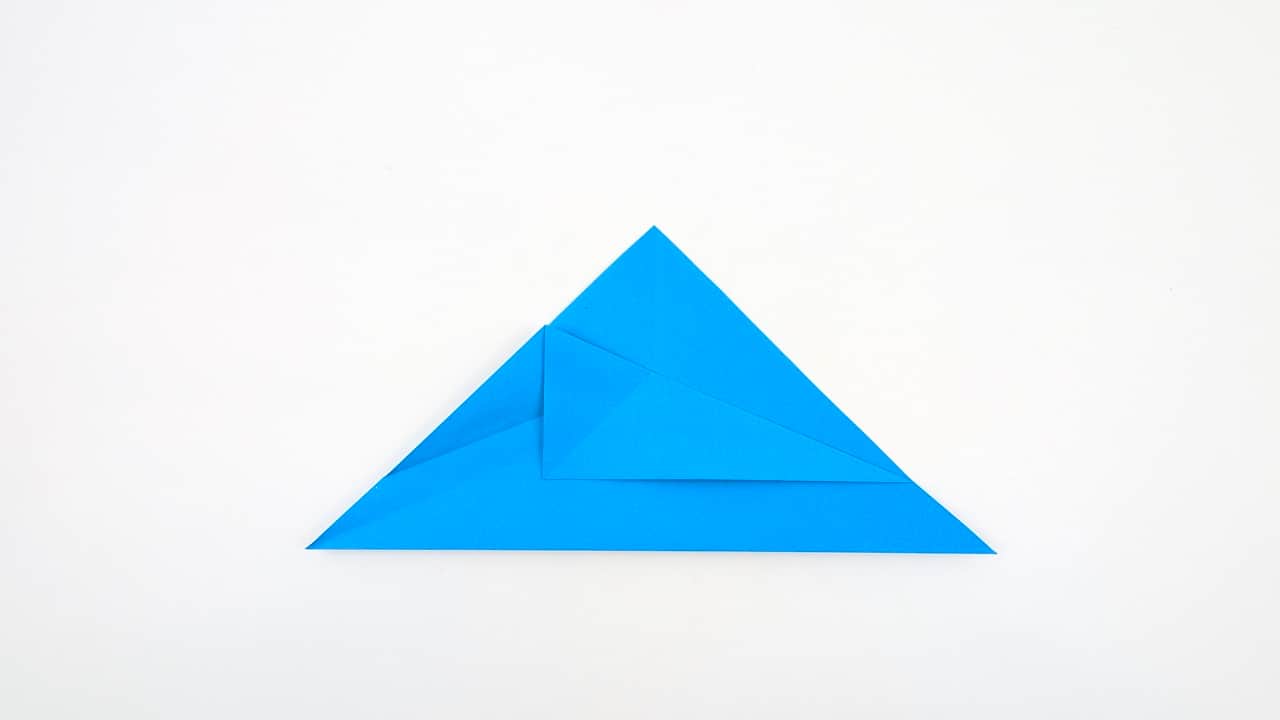 11
11Lift the bottom point of the front layer up while opening the two flaps — squash into a petal fold.
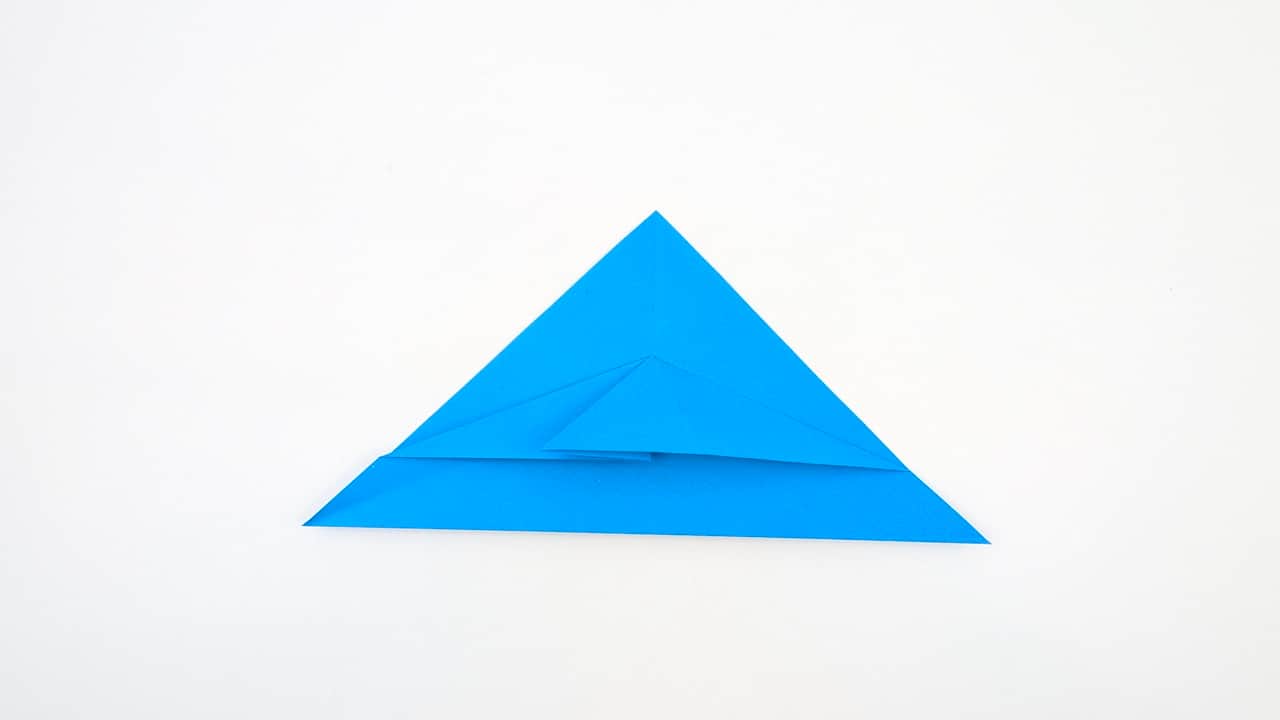 12
12Crease the petal fold flat, pressing down firmly on all edges.
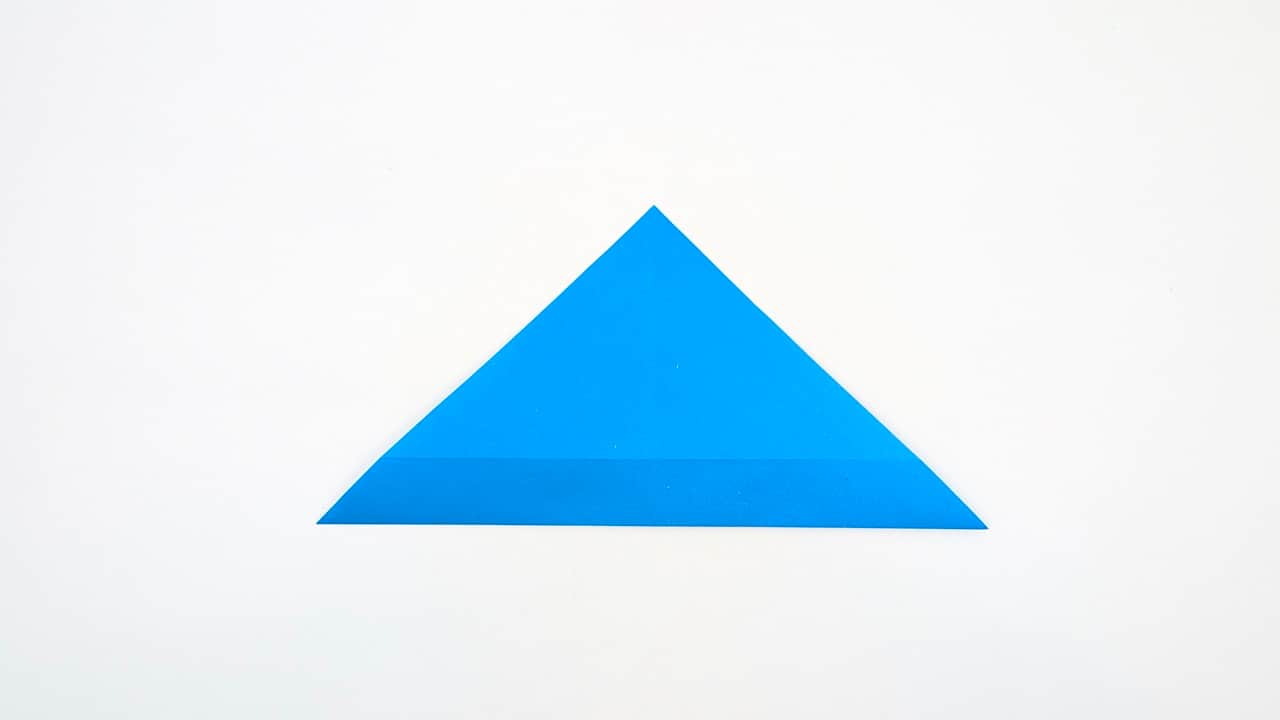 13
13Flip the model over. Repeat the petal fold on the back layer.
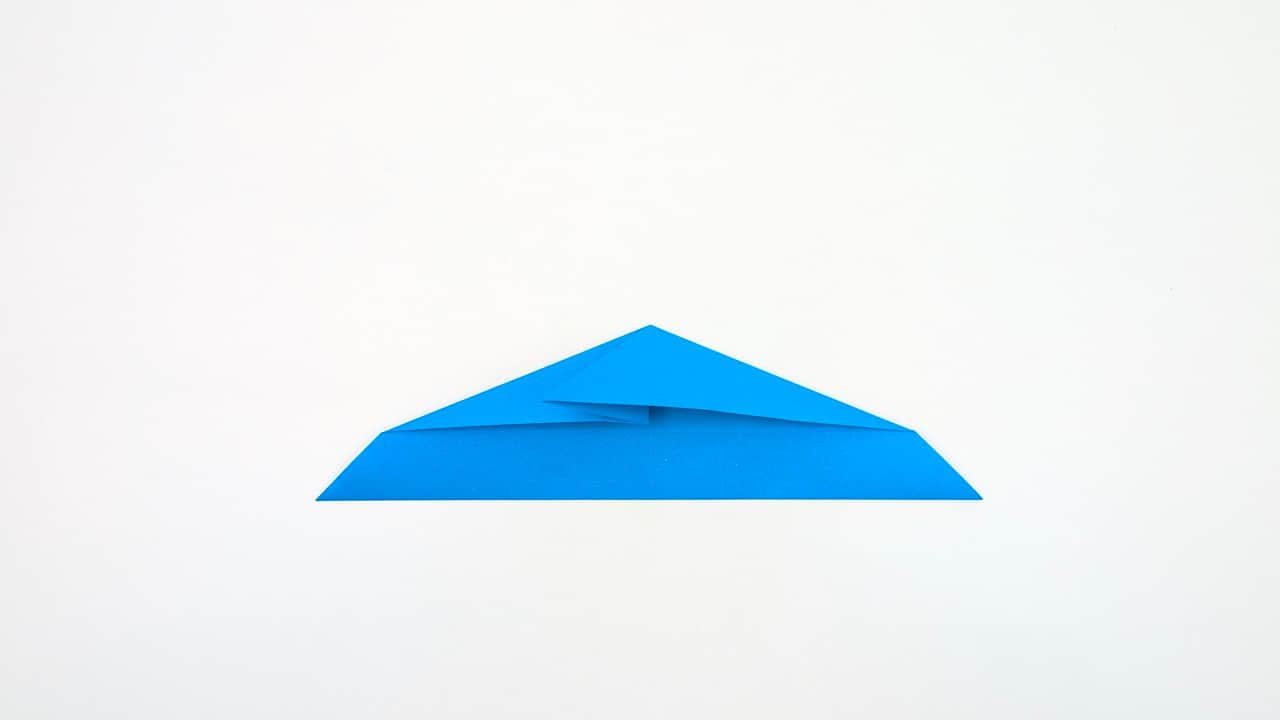 14
14You now have a bird base with four long points extending from the center.
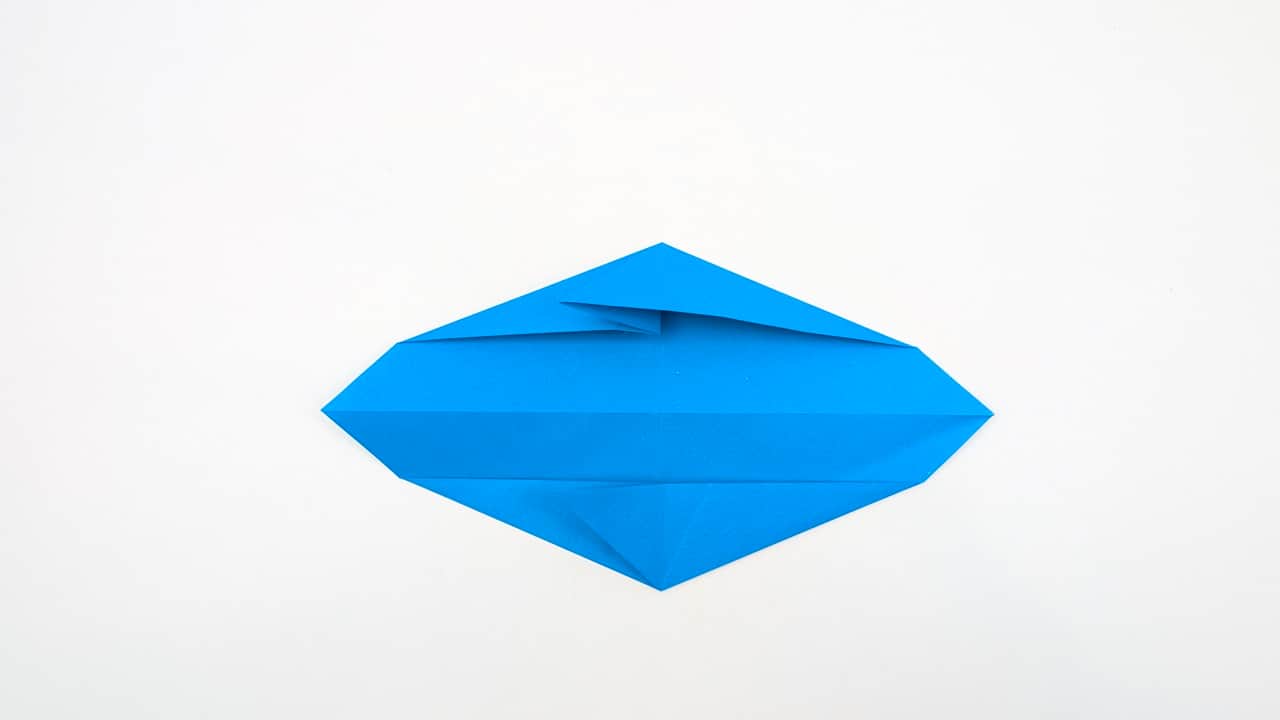 15
15Fold the bottom left point up to the top, aligning it with the center crease.
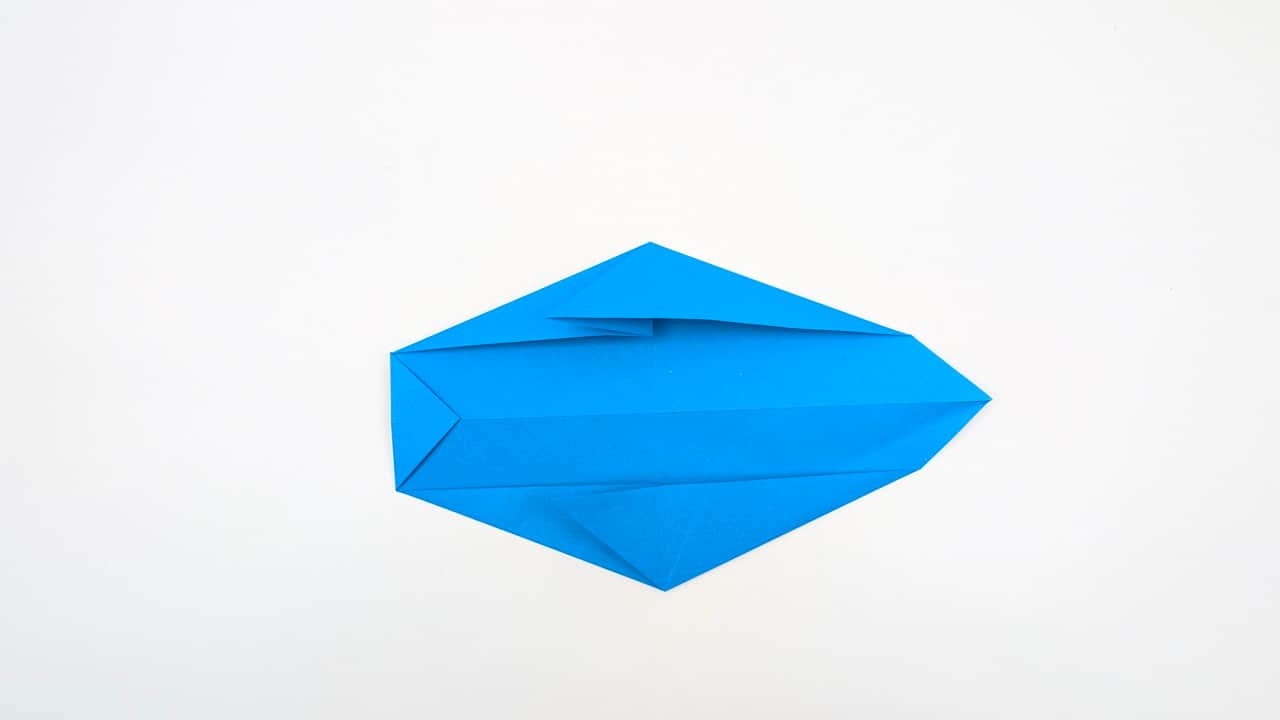 16
16Fold the bottom right point up to the top in the same way.
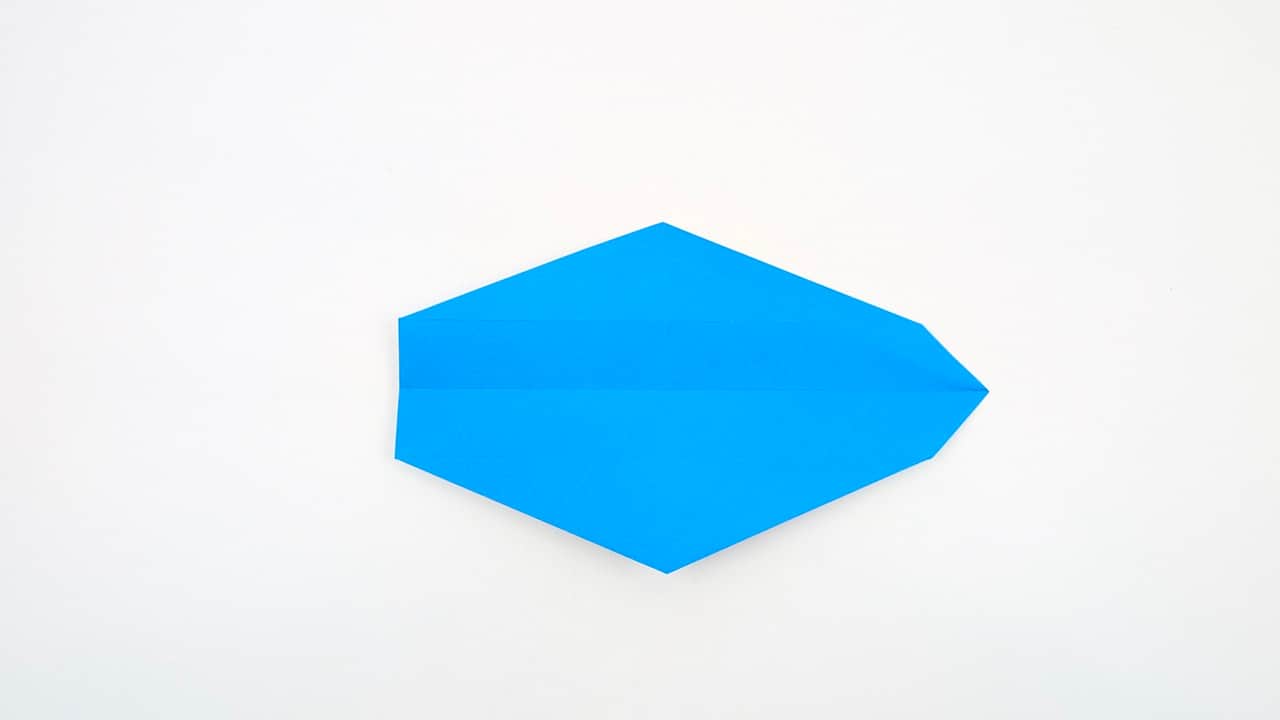 17
17Open the two bottom flaps out to form the tail section of the shark.
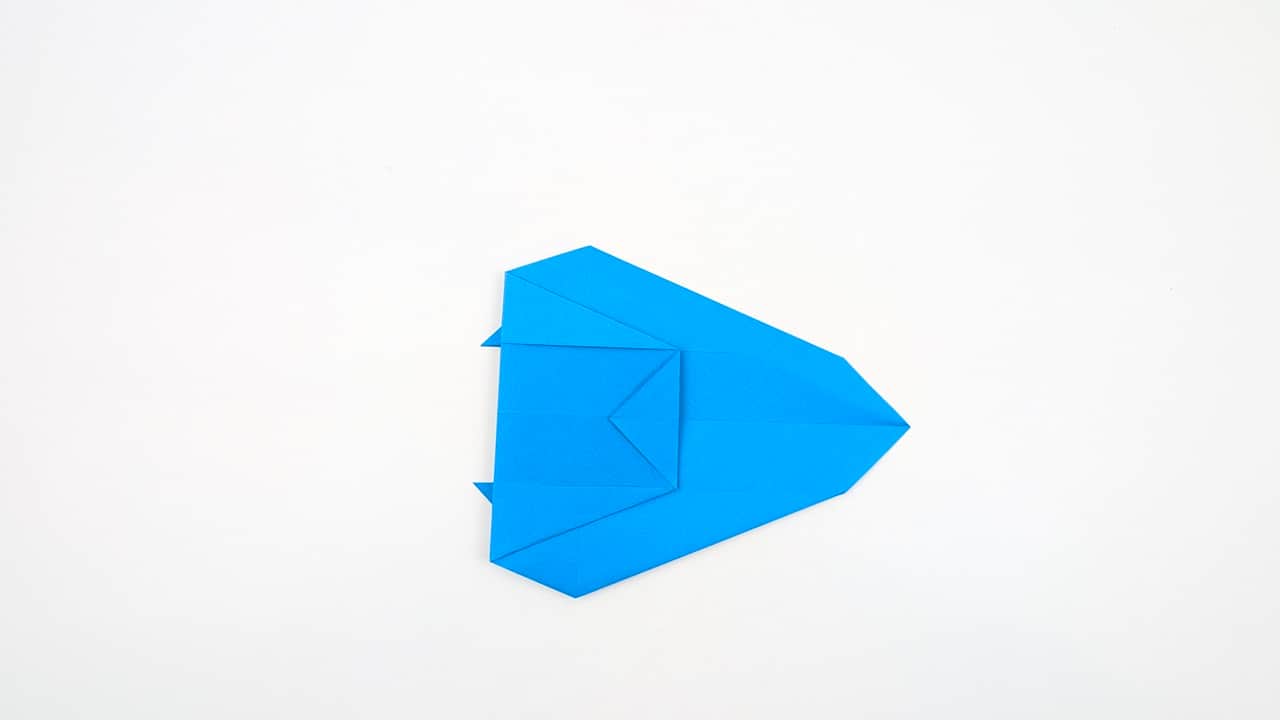 18
18Fold the top point of the front layer downward to begin forming the head.
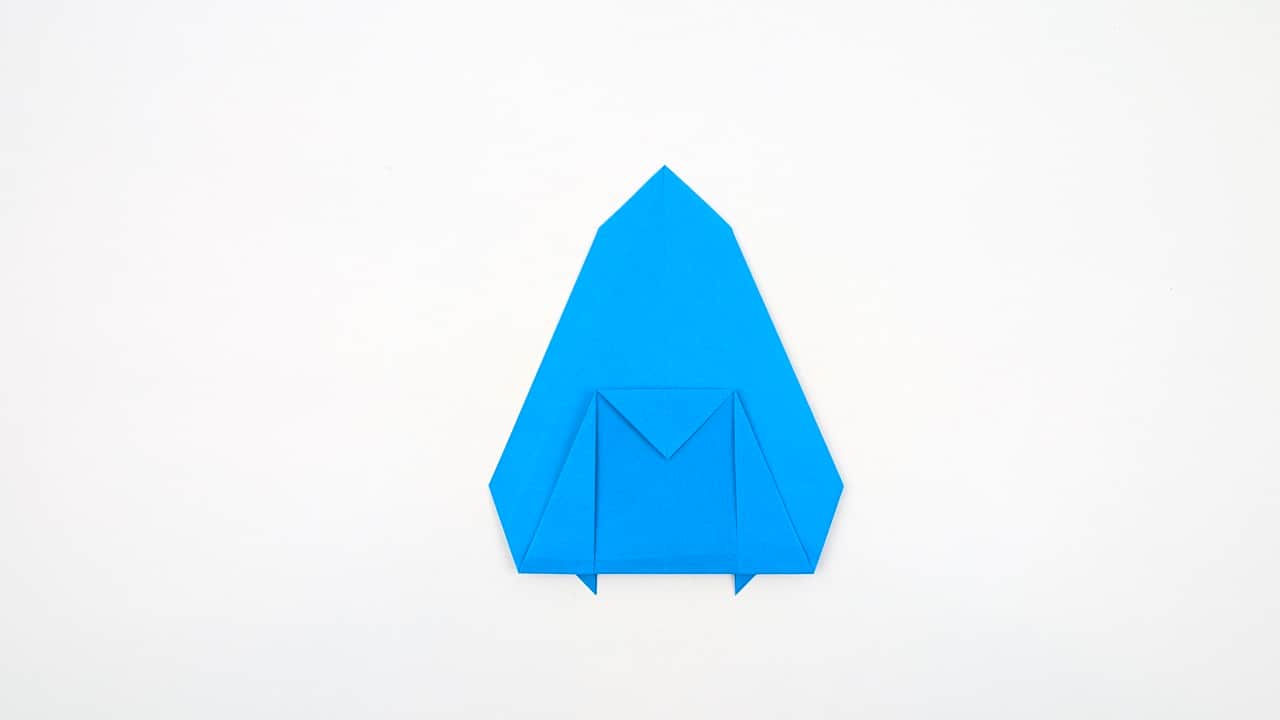 19
19Fold the top point back upward at a shorter distance to create the nose profile.
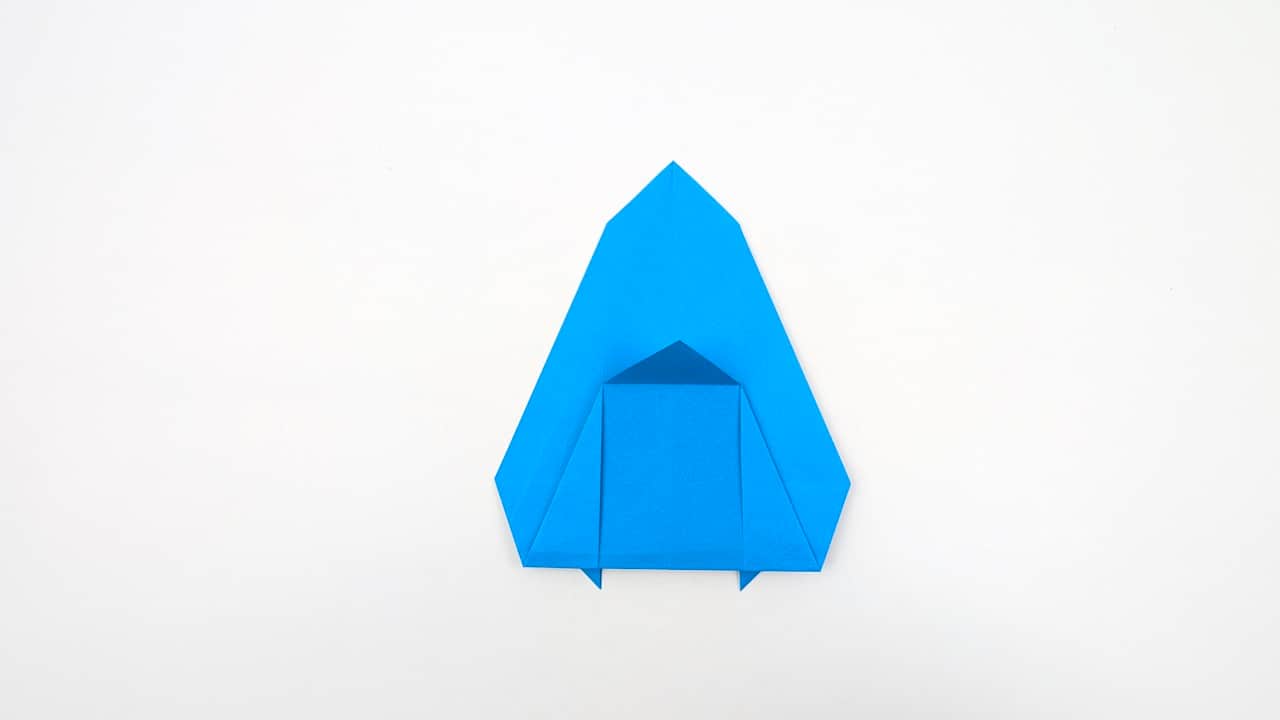 20
20Fold the right side of the head section diagonally inward to narrow the nose.
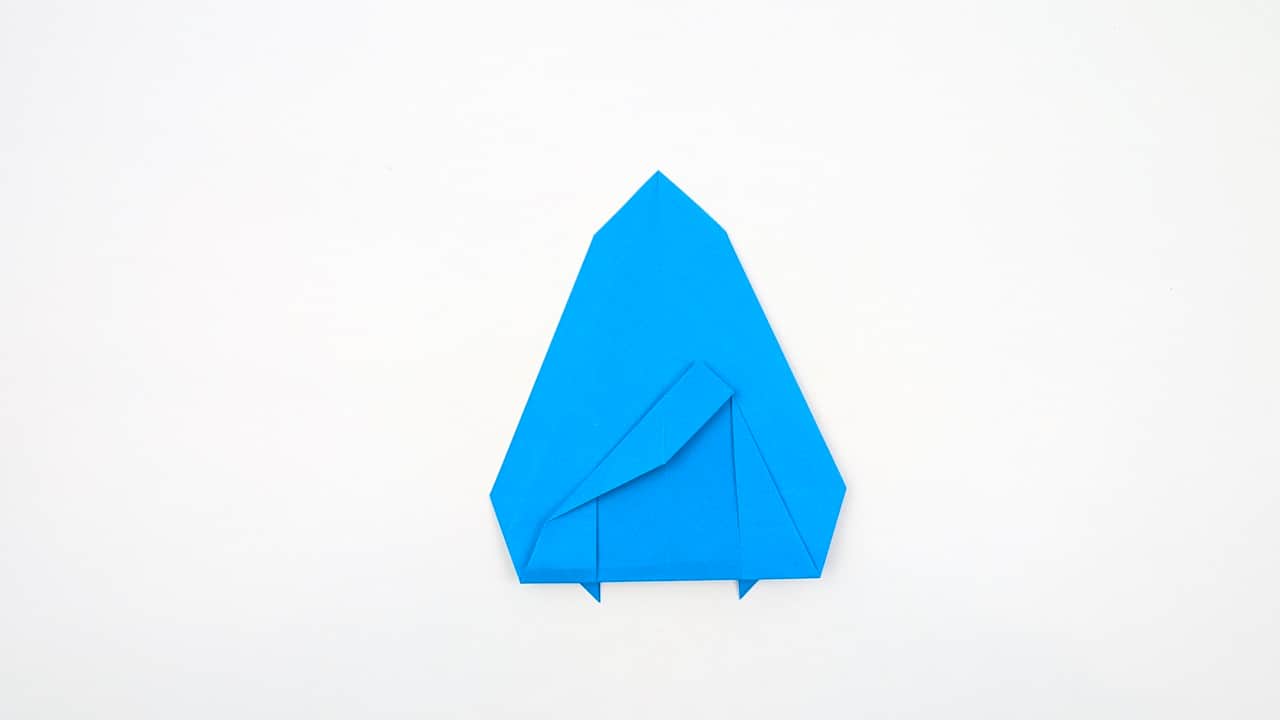 21
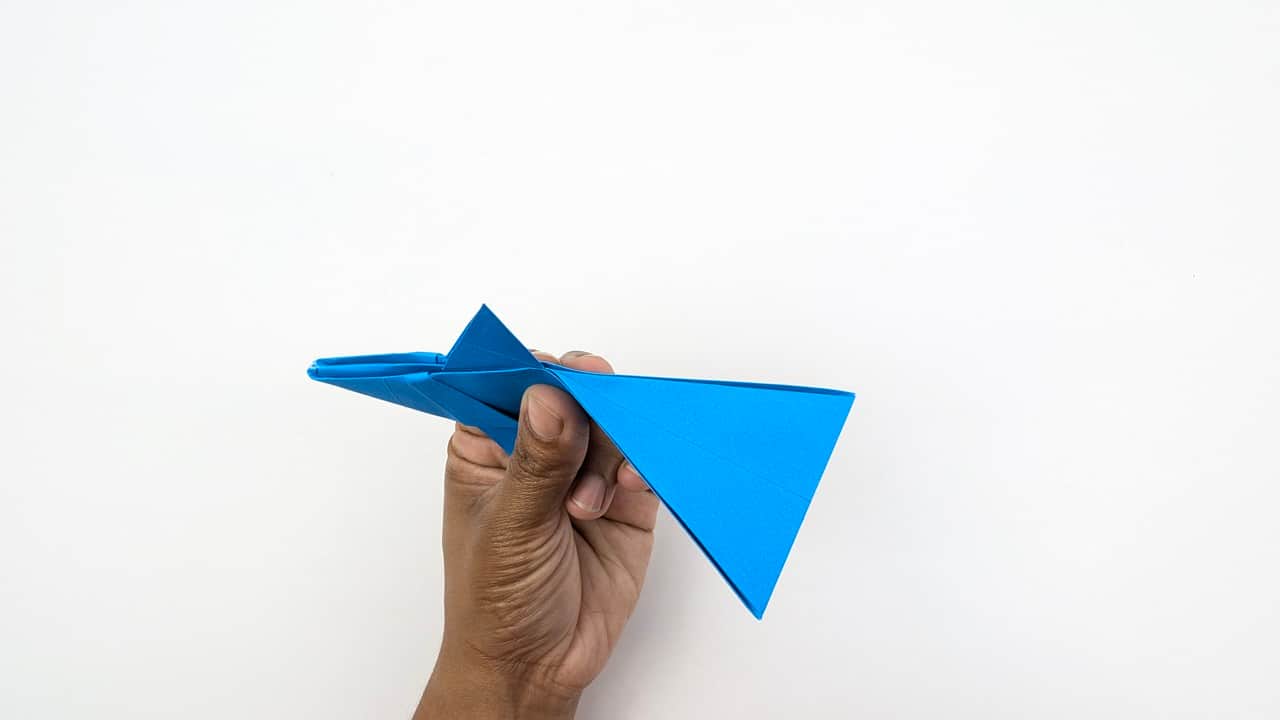
21Fold the left side of the head section diagonally inward to match the right.
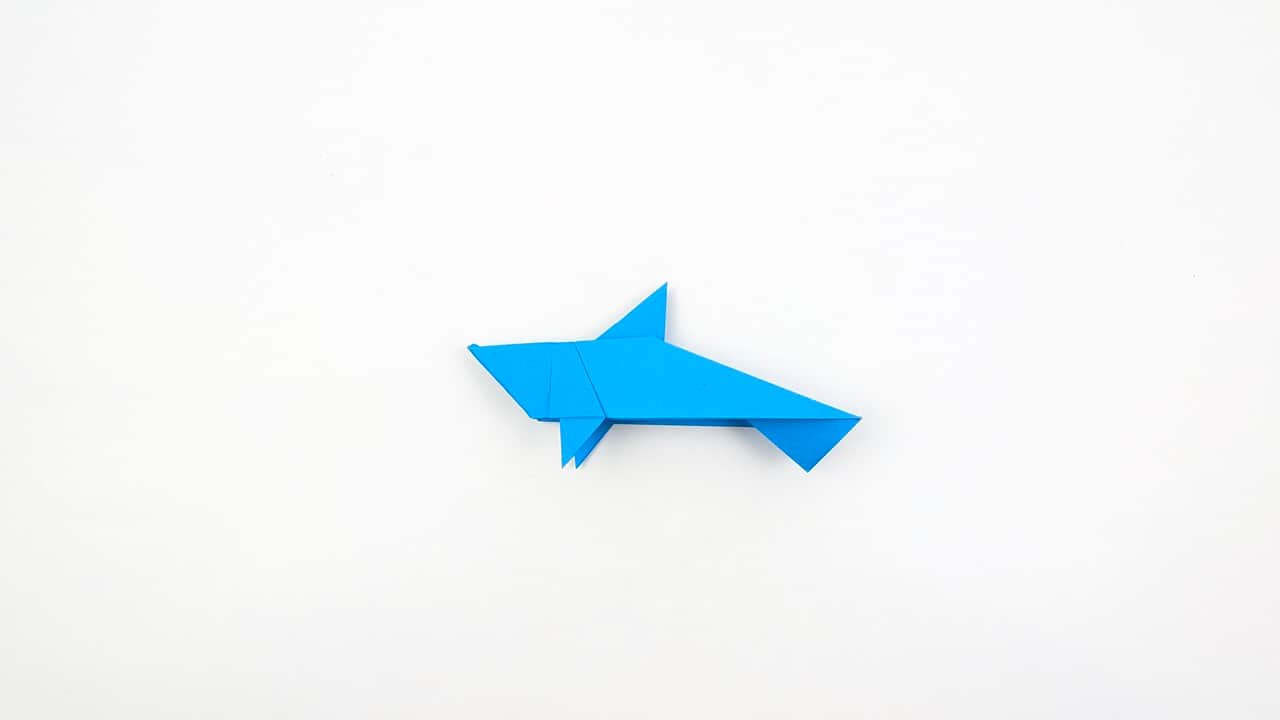
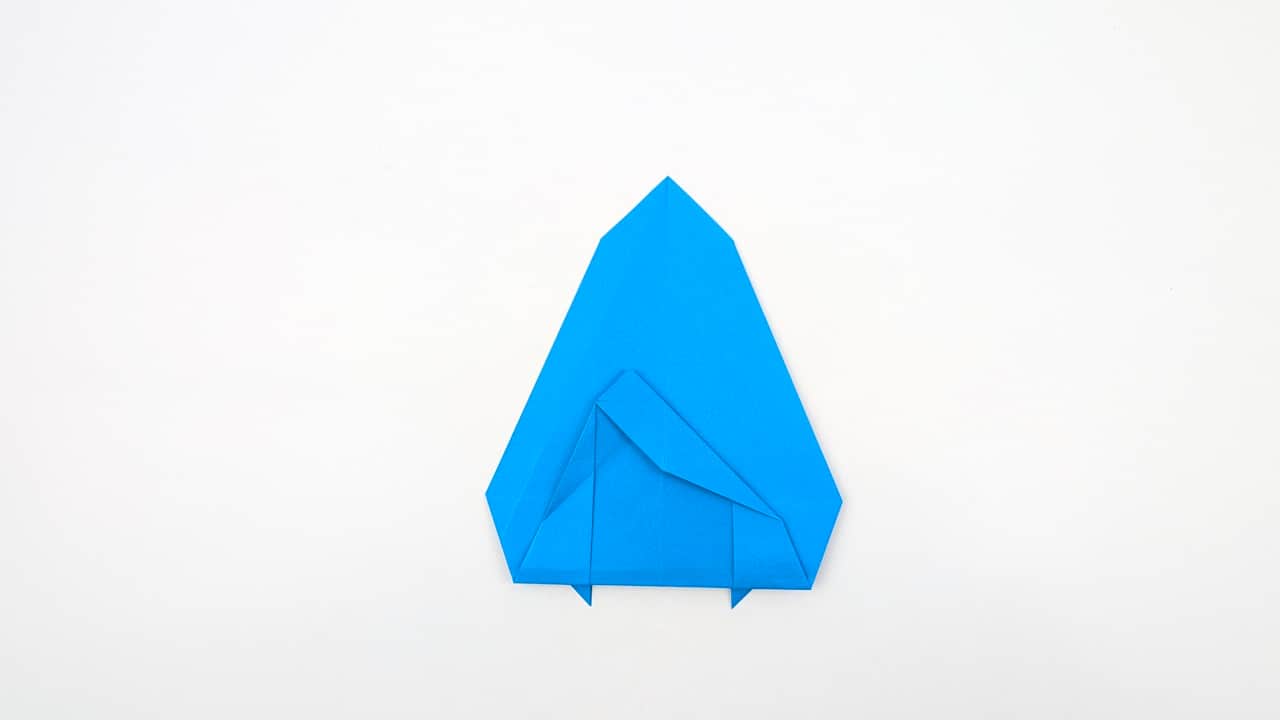 22
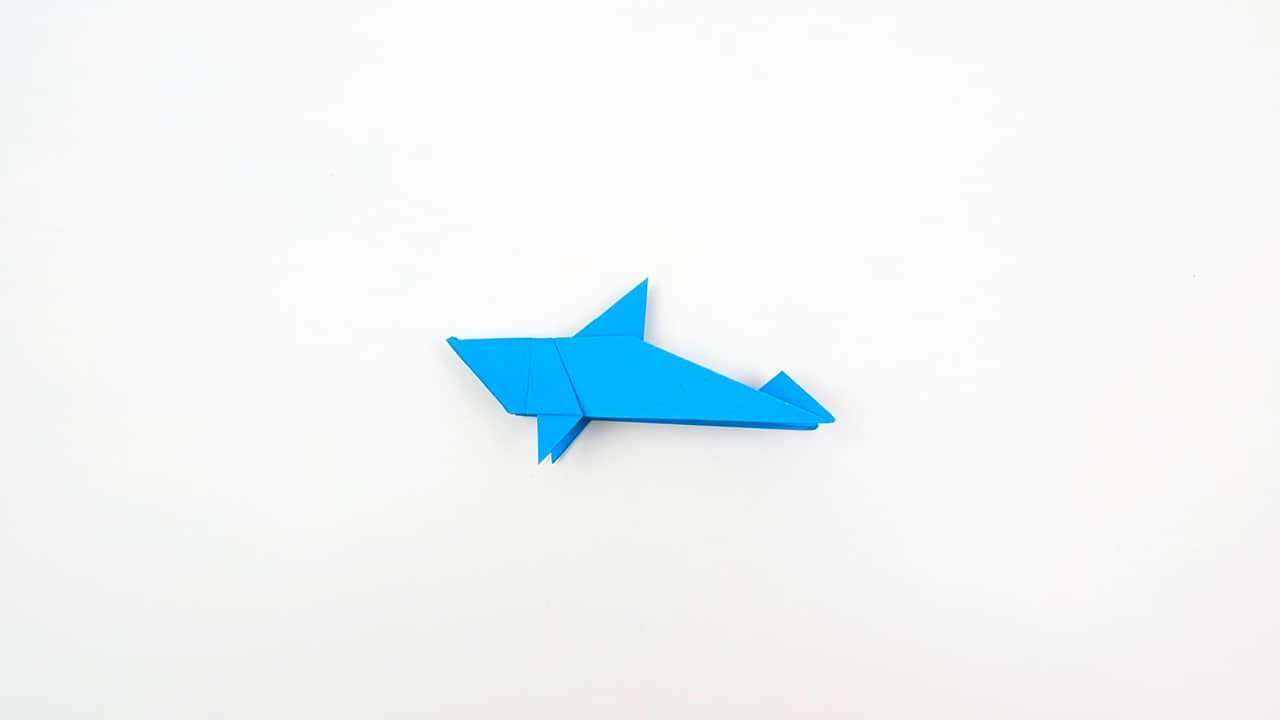
22Squash the nose section flat and crease all edges firmly.
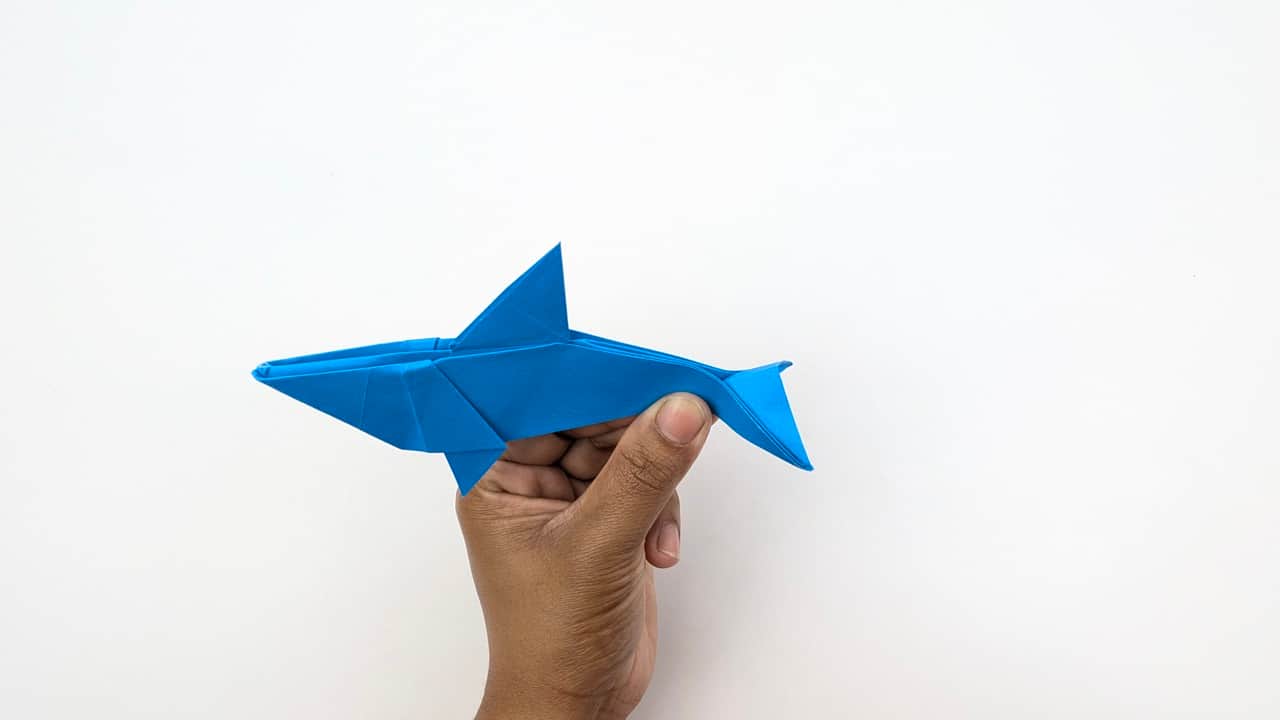
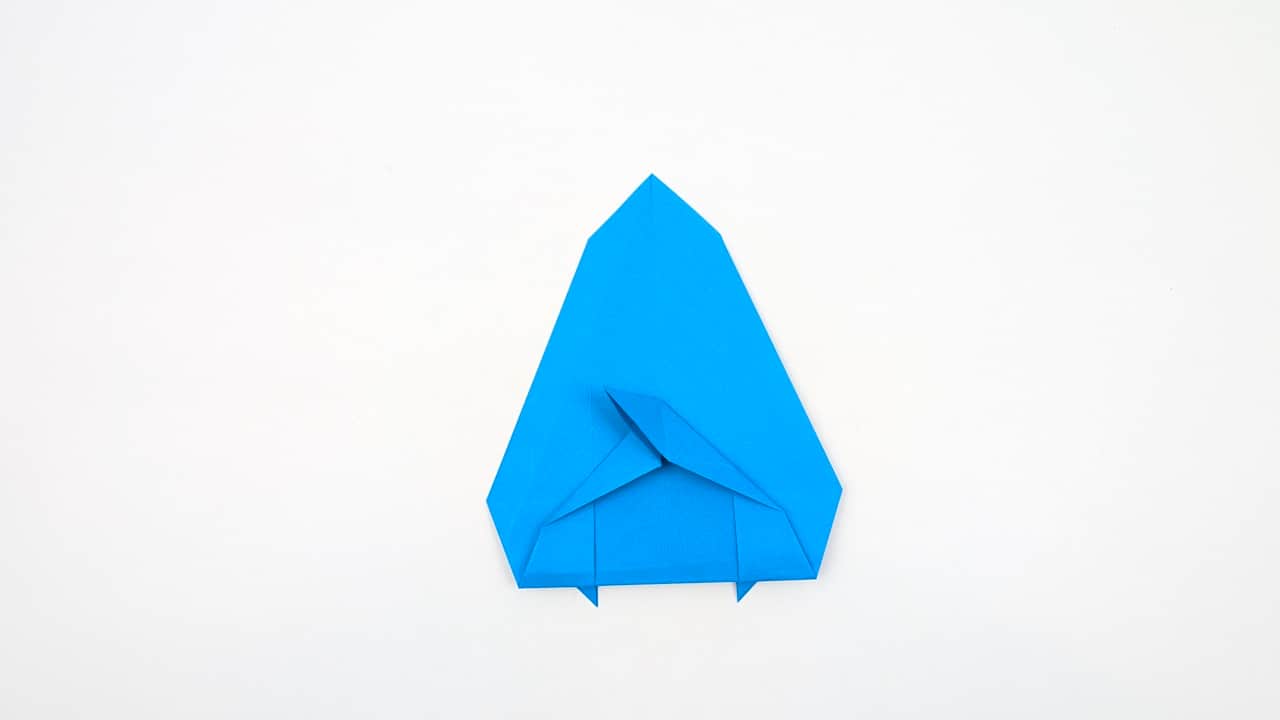 23
23Fold the right flap of the tail section upward at an angle to form the right tail fin.
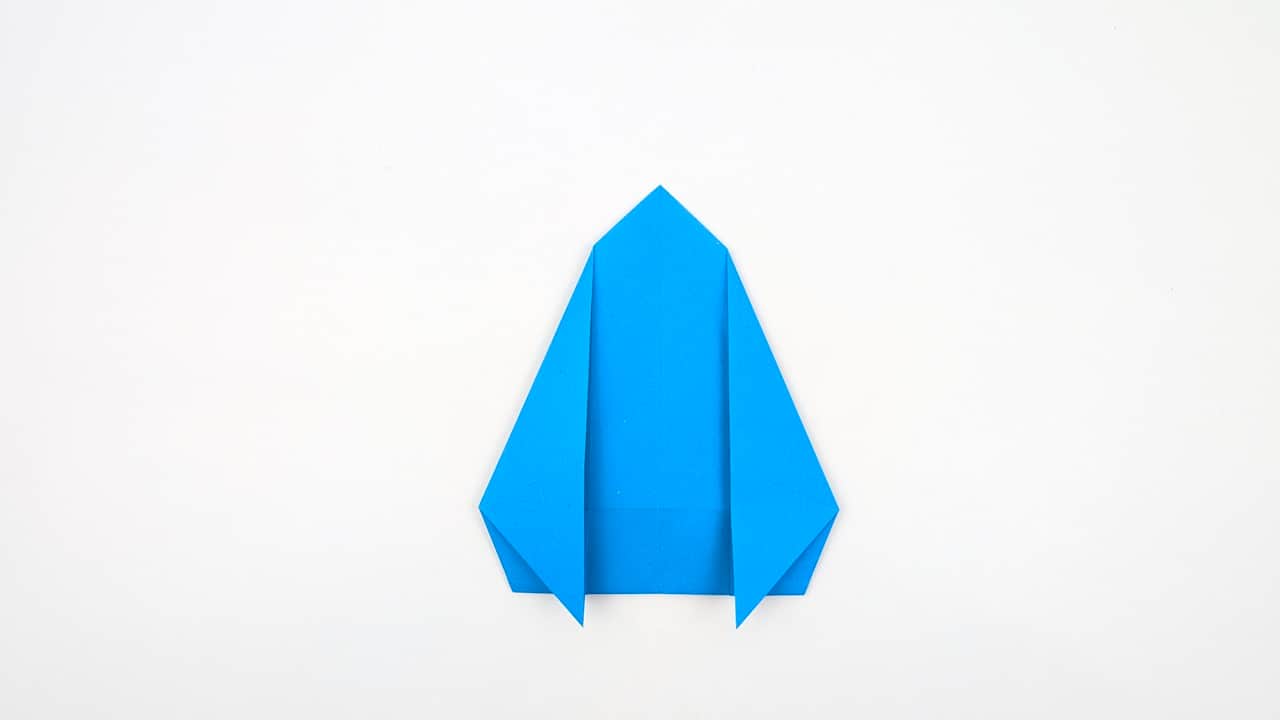 24
24Fold the left flap of the tail section upward in the mirror image to form the left tail fin.
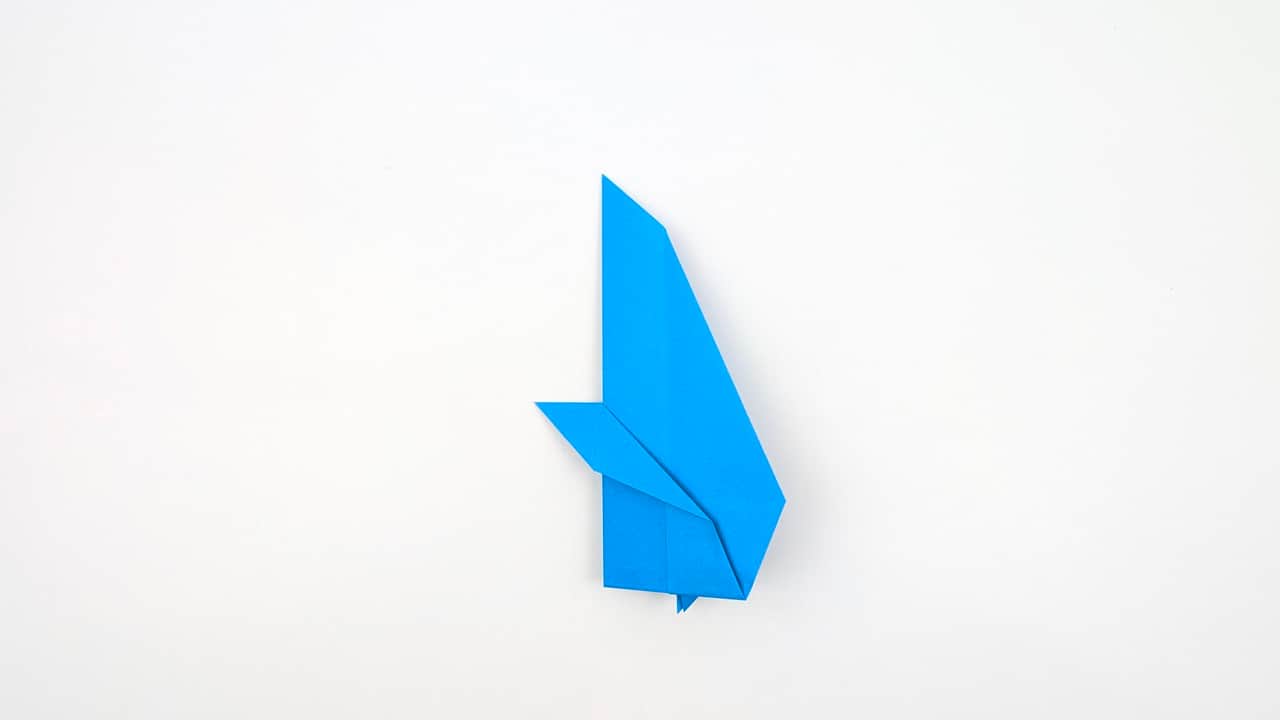 25
25Adjust both tail fins so they are symmetrical.
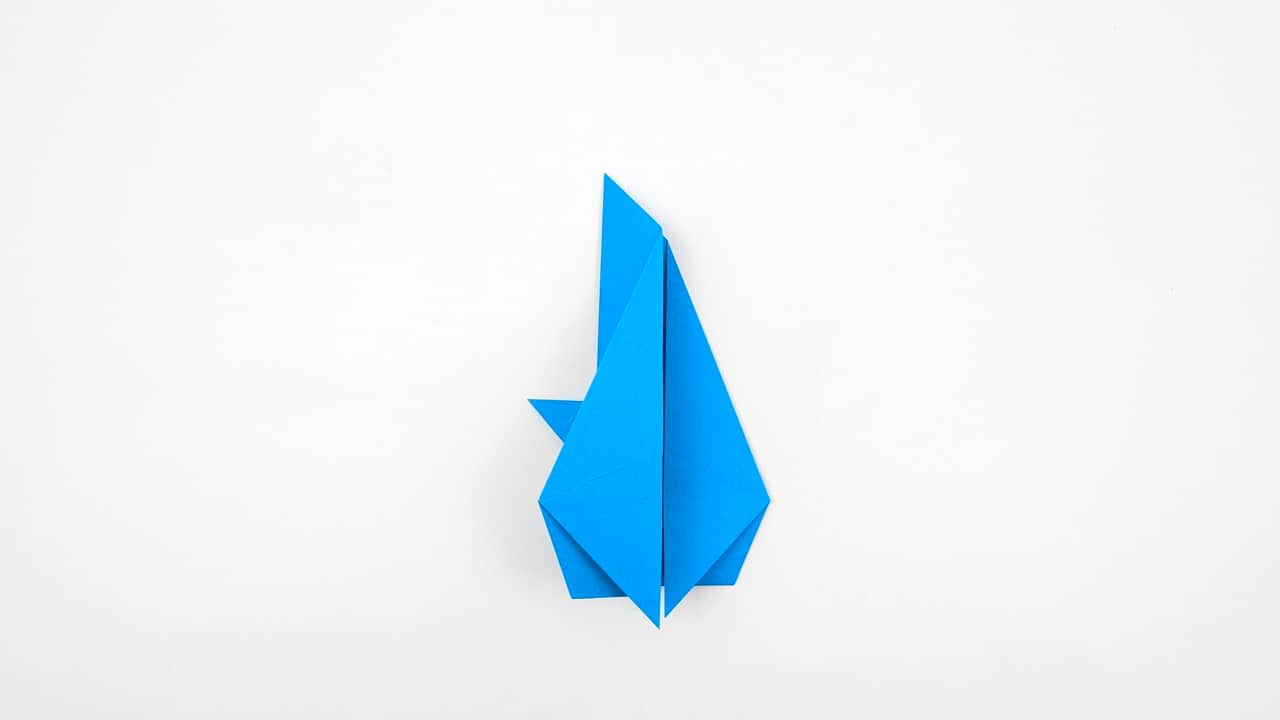 26
26Fold the top right edge of the body inward to begin shaping the dorsal fin.
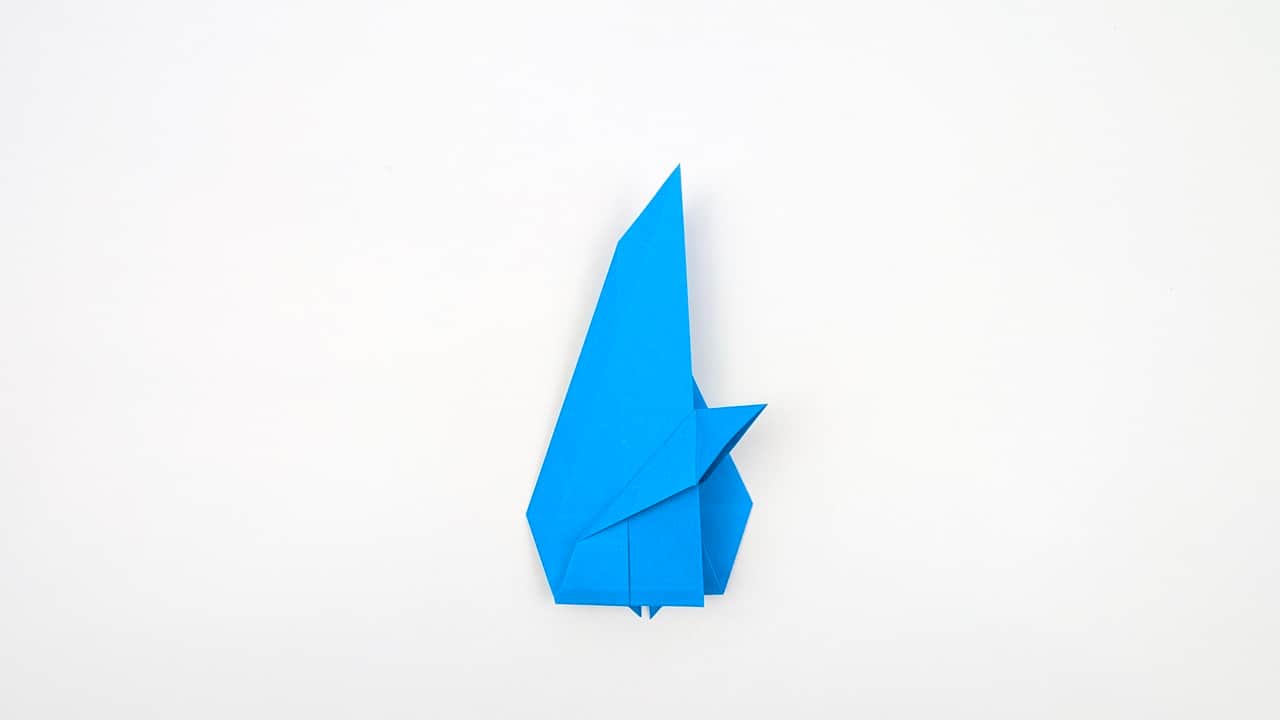 27
27Reverse-fold the dorsal fin upward so it stands above the body.
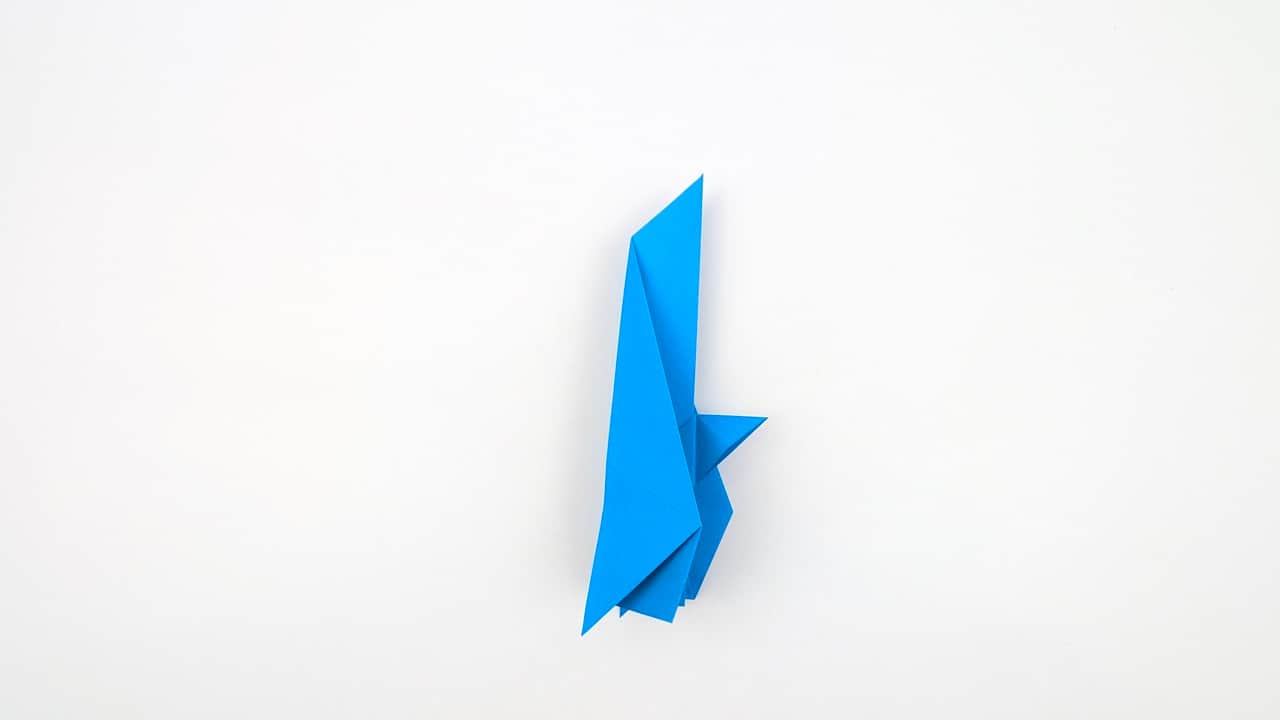 28
28Crease the base of the dorsal fin firmly so it holds its upright position.
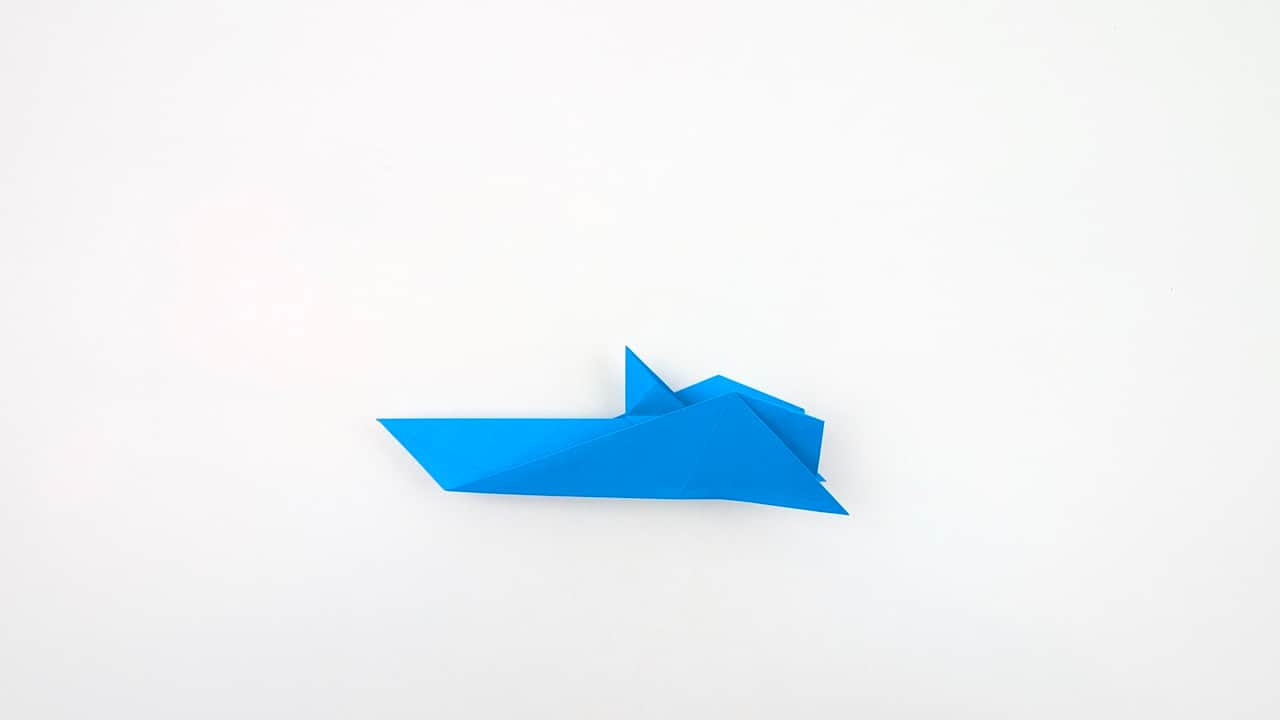 29
29Fold the right pectoral fin point outward and downward.
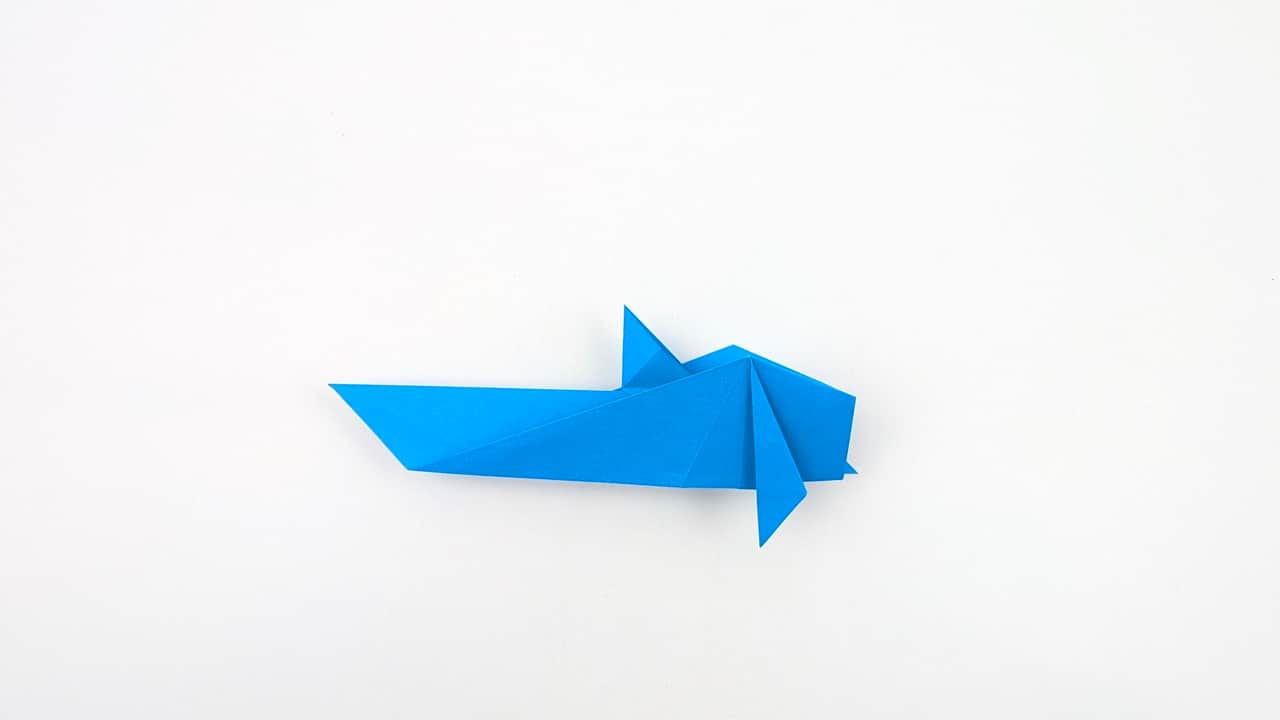 30
30Fold the left pectoral fin point outward and downward to match.
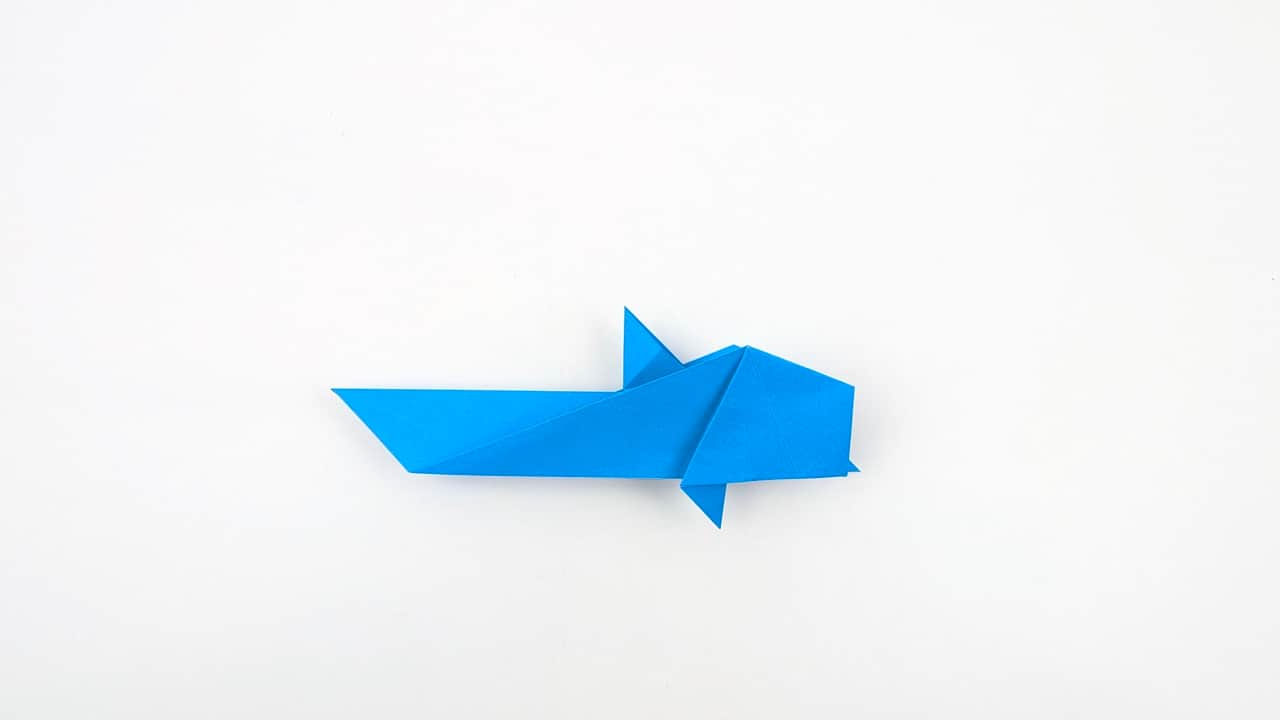 31
31Crease both pectoral fins at the same angle so the shark looks balanced.
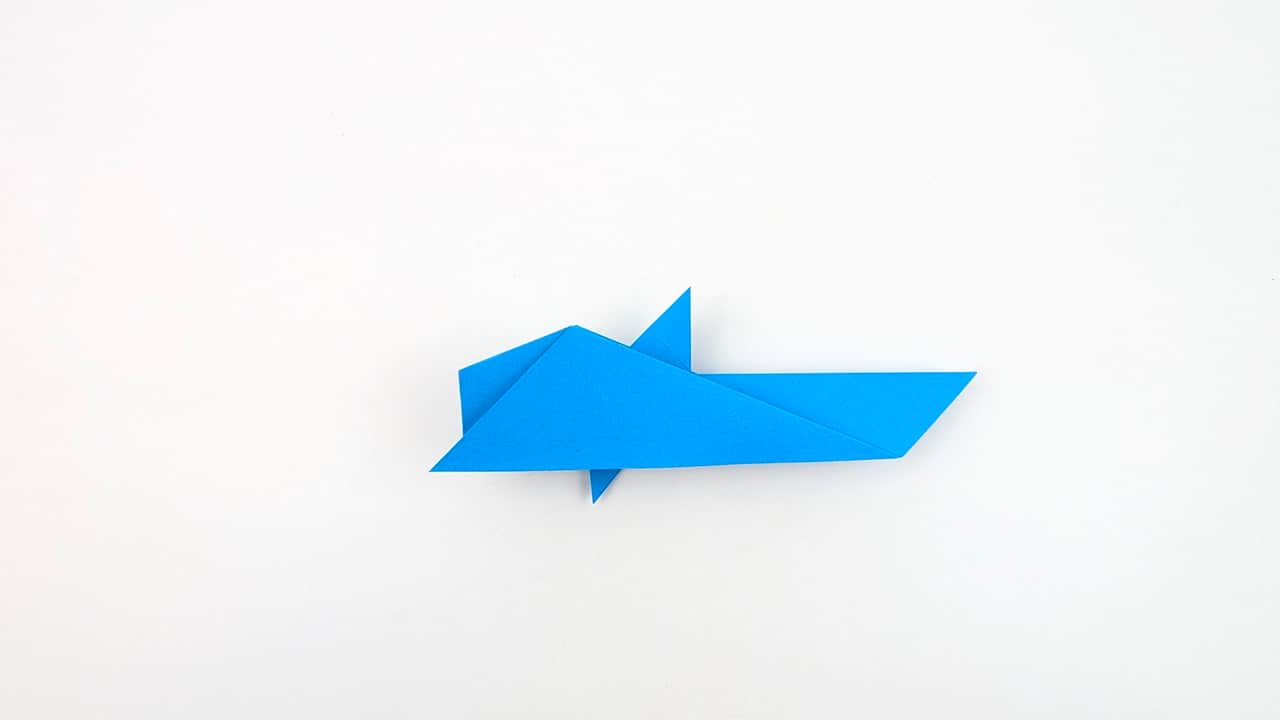 32
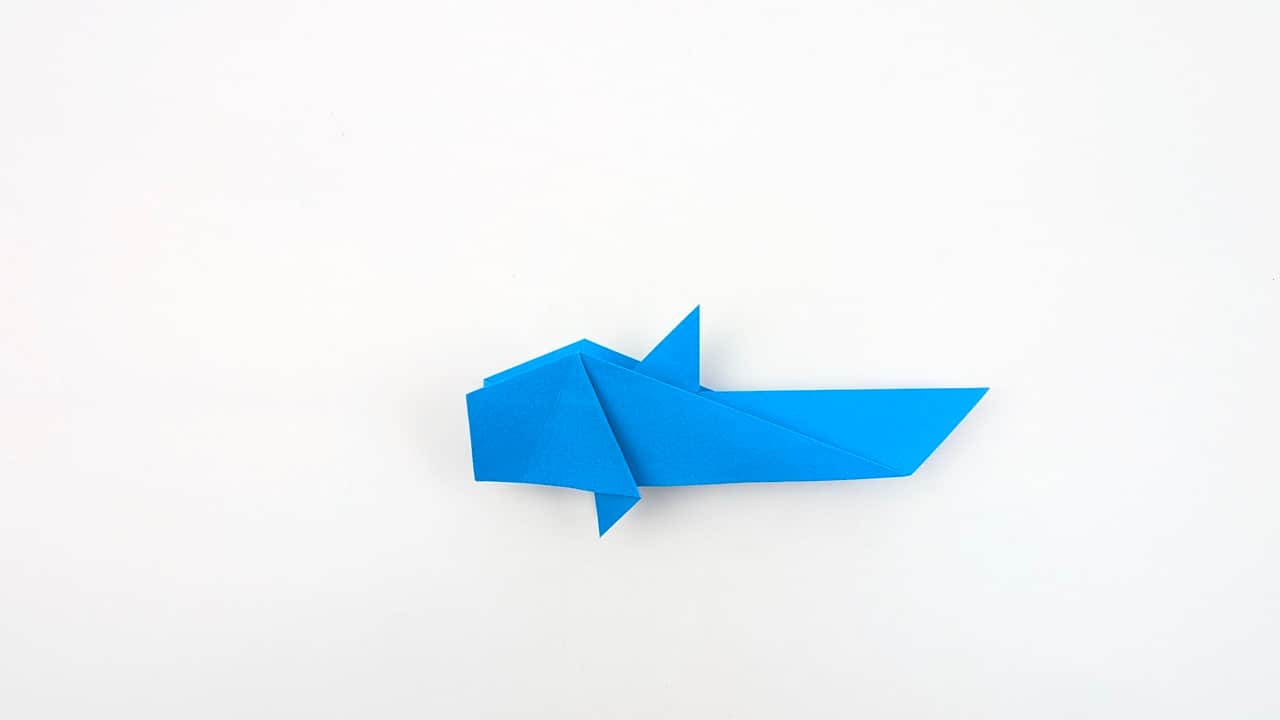
32Turn the model sideways. Fold the top layer of the body in half lengthwise to give it dimension.
 33
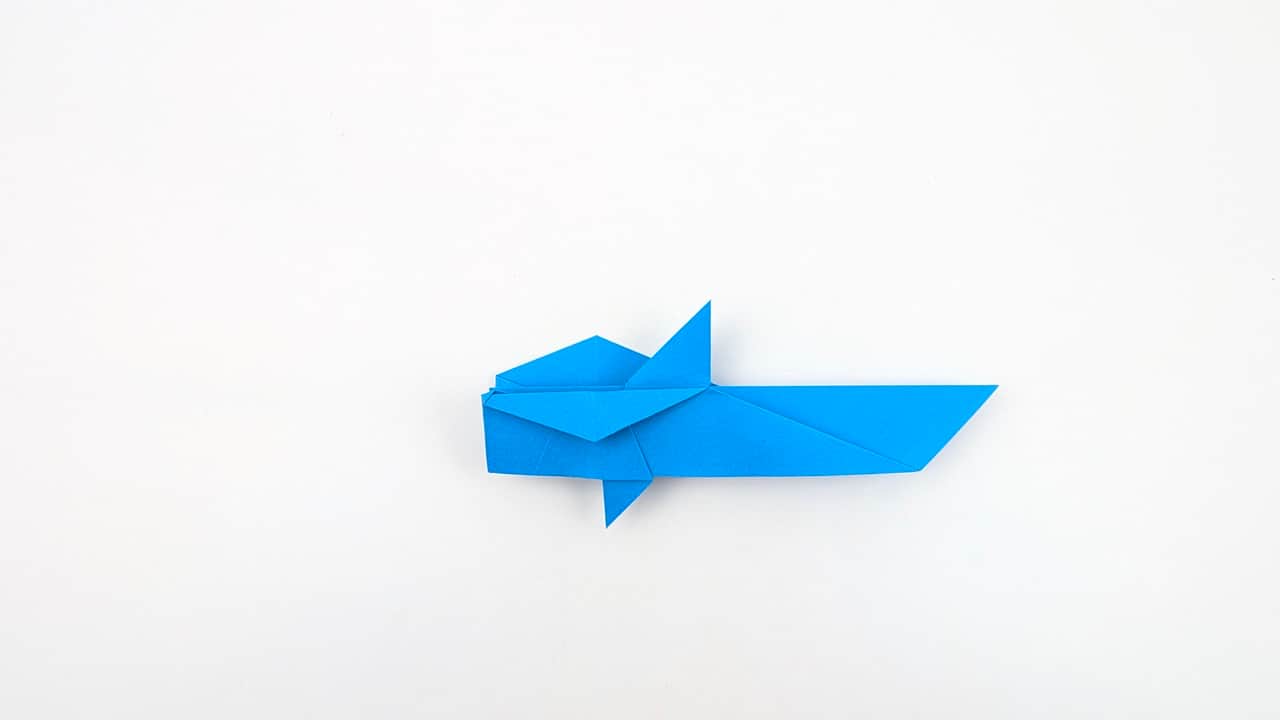
33Open the body slightly from the underside to give it a rounded three-dimensional profile.
 34
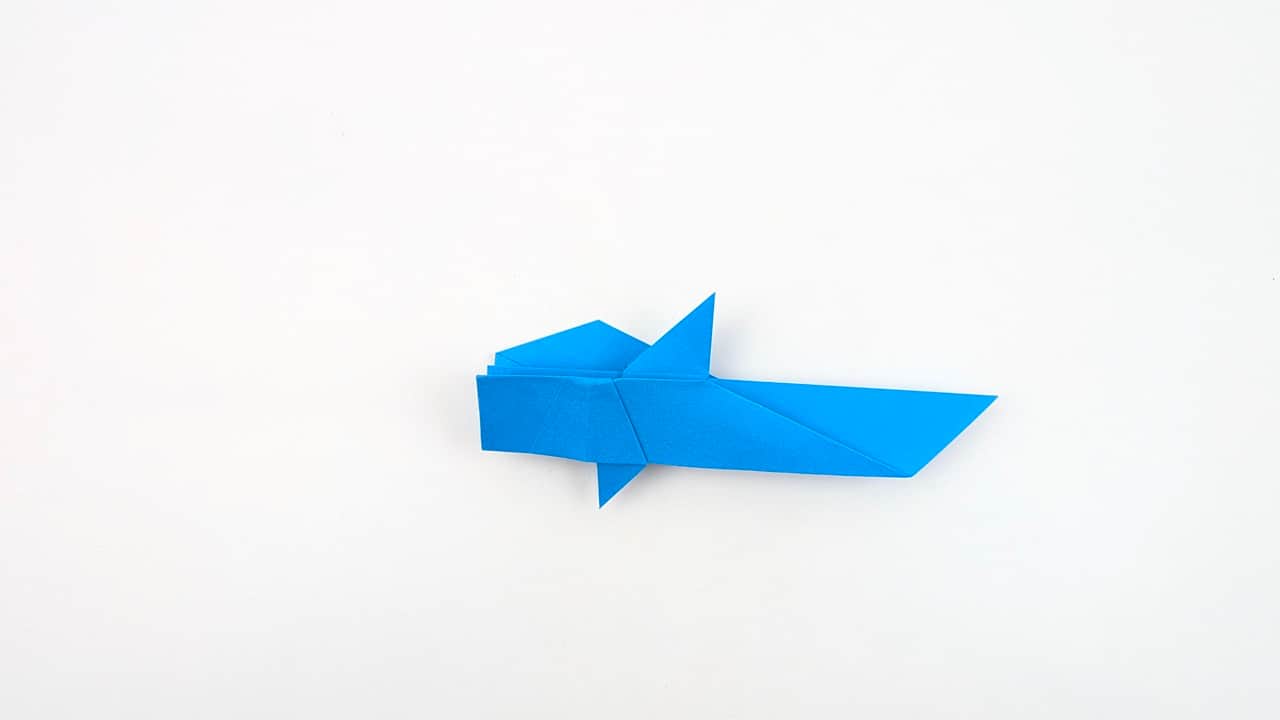
34Pinch the snout to sharpen and narrow the nose point.
 35
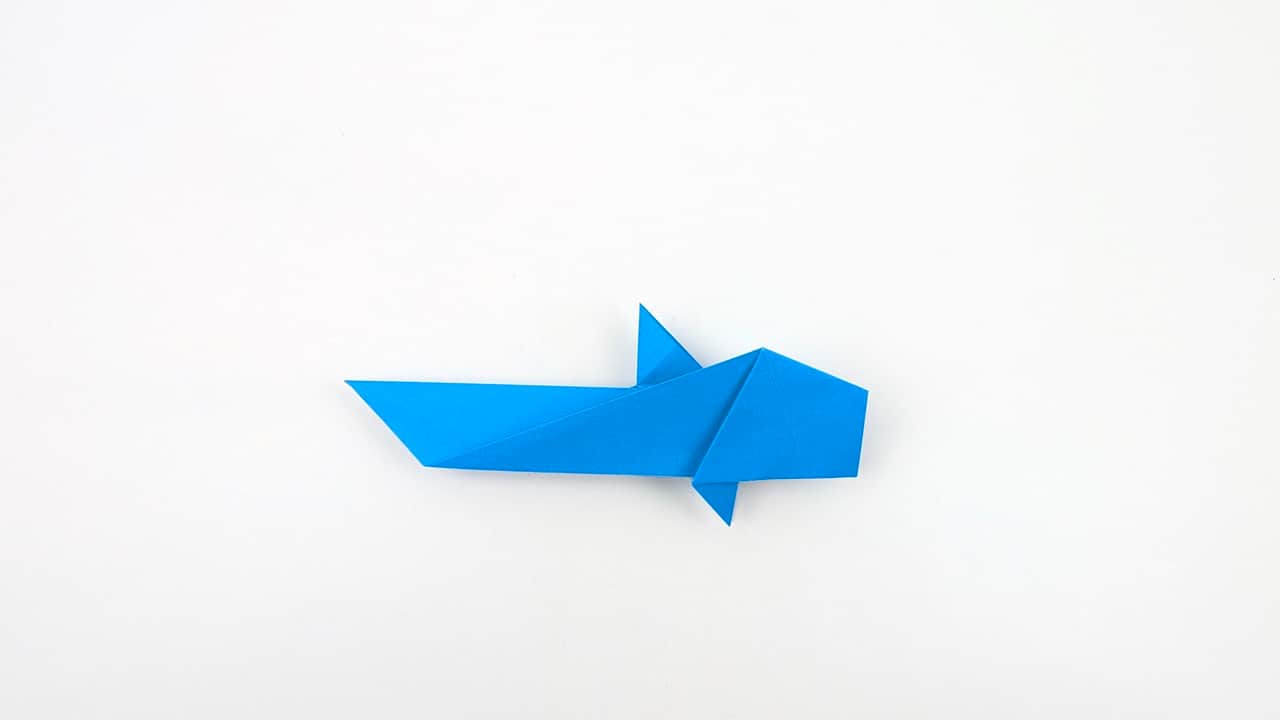
35Open the mouth area slightly by gently pulling the upper and lower jaw apart.
 36
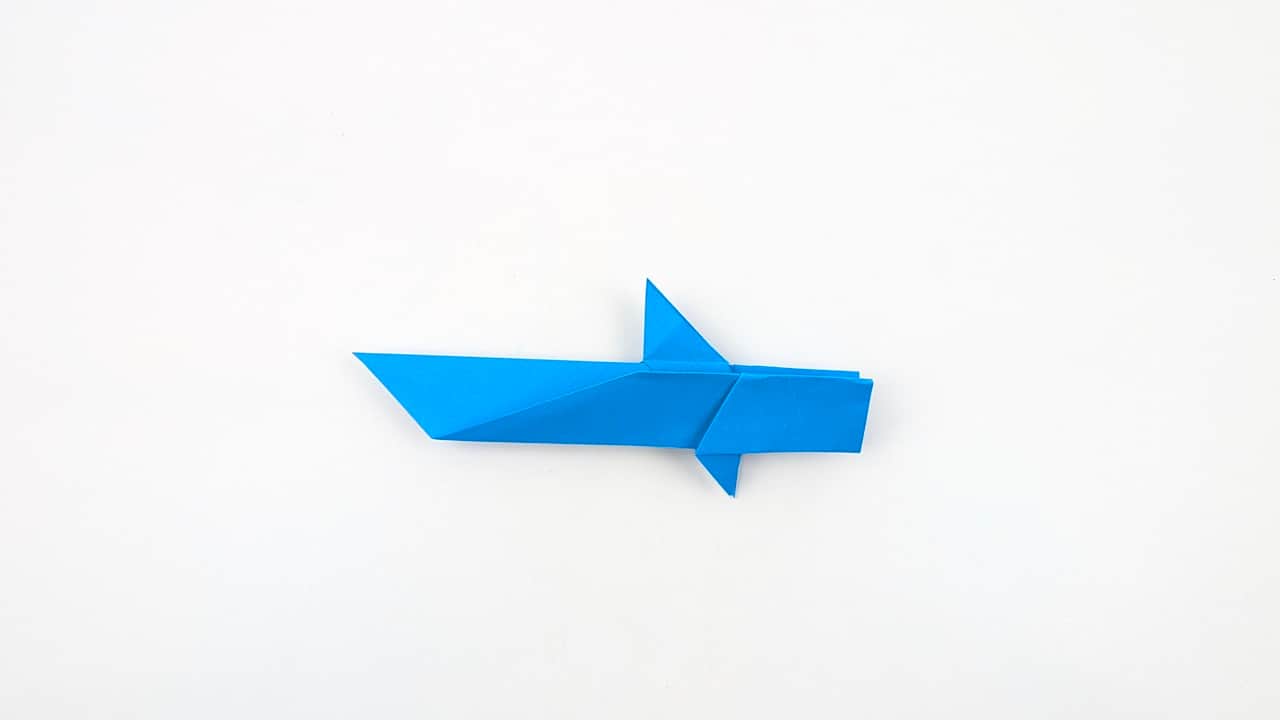
36Fold small triangular points on each side of the lower jaw to suggest teeth.
 37
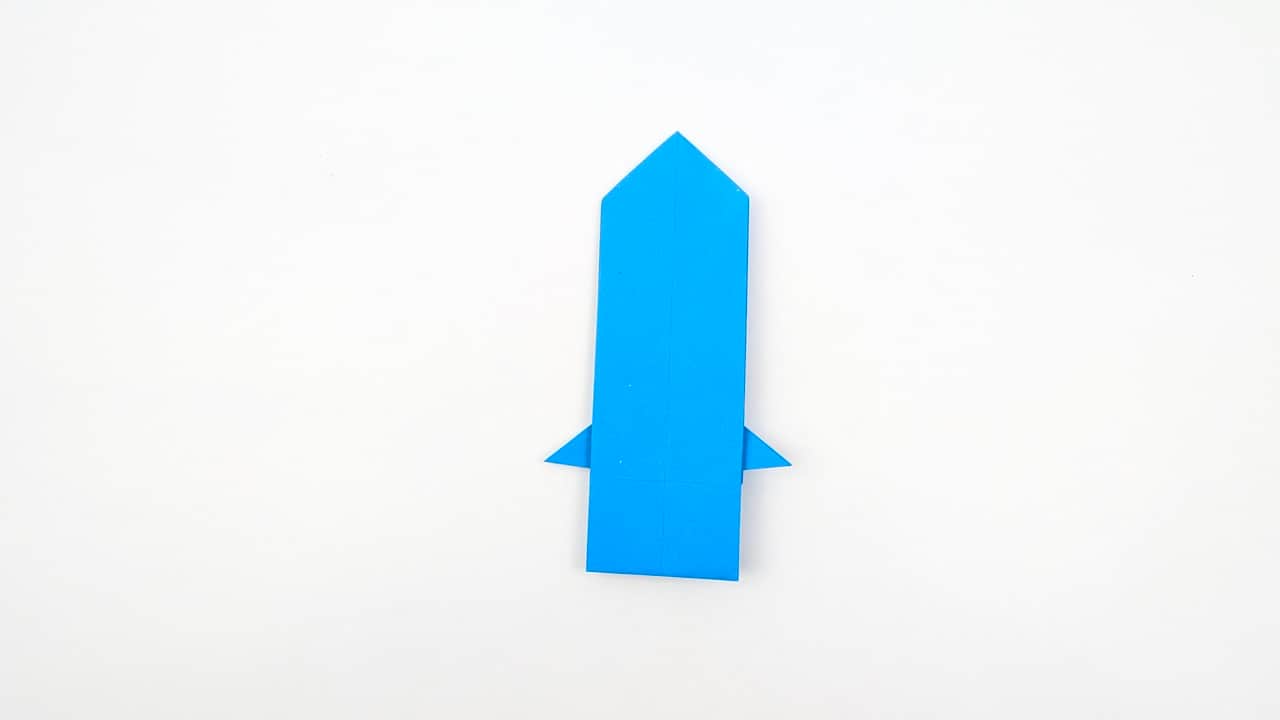
37Repeat the tooth folds on the upper jaw.
 38
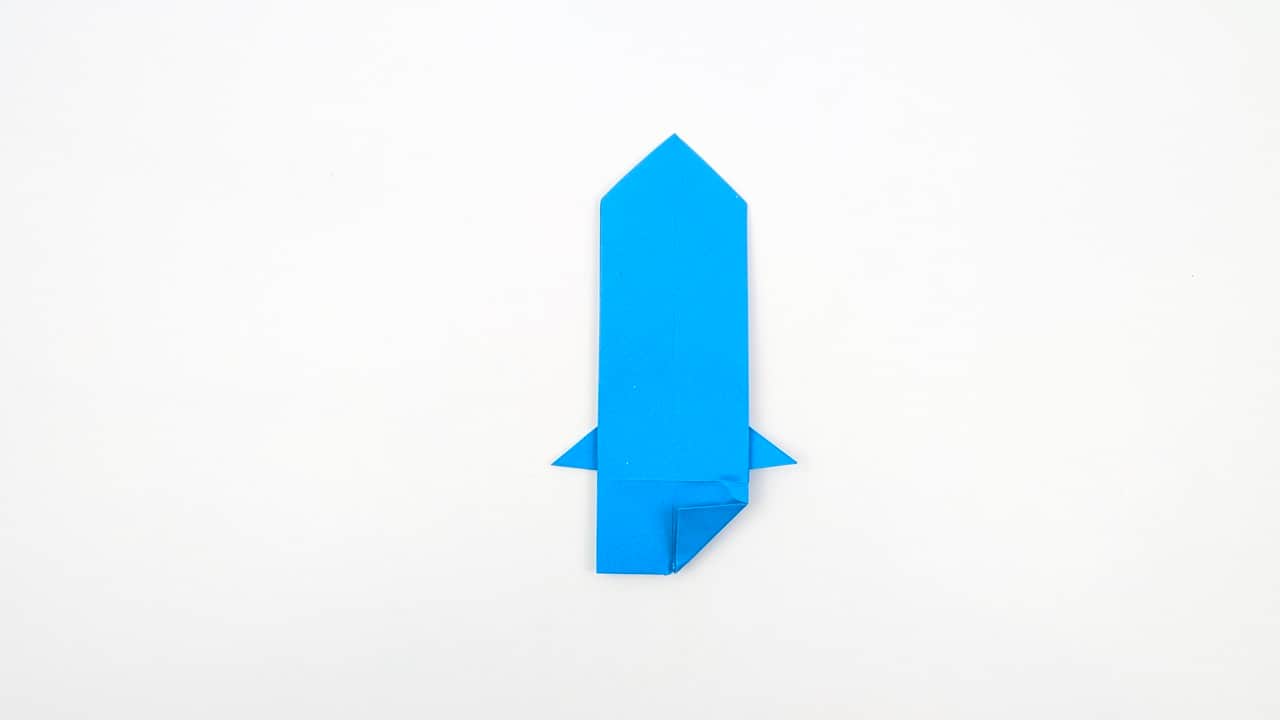
38Check the jaw angle — the mouth should appear open and slightly aggressive.
 39
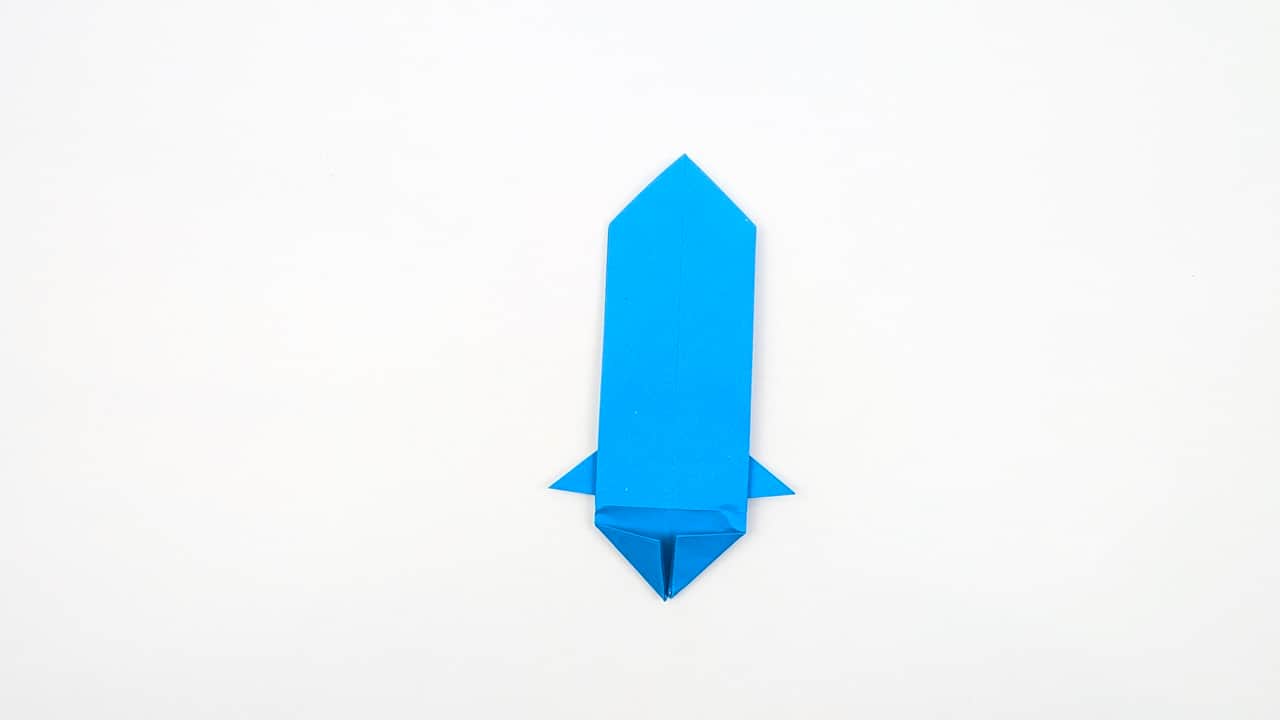
39Refold the tail fins to make sure they are at equal angles.
 40
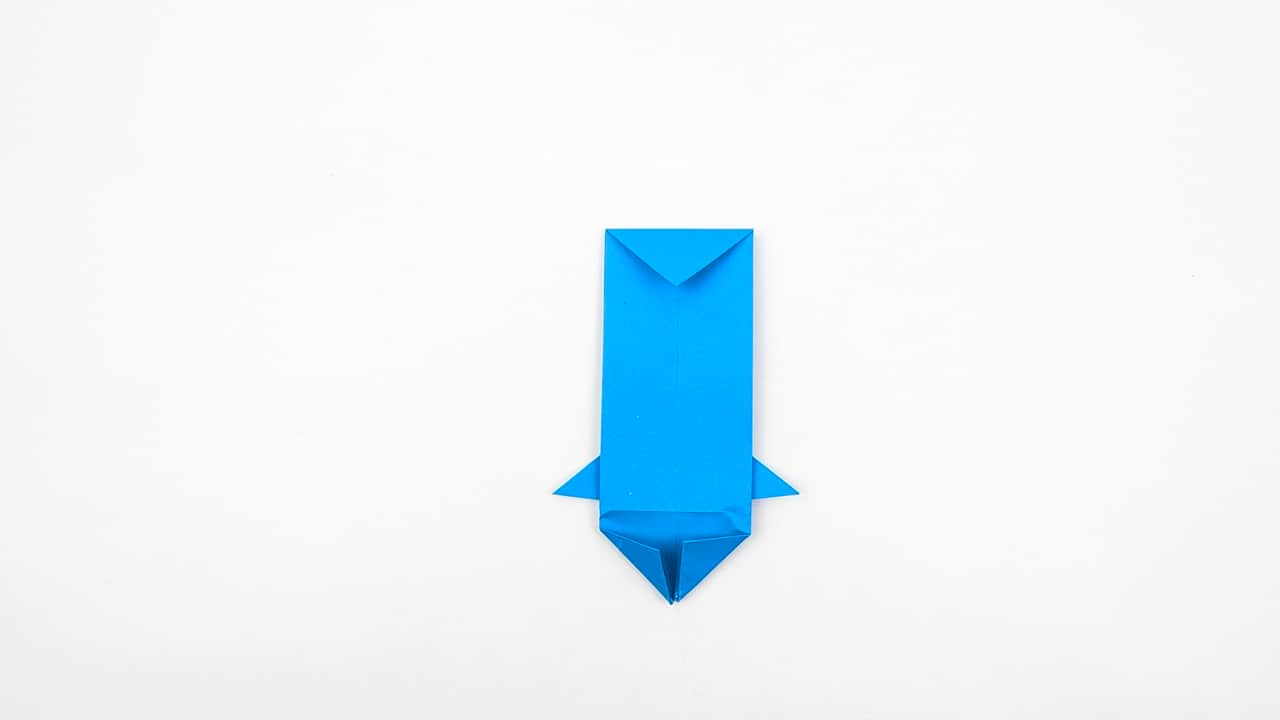
40Adjust the upper tail fin so it angles upward at roughly 30 degrees.
 41
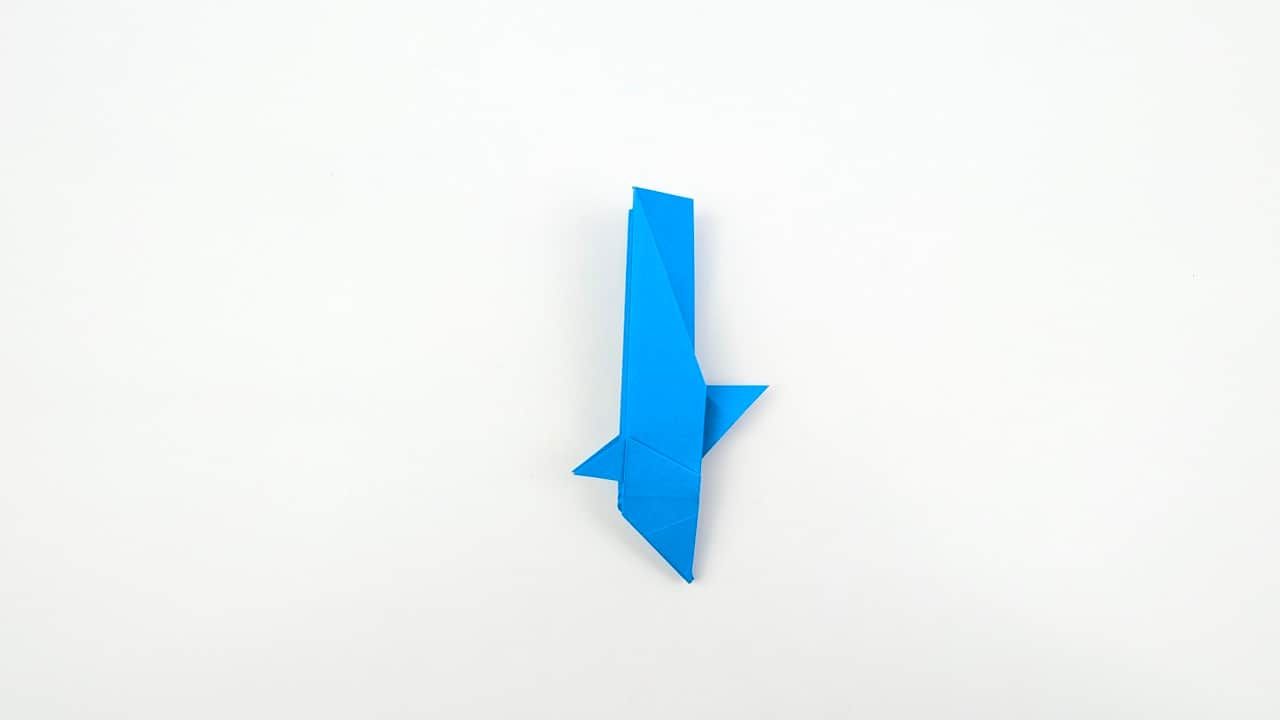
41Adjust the lower tail fin to angle slightly downward.
 42
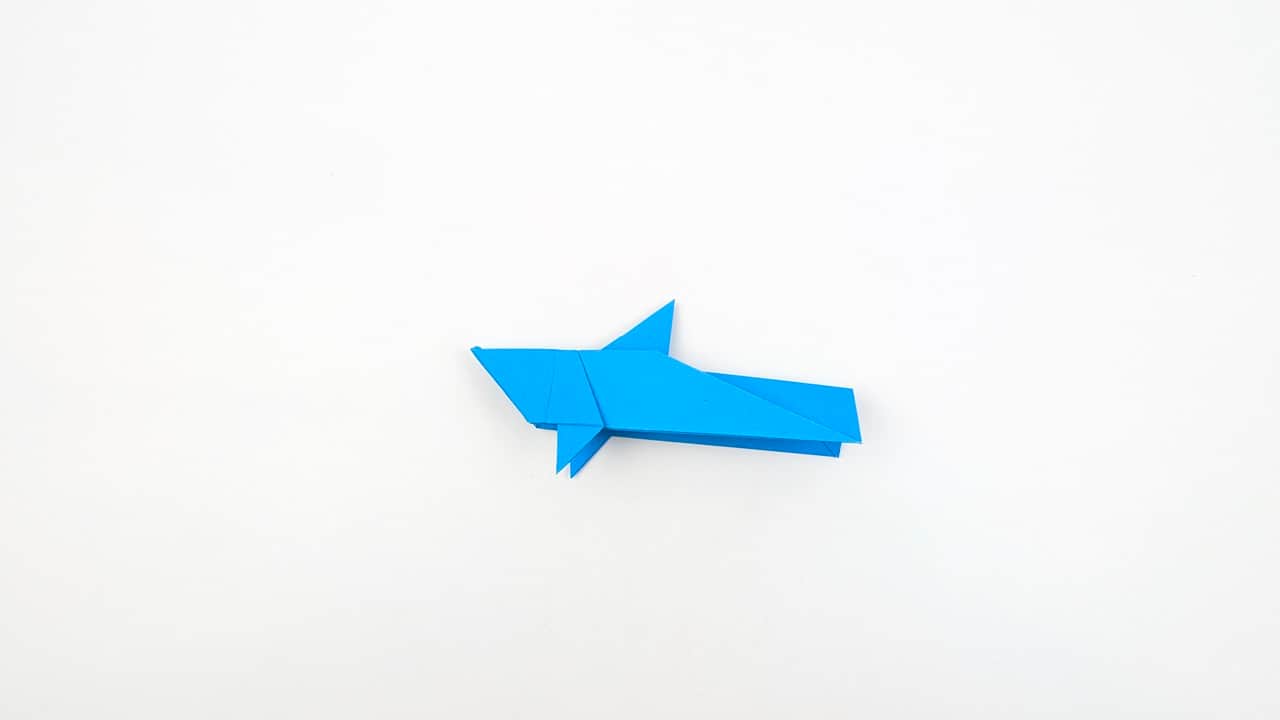
42Pinch the tail join firmly so both fins stay in position.
 43
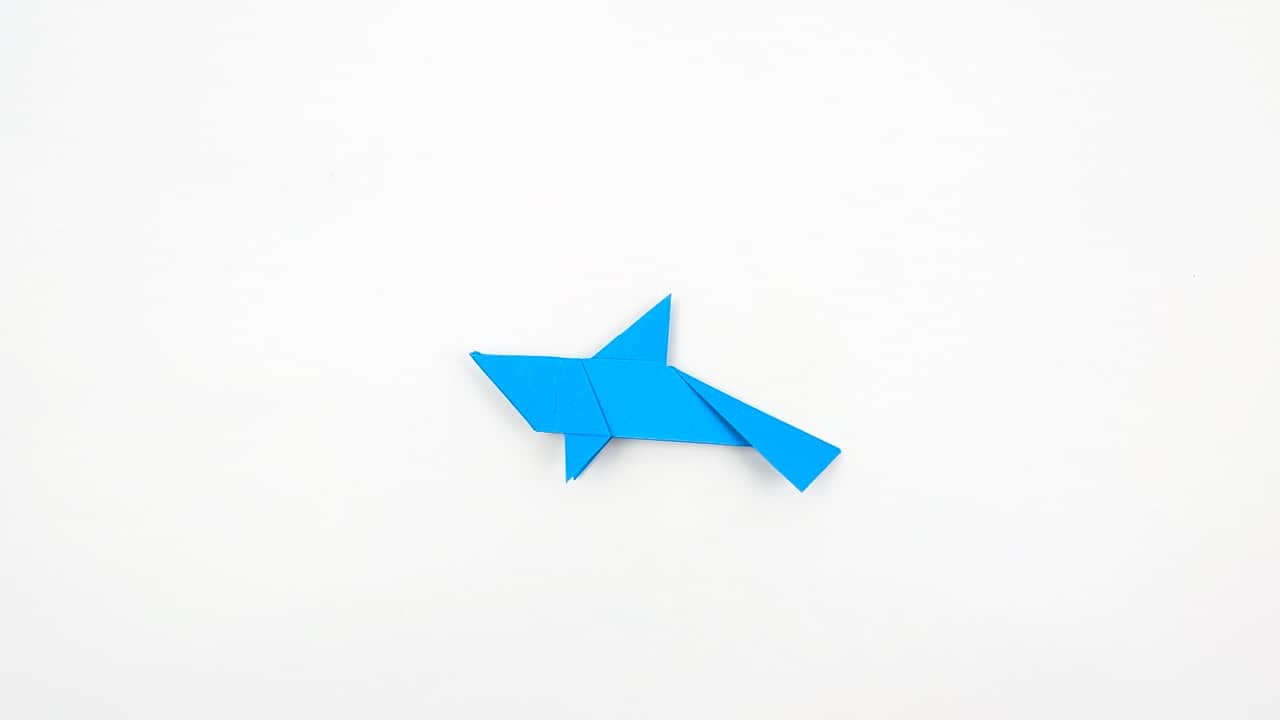
43Look at the shark from above — the body should taper from wide at the gills to narrow at the tail.
 44
44Look at the shark from the front — the body should be rounded, not flat.
 45
45Fold the gill area slightly to create a subtle indent on each side of the head.
 46
46Pinch the dorsal fin to make sure it stands tall and straight.
 47
47Round the underside of the body by gently curving it with your fingers.
 48
48Check all fins are firm and not flopping — re-crease any that have softened.
 49
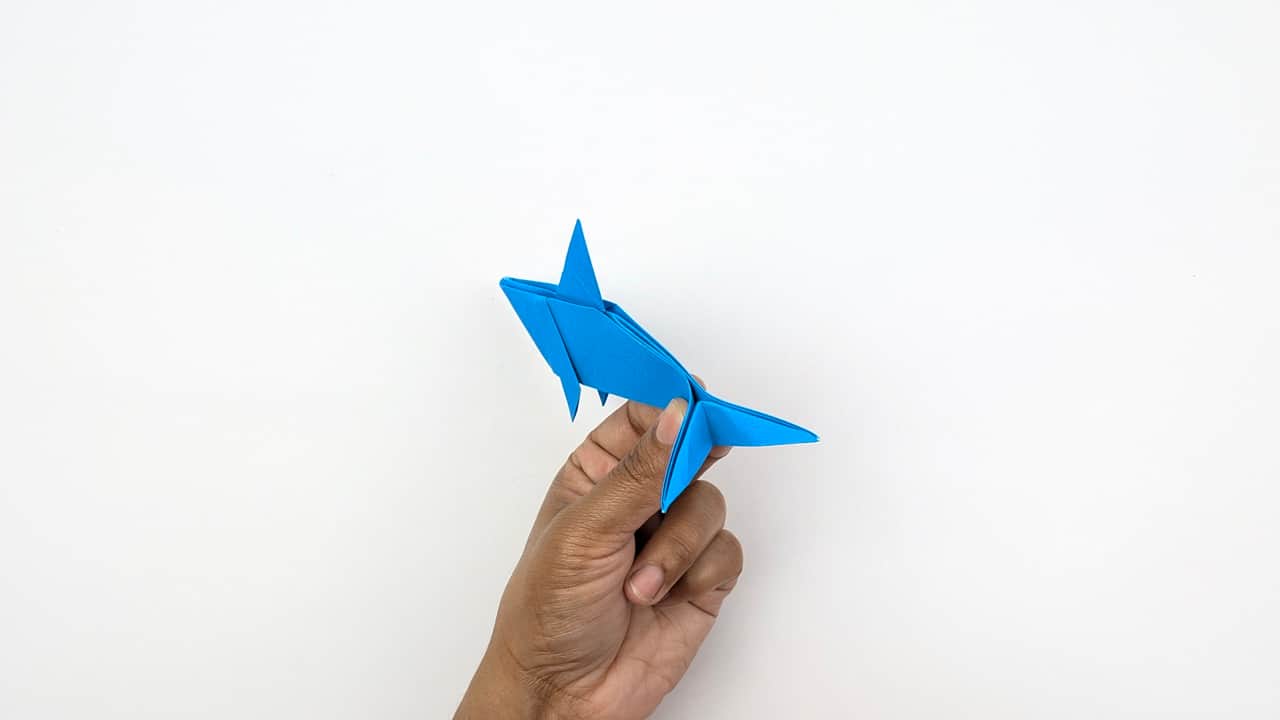
49Adjust the pectoral fins so they angle downward and outward, like a real shark in motion.
 50
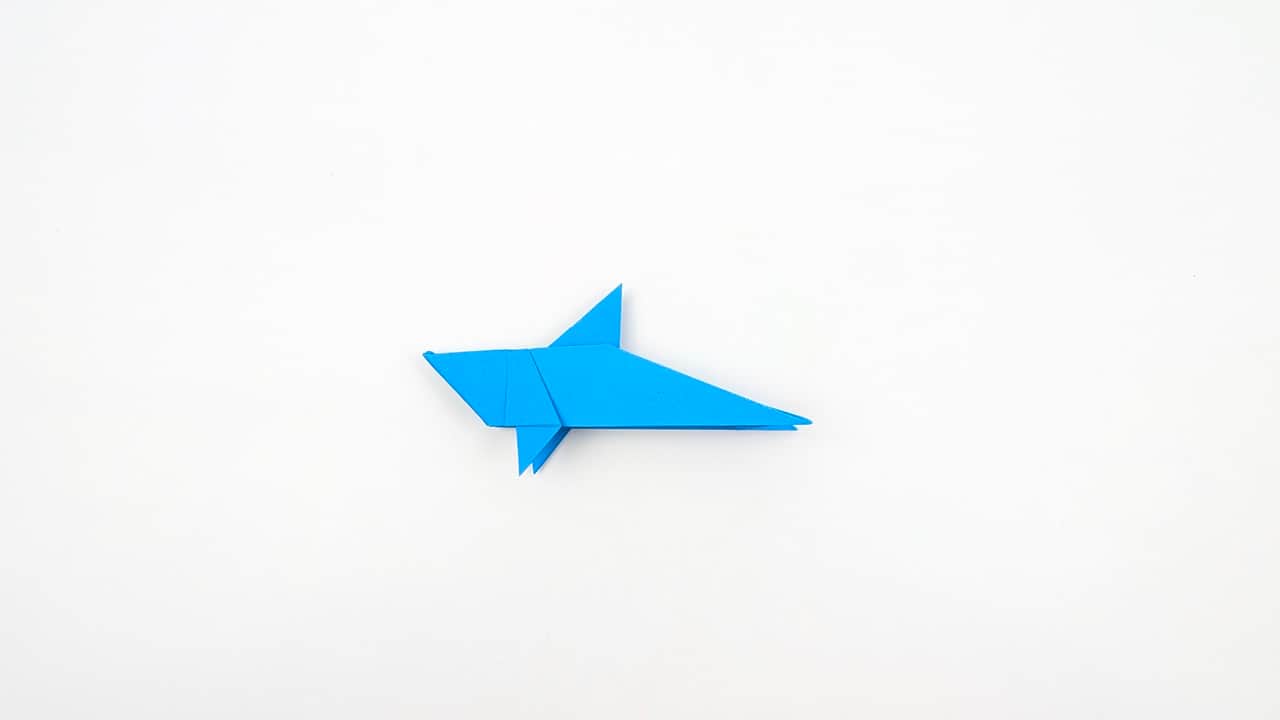
50Look at the shark from the side. The nose, dorsal fin, and tail should create a recognizable silhouette.
 51
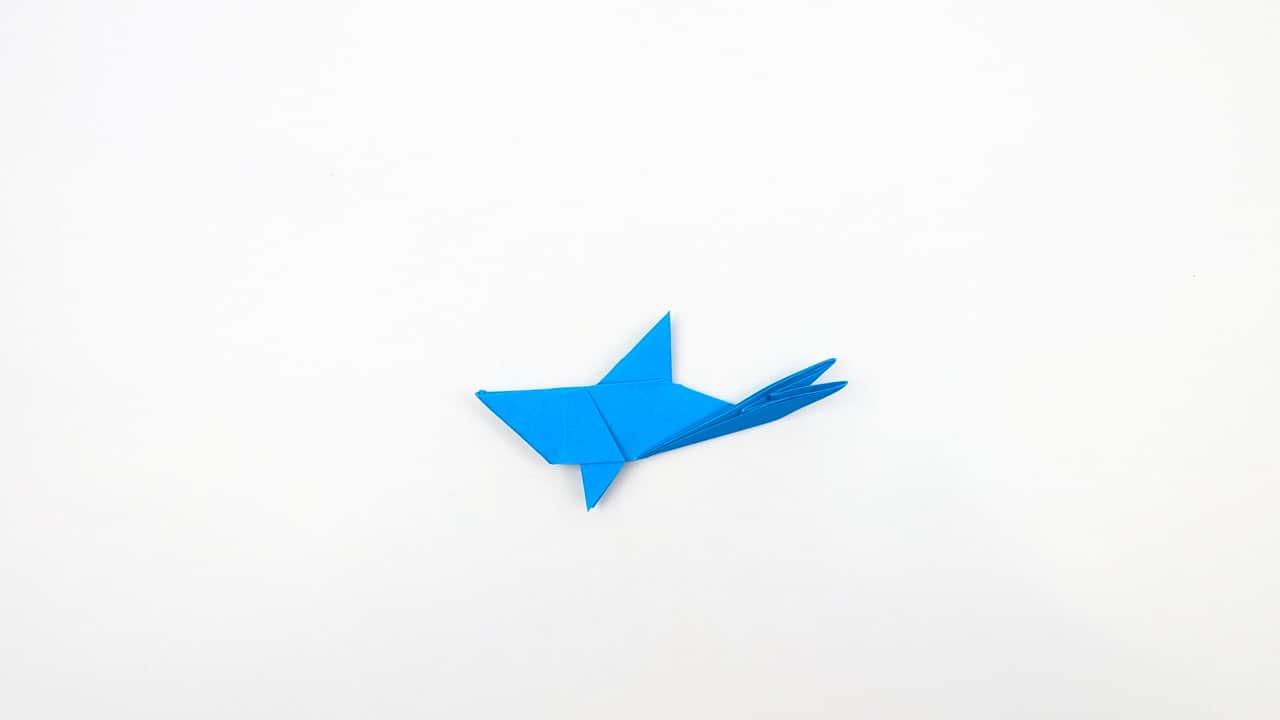
51Make any final adjustments to the nose — it should be pointed and slightly curved downward.
 52
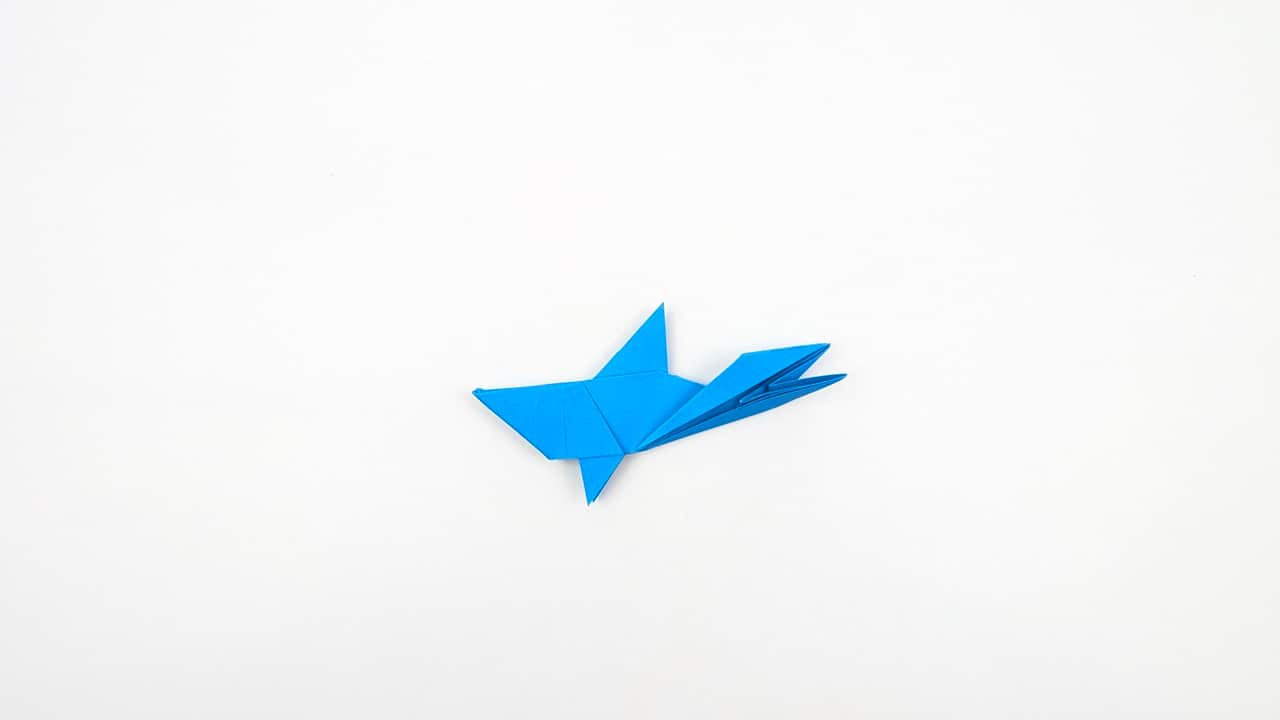
52Crease the mouth edges one more time to keep the jaw open.
 53
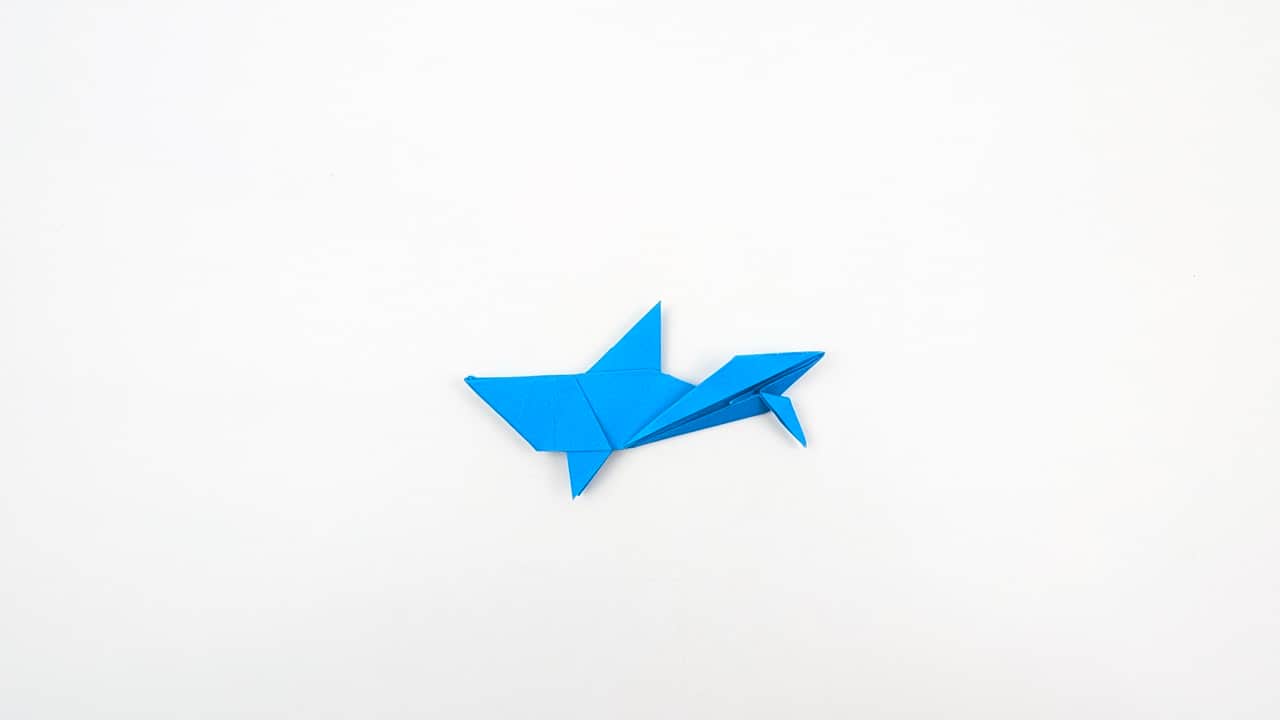
53Check the body from above for symmetry — both sides should match.
 54
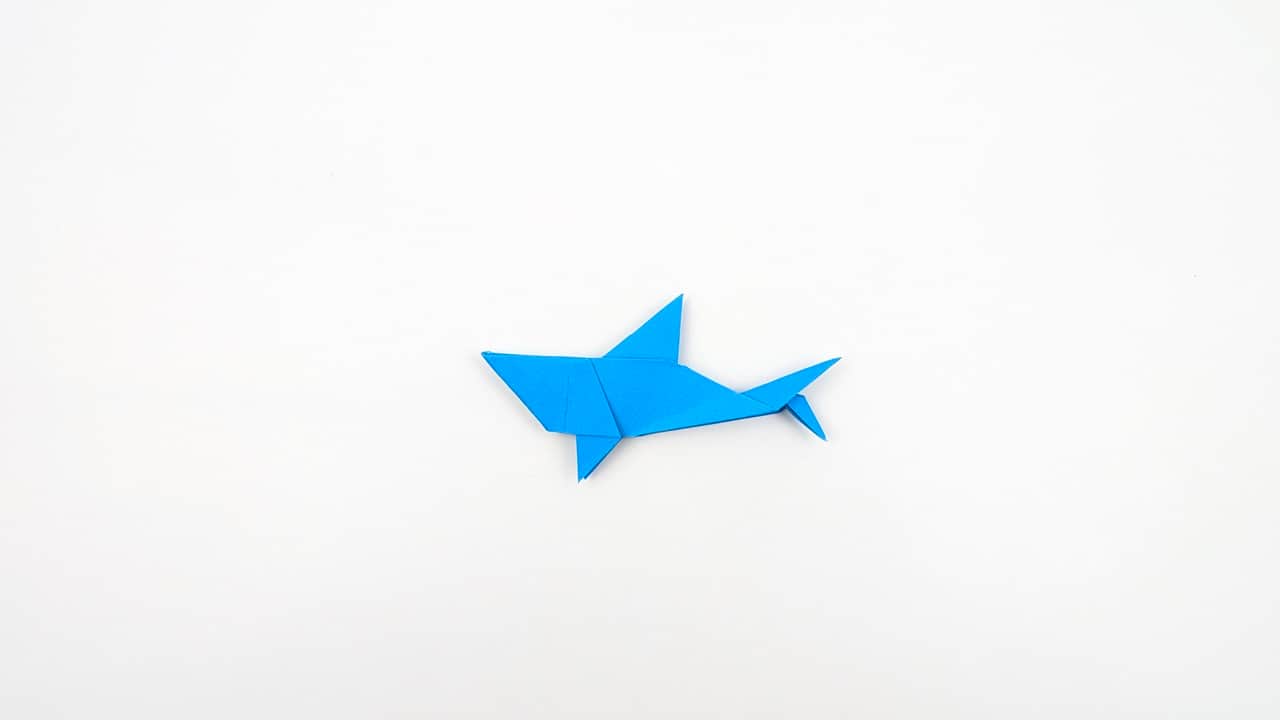
54Give the entire model one final firm press to set all the creases.
 55
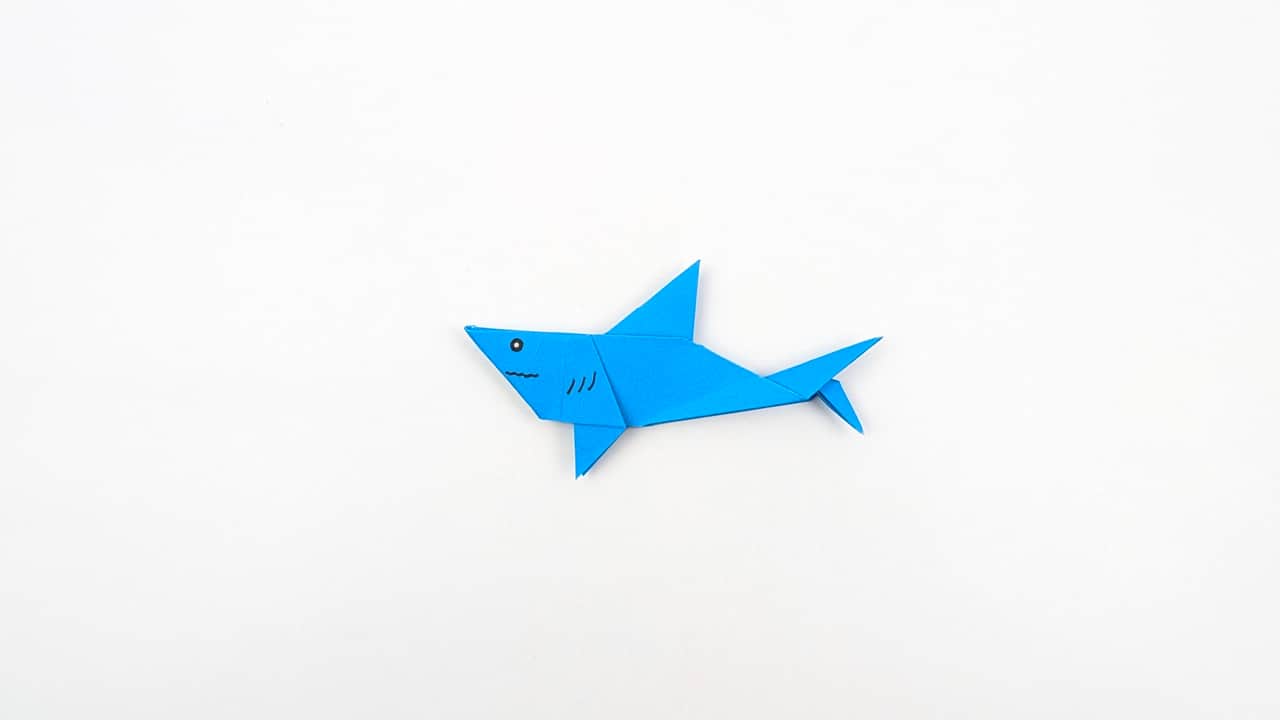
55Your origami shark is complete. Display it with the open mouth facing forward for maximum impact.
Frequently Asked Questions
What paper should I use for the origami origami shark?
Standard 15 cm x 15 cm origami paper (kami) works best for the Origami Shark. For this complex model, use a 20 cm+ sheet to give yourself more room for detailed folds.
How long does it take to fold the origami origami shark?
This model takes approximately 30 minutes for someone with solid experience. Beginners may need more time — that is completely normal. Take your time and focus on clean creases.
Is the origami origami shark hard to make?
This model is rated hard. Prior experience with intermediate folds is recommended. Make sure you are comfortable with reverse folds and squash folds before attempting this model.
Can kids make the origami origami shark?
The Origami Shark is an advanced model best suited for experienced folders. Most children would find it too difficult, but teens with origami experience may enjoy the challenge.
What size paper works best for the Origami Shark?
For the Origami Shark, we recommend a 20-25 cm (8-10 inch) square. Larger paper gives you more room to work with and is especially helpful for complex models with many layers.
What other folds should I learn before the Origami Shark?
Before attempting the Origami Shark, make sure you can fold the Simple Fish, Blue Whale, Fire Dragon. These models share similar techniques and will prepare you for this design.